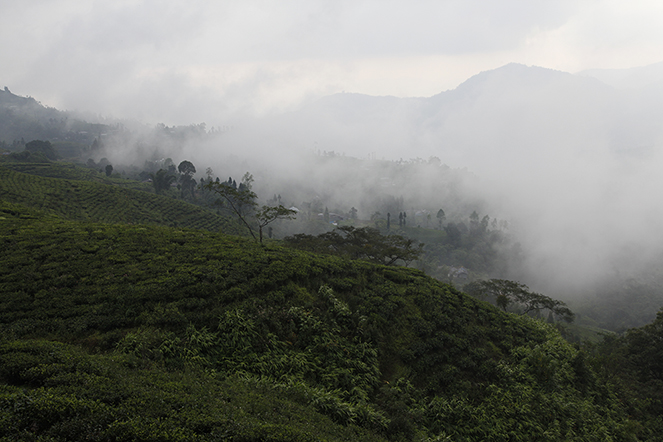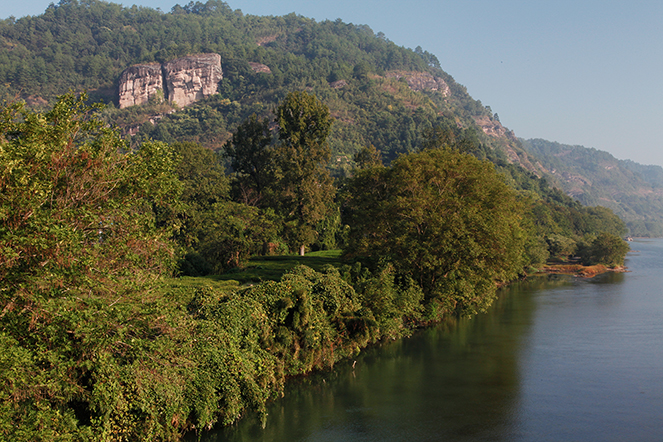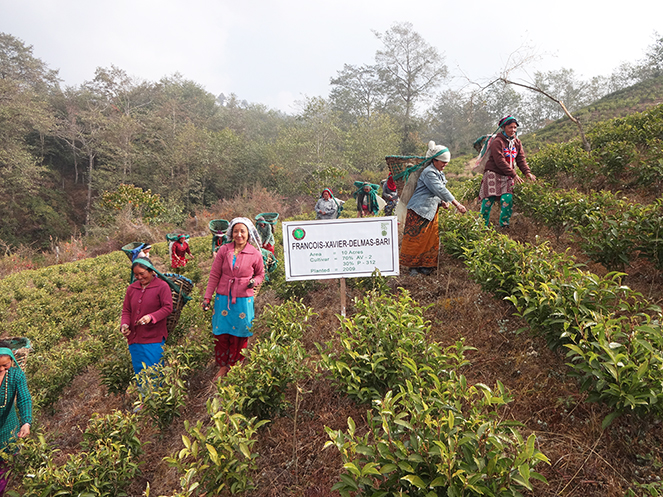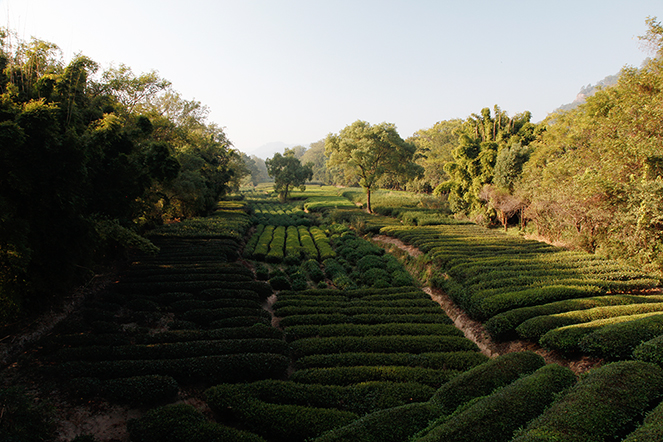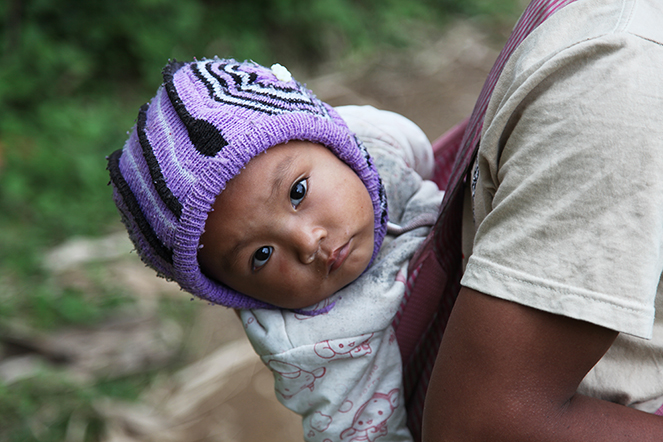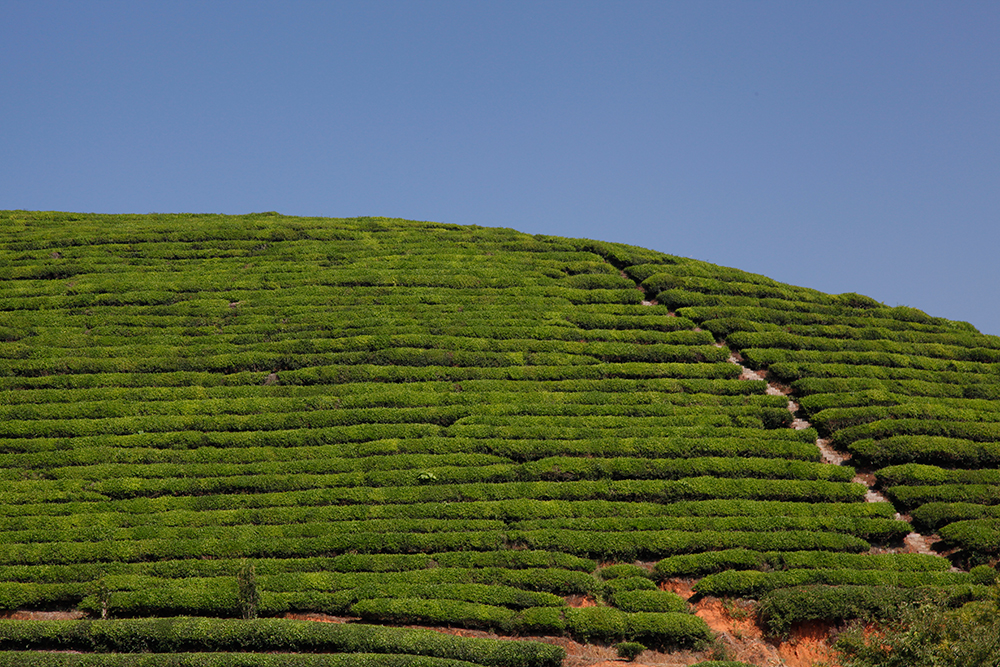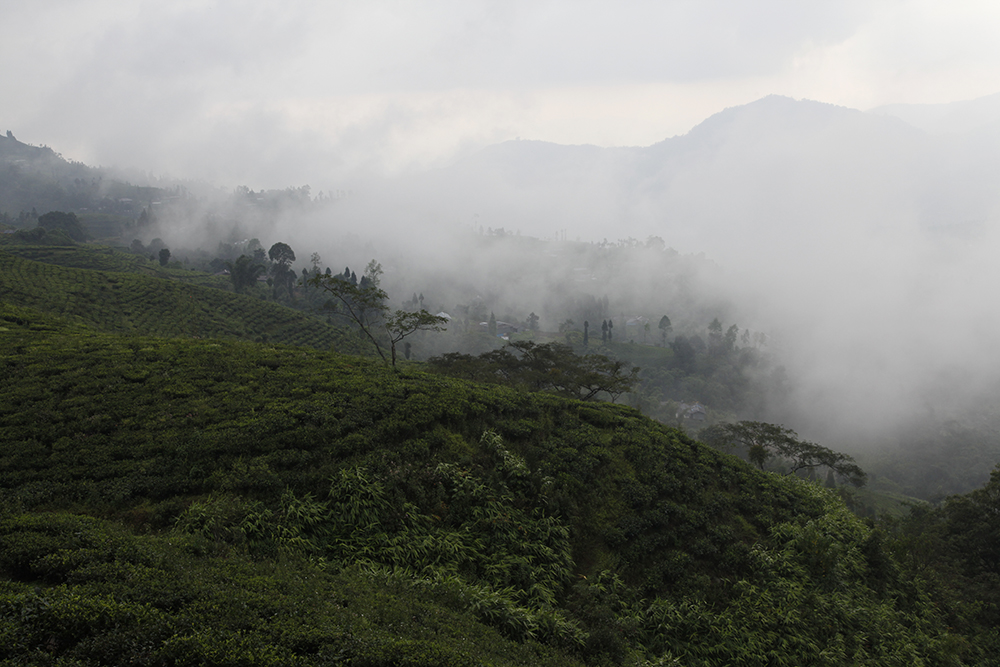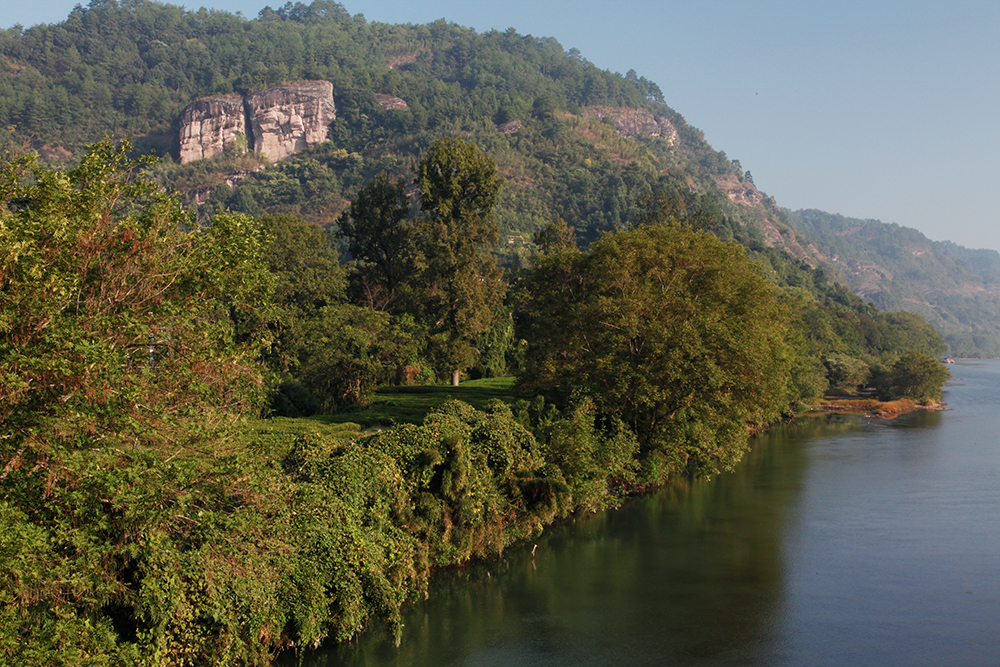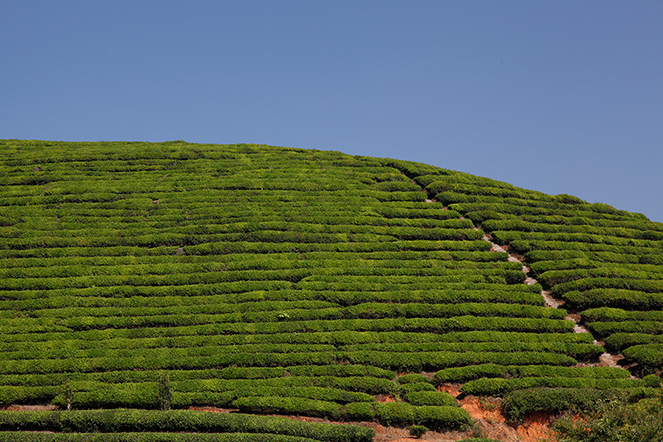
In China, Fujian is one of the most important tea-producing provinces. Important from a historical perspective, because the first shipments of teas bound for Europe left from its ports; important also in terms of the tea itself, because Fujian is the country’s only province that grows Oolongs and the legendary white teas, as well as green teas, black teas, smoked teas and the finest jasmine teas in the country. It’s an incredible variety.
A meeting with Daniel Rebert, pastry chef
There is nothing I enjoy more than thinking about what tea I will drink next. For me, the pleasure of tea begins as soon as I lift the lids from my canisters, inhale the scent of the leaves and decide which one is best suited to the moment, mood and season.
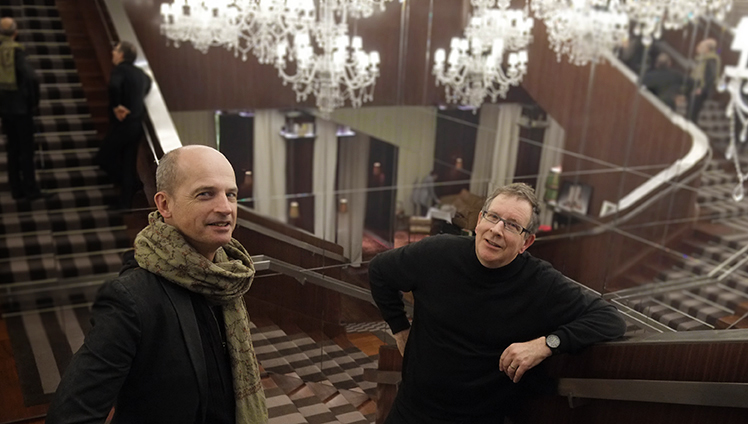
From time to time, this exercise moves beyond the close confines of the teapot, when considering which tea will go best with a particular food. A few days ago, the journalist Laura Annaert arranged a meeting between the well-known pâtissier Daniel Rebert and myself at the Royal Monceau Hotel in Paris. She wanted to listen to us both as we decided on suitable pairings between Daniel’s creations and my selection of fine teas. Together, we tasted a Butterfly of Taiwan, a Qimen Imperial and a Shiraore Kuki Hojicha at different temperatures. We compared the textures, the toasted and toothsome notes, and the aromas of leather, cocoa and wood, while enjoying delicious millefeuilles, biscuits and chocolates. It was a very fruitful discussion!
(photo: Victoire Avril)
A good year starts with a good bed
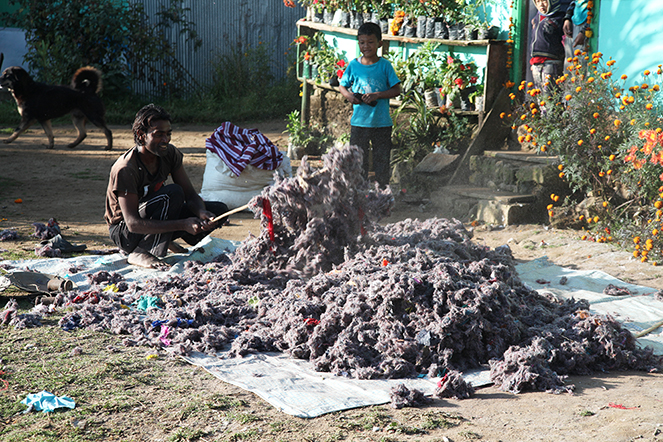
Travelling to far-away places introduces me to unknown occupations. It’s said we should air our beds from time to time, and that’s probably because we don’t have a mattress shaker. The man knocks at your door and you give him your bedding. He begins by unpicking the stitching; then, using a stick, he mixes up all the stuffing – raw cotton in this case – before placing it back in the mattress, which he stitches up again. All ready for a good night’s sleep.
School teaches us about freedom
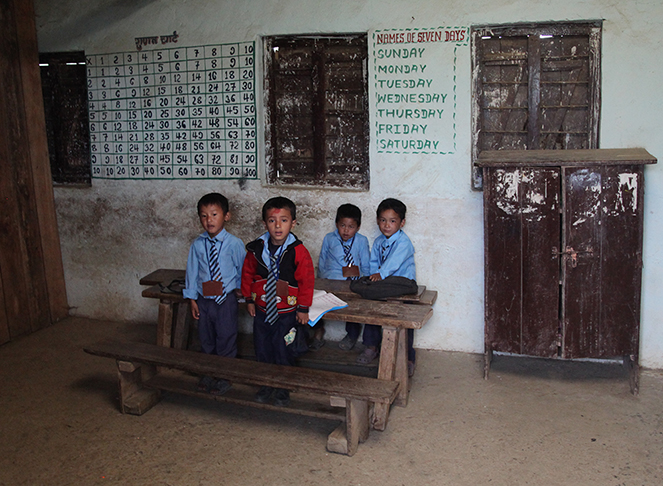
School is a place of learning: learning about knowledge, about language, but that’s not all. Learning about living life together, too. At school, we meet other children who might be different from ourselves, they might be stronger, weaker, richer, poorer, they might have a disability, they might have different opinions. They might come from a variety of backgrounds, they might have a different skin colour, a different religion. School is a place where we learn to live together. Language, tolerance and laughter helps form us as men and women.
Best wishes for 2015
Seeing in the new year can be an opportunity to celebrate, but also to take a look at oneself, to review the past year and make some resolutions. It can be good, sometimes, to look at the world with fresh eyes, to try and see the positive in things. It can be good to think how lucky we are, and to consider what we could do to make the world a better place tomorrow than it is today. I wish you a very Happy New Year, I hope you travel along some rewarding paths, and do some interesting and enjoyable things. I hope, whatever your age, that you have a good life ahead of you.
Gifts beneath a portrait in China
When I’m invited into farmers’ homes in China, I sometimes find myself confronted by Chairman Mao. I don’t know if he’s worshipped or idolised, but in any case, the offerings and lights are there, beneath his portrait that presides over the main living room. A divine Mao.
Tea and food pairing: Cantal Vieux and Bourgeon de Pu Er
I’ve already written about cheese, when I celebrated the pairing of a fresh goat’s cheese and a Premium Bao Zhong. Today I’m recommending another combination: a Cantal Vieux and a Bourgeon de Pu Er. The tea is infused hot, as usual, but it’s best to then let it cool and drink it at room temperature. This allows you to prepare your tea a few hours before the meal, keeping it in your teapot. To serve, I suggest a small clear carafe and liqueur glasses. Your guests will be amazed! I’m sure they’ll appreciate the richness of this accord, the balance and harmony between the woody, undergrowth and animal notes of the Pu Er and the notes of the Cantal Vieux.
A characteristic of Nepal
Yaad Bahadur Limbu, “tea father” of Soyam
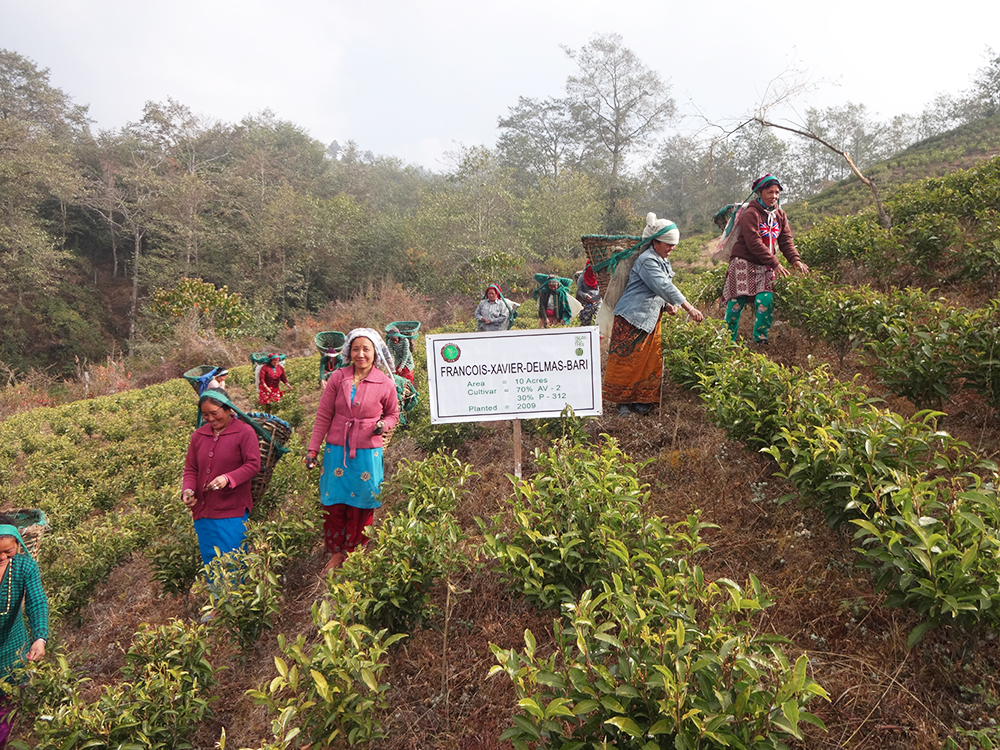
In his village of Soyam, Yaad Bahadur Limbu is known as the “tea father”. He was the first to plant tea in the village, and today, tea is its main source of income. Everyone is involved. To reach Soyam, you must cross a suspension bridge and then climb for several hours. You pass terraced rice paddies and fields of millet, and cross farmyards. When Soyam’s villagers harvest the tea leaves, they are transported on horseback. This requires four or five horses. They take the same path as the one that had me huffing and puffing, and they cross the same suspension bridge. Each horse wears a pack saddle allowing it to carry a load of 100 kilos. The caravan takes five hours to reach the factory, and must return to the village the same evening. It is a long expedition.
The Margaret’s Hope garden celebrates its 150th anniversary
This week, the Margaret’s Hope garden celebrates its 150th anniversary, and I am invited to the event. It’s an opportunity for me to remind you that tea was only introduced to India very late, in the mid-19th century. It was the British who set up the tea plantations in the country, after stealing the seeds of tea plants from China.
Margaret’s Hope makes teas that are sometimes exceptional, such as Margaret’s Hope DJ40 Moonlight, and Margaret’s Hope DJ219 Pure Av2. They are two fine teas from 2014 that I hope will be back next year.