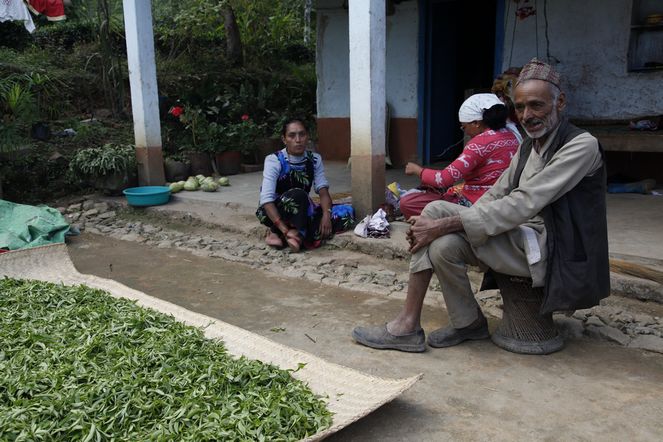
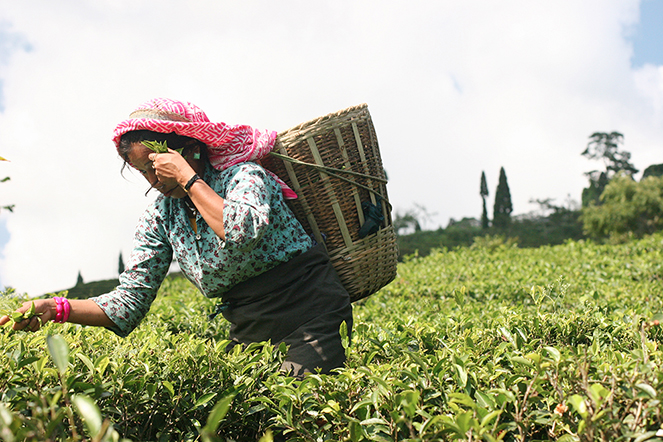
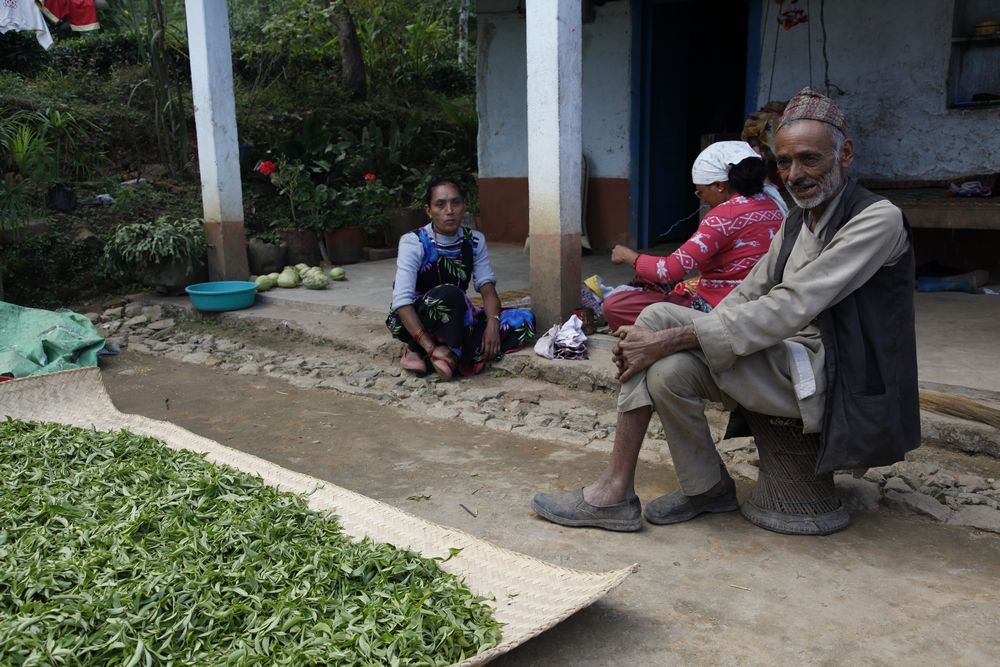
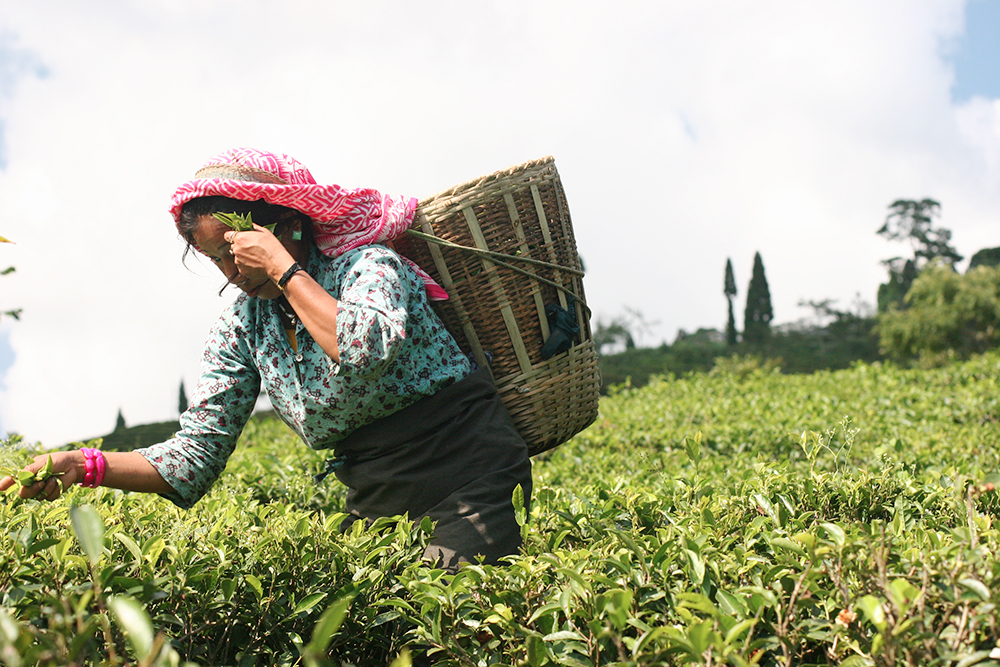
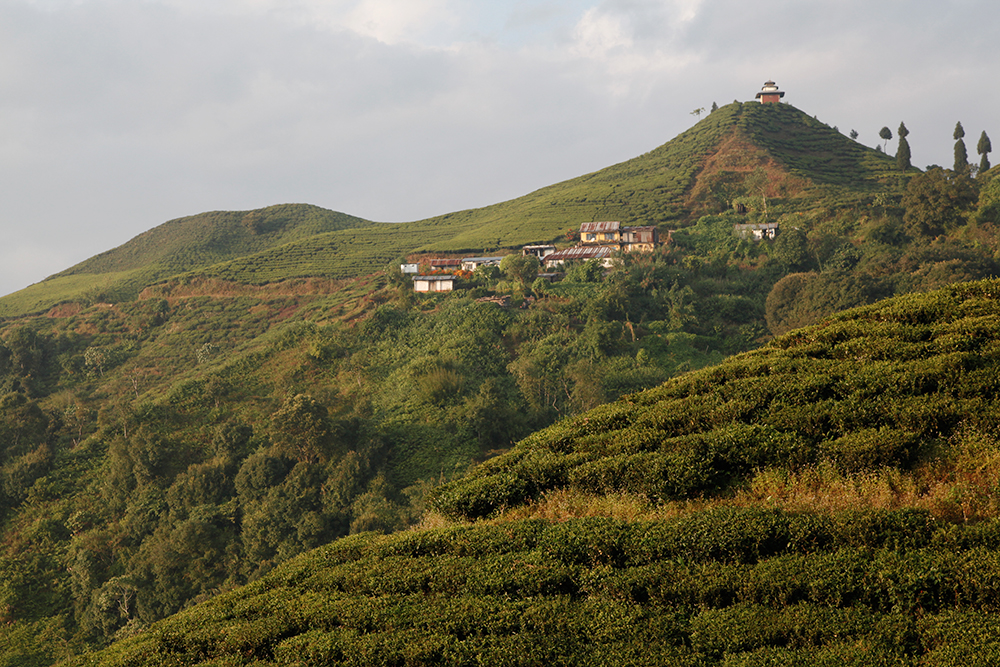
Nowadays, the main problem facing Nepalese tea producers is a labour shortage. A significant portion of the population has left to find work in the Gulf countries or in Malaysia. This means the tea is only plucked once a fortnight on some mountains, which compromises its quality. Luckily, the plantations that produce the best teas are less affected. This problem does not only concern tea. The whole of the country’s manufacturing and farming sectors have been hit too.
Andrew Gardner: passionate about supporting Nepalese teas
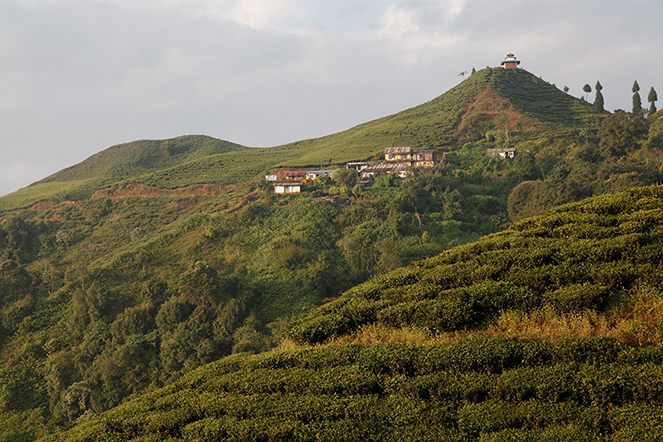
I have just returned from Nepal, where I had the opportunity to spend several days with my friend Andrew Gardner, who came to join me in Ilam valley. He had planned a four-hour walk for me, to reach a village of small producers. Andrew has worked on several plantations, but you could say he was the first to make very good teas in Nepal. We owe the renaissance of tea in the country to him. He started by working at Jun Chiyabari, and he is now applying his talents at Guranse. He’s passionate about what he does.
Nepal: exceptional teas and scenery
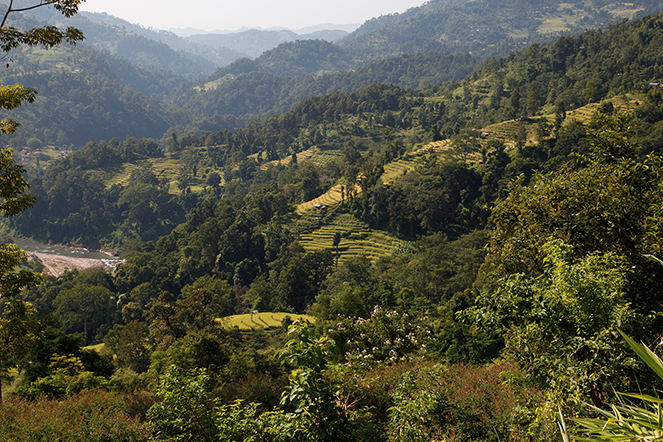
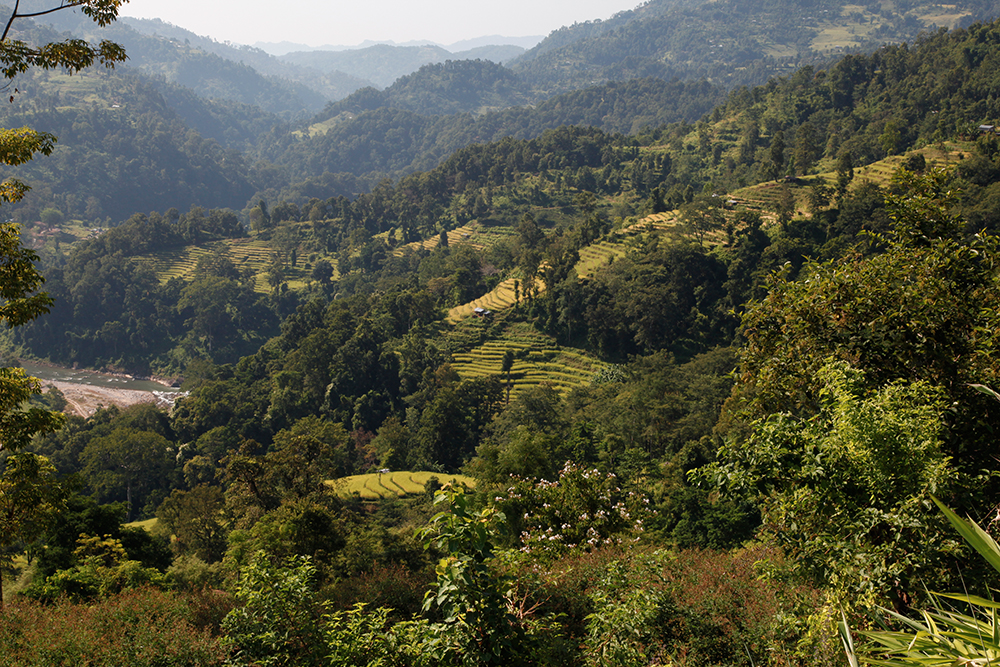
Nepal produces some very fine teas, but so few people know about them! You have to travel for hours, and sometimes walk, to reach the mountains where the tea is grown. On the way I admire the scenery, with the paddy fields carved into terraces. The farmers work using the old methods, with the help of a buffalo. Life passes slowly. You listen to the birds sing. They announce the harvest time.
Rock tea: a mysterious name
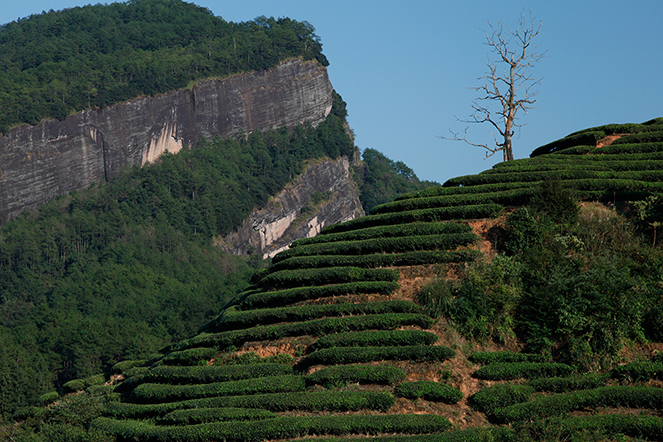
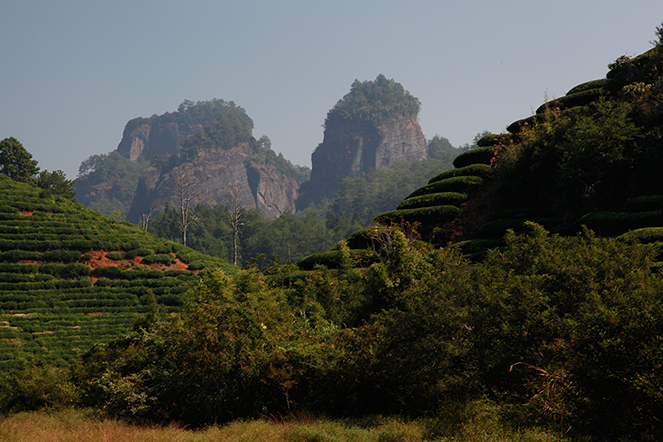
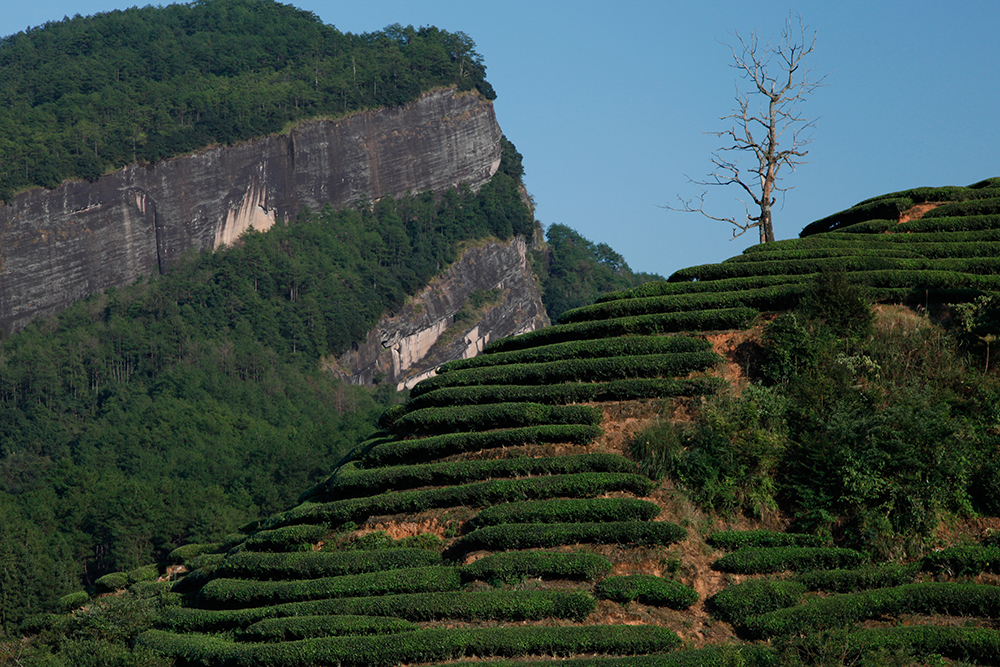
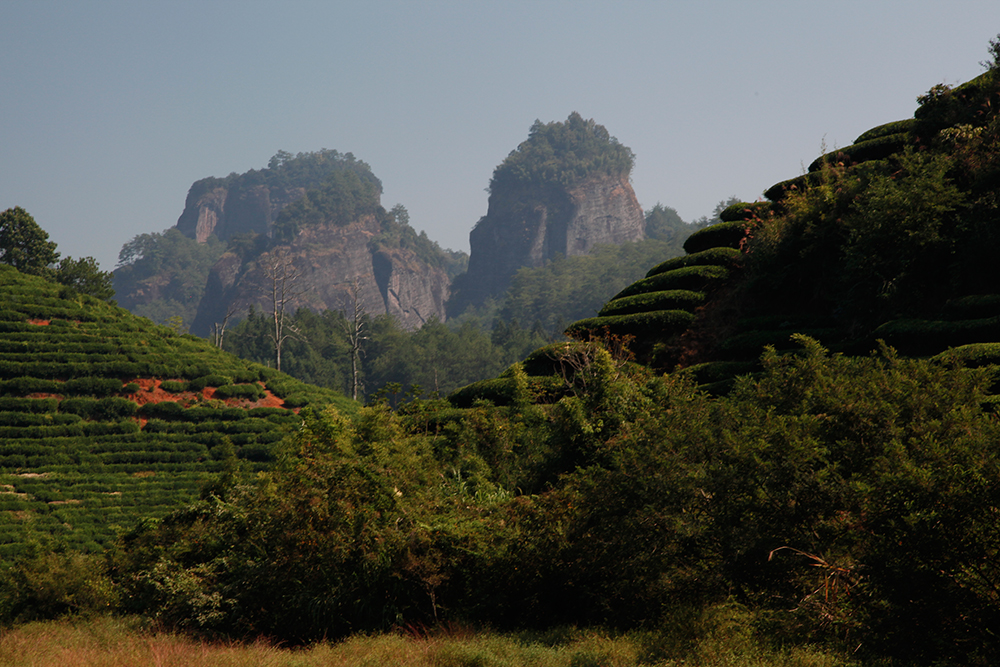
Last week I wrote about “rock teas”, because I had just returned from that region of China. When you ask local farmers where the name comes from, some talk about the fact that the tea must be rocked at a particular stage during the processing. But others draw an analogy between the tea’s smooth flavour, its minerality and strength, and the amazing rocks around which the camellias grow.
Da Hong Pao: a legendary oolong
In China there is a very famous group of teas called “rock teas”. These semi-oxidised teas come from Wu Yi Shan, a mountain range in the north of Fujian province. The best known is Da Hong Pao. You have to taste it at least once in your life to realise what an exceptional tea this is. It has a rare strength and length in the mouth, yet remains subtle. It is fruity, toasted, woody and sweet at the same time.
The origins of “lapsang souchong”
Calling all smoked teas connoisseurs! It is here, in a Chinese regional park in the north of Fujian province, that all lapsang souchongs were produced for two hundred years. The origins of this tea date back to the 19th century, when a high-ranking Chinese army officer requisitioned the tea factory that stood here before this one, to house his regiment, leaving the farmer no choice but to dry his tea outside, over burning spruce roots. Which is how smoked tea came about.
Japanese shadows
For anyone interested in Japan, I recommend reading “In Praise of Shadows” by Junichiro Tanizaki. The author invites us not to view Japan through western eyes, but to take a wider perspective on what we call technical progress. He teaches us, beautifully, to look at the interior of a house. He talks about rays of sunshine that we in the West love to allow into our homes, while in Japan, they filter the light. This gives it a diffuse quality, rather than flooding everything with its intensity. It creates shadows, and gives things and people intimacy and mystery.
A morning in Kyoto
There are different ways to start the day. You can get up and get straight down to work, taking refuge in activity. You can also take time to observe nature, to contemplate a corner of our beautiful planet. To admire its beauty, the colours of a sunrise, the singing of a bird, the smell of damp earth. This morning, in Kyoto, I took a few steps out onto the balcony, I sat down on the little bridge that extends out from it, and spent a long time rejoicing in the presence of these beautiful carps.
An isolated farm at the end of the world
During my childhood, I spent every summer in Brittany, on a small island without running water or electricity. I learnt to economise on resources. So I don’t feel out of place when I find myself at the end of the world, on a fairly isolated farm with no mod cons. I feel good. I don’t miss anything, other than what is superfluous.
A time to talk with bloggers
I love spending time with tea producers, but I also really enjoy talking to our customers or, as I did this week at our Rue Vieille-du-Temple store, with bloggers who had come to discover and taste our latest creations: Les Jardins. I spoke about how gardens were a source of inspiration; the joy of walking through a favourite garden in different seasons; how these new infusions can be enjoyed hot, at room temperature, or iced. Of course, we also talked about “grand cru” teas, and food too.