Contemplation and calm

17 April 2026
Slider


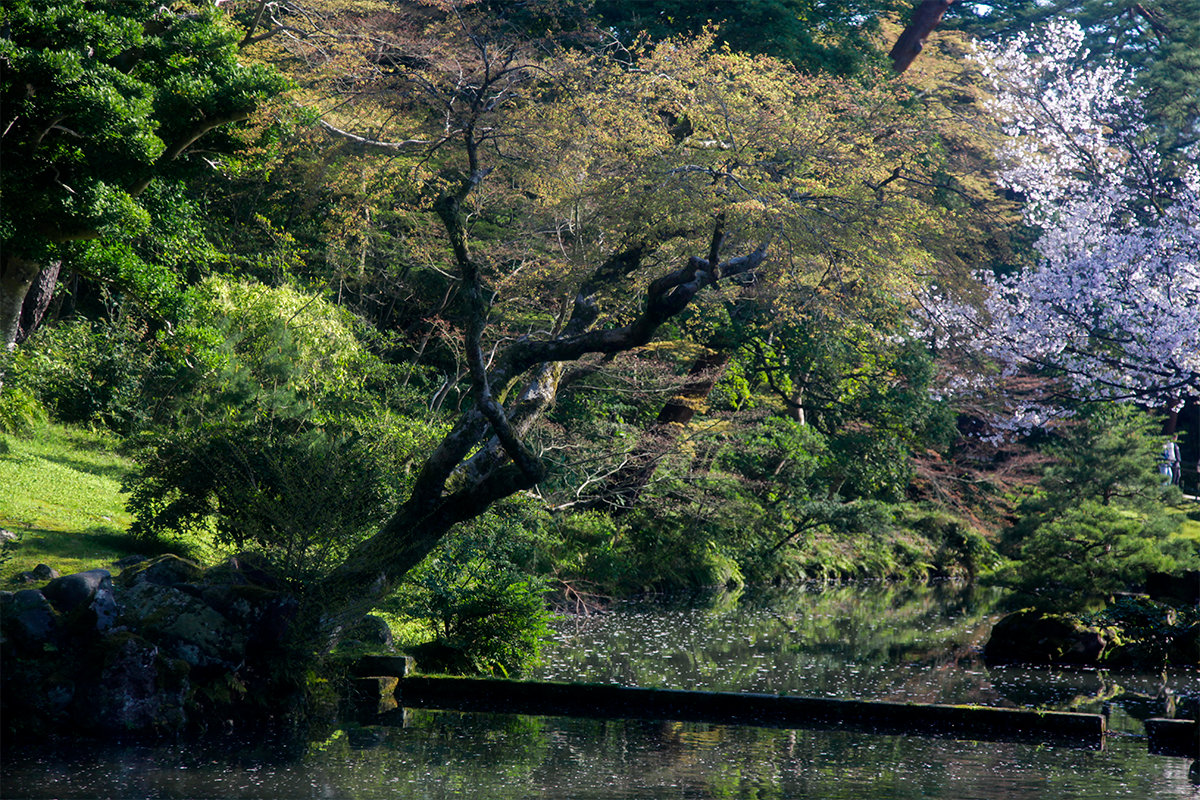
In Japan, with cherry blossom season in full swing, it’s a time for contemplation. People travel from far and wide to admire the trees covered in blooms and take selfies or simply enjoy a picnic beneath a canopy of pink or white petals. This love of nature at its most fleeting naturally brings to mind the saying ichi-go ichi-e, which is an invitation to focus on the present moment, to understand and accept the transience of existence. This precept forms an essential part of understanding cha no yu, the Japanese name for the tea ceremony.

This contemplation of cherry blossom evokes tea in another way. When you ask a tea enthusiast what tea means to them, what it gives them, the word that comes up most often is a sense of “calm”. Tea soothes us – in the same way that we are soothed by this silent, joyful, blissful contemplation of cherry blossom, by scenes of delicate beauty, like here in Kenroku-en in Kanazawa, one of Japan’s most celebrated gardens.

Share on Facebook. Tweet this!

A legendary tea

2 April 2026
Slider


Harvesting of the legendary Darjeeling teas begins every year in early March. But what makes Darjeeling so special? It is grown on vast estates that were planted by the British in the mid-19th century – an epic endeavour that left an indelible mark on two countries. The grand saga of the East India Company wrote a page not only in Great Britain’s history, but India’s too. The breathtaking views across stunning landscapes on the roof of the world have helped to create the legend of this exceptional tea, which grows in a unique climate. Harsh winters transition to early summers, which quickly give way to torrential rains until the arrival of a sunny autumn. The camellia thrives on these high slopes, where the acidic, well-drained soil suits it perfectly.

Thousands of men and women (mostly women) pick the most tender shoots, which fetch high prices, despite the fact that working conditions have improved little over the years. If labour shortages continue, they could one day jeopardise the future of the appellation.

Share on Facebook. Tweet this!

Fair wages

20 March 2026
Slider


Picking tea by hand is labour-intensive, and the question of how to fairly compensate tea pickers concerns everyone. Some teas sell at high prices that can cover fair pay for everyone involved in their production. Other teas, however, are worth almost nothing when they leave the factory. So how can those involved in the production chain be fairly compensated? I am thinking of industrially manufactured teas, of course – the kind that end up as dust at the bottom of a paper teabag.
There are industrial teas and artisanal teas. Some teas are produced using mechanical processes, while others require expertise and manual labour. The latter can cover fair pay, though this should be verified by visiting the sites in person. These artisanal teas not only provide fair compensation, they can also instil pride in those who craft them.
We all have the opportunity to reflect on our consumption habits, and we can each play a part in ensuring that every tea picker is happy.

Share on Facebook. Tweet this!

Stand-out shoots

6 March 2026
Slider


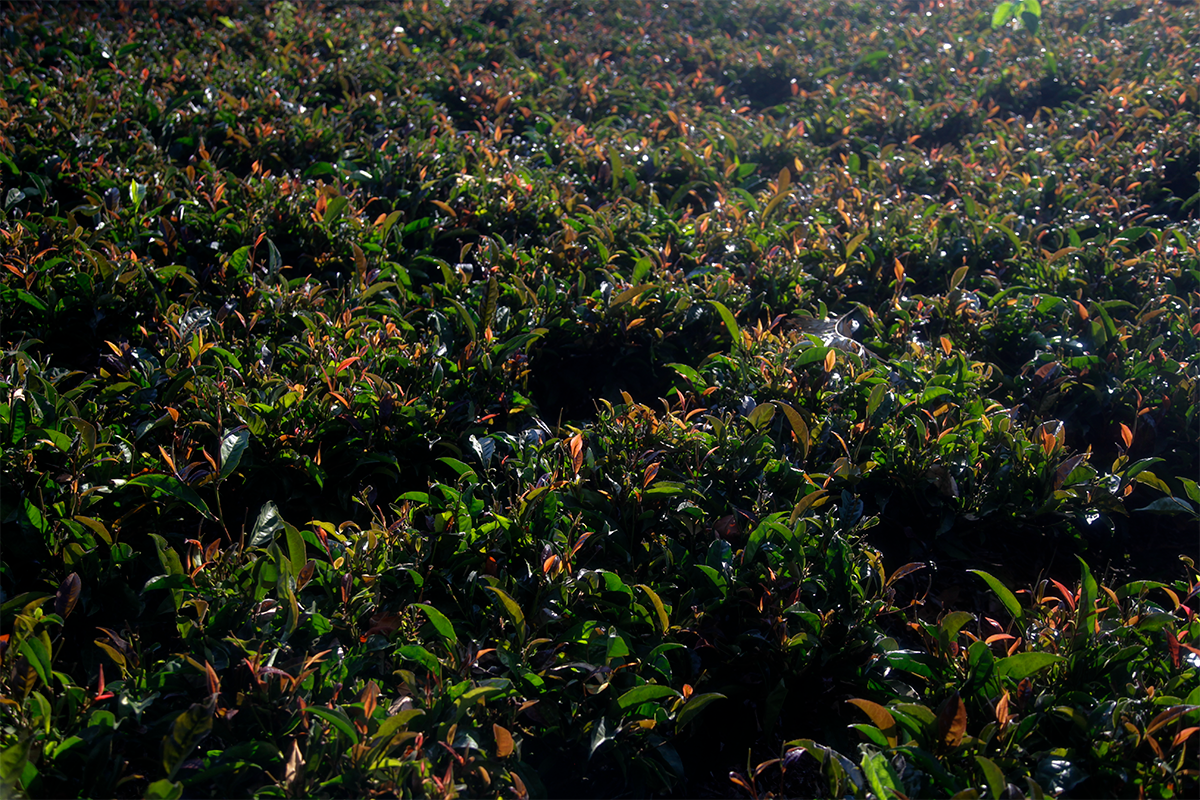
Kenya’s famous purple tea, developed by the country’s largest tea research centre, is characterised by its contrasting foliage. While the older leaves retain the familiar green colour of camellias, the new shoots have a distinctive purple hue. This makes picking easier, as only the reddish tips, which are the most tender, should be harvested.

Share on Facebook. Tweet this!

Des pousses identifiables


Slider


Au Kenya, le fameux cépage violet qui a été mis au point par le plus important centre de recherche du pays se caractérise par un feuillage contrasté. Si les feuilles plus anciennes conservent la couleur verte familière aux camélias, les pousses, en revanche, épousent une teinte pourpre facilement reconnaissable. Le travail de cueillette s’en trouve facilité et seules ces extrémités d’aspect rougeâtre, les plus tendres, doivent être récoltées.

Share on Facebook. Tweet this!

Kenya, an unsung champion

20 February 2026
Slider


Kenya is the world’s leading tea exporter. Although China and India produce more, both countries consume a significant proportion of their own tea, unlike Kenya. The East African country’s soil, climate and altitude are ideal for Camellia sinensis, which is why the British introduced the crop there in the early 20th century. Today, tea represents a significant portion of Kenya’s resources. But who knows about Kenya’s tea? Most of it is industrially produced CTC (crush, tear, curl) and is found in paper tea bags, usually in blends of different origins, which is why the production country is not mentioned on the packaging. However, Kenya has a bright future ahead of it, provided it focuses on the superb high-altitude teas, which are harvested by hand and processed using the orthodox method. These teas could generate much more income and pride for the people who make their living from this crop. We must rigorously select the finest batches, support the farmers, introduce them to new techniques, encourage their creativity, and do everything we can to make consumers aware of this unjustly overlooked tea-producing region.

Share on Facebook. Tweet this!

Purple tea is a source of pride for Kenya

6 February 2026
Slider


Purple tea is part of Kenya’s identity. The colour refers to the tea variety rather than the way the leaves are processed. The cultivar is easy to spot while walking through the tea fields (seen here in the background). It is rich in anthocyanin, a natural pigment and an excellent source of antioxidants. Developed by Kenyan researchers, the cultivar is known as TRFK 306/1. After harvesting, the leaves can undergo the same processing as green, black, white or semi-oxidised tea, depending on the farmer’s preferences and expertise.

Share on Facebook. Tweet this!

The tea route

28 November 2025
Slider

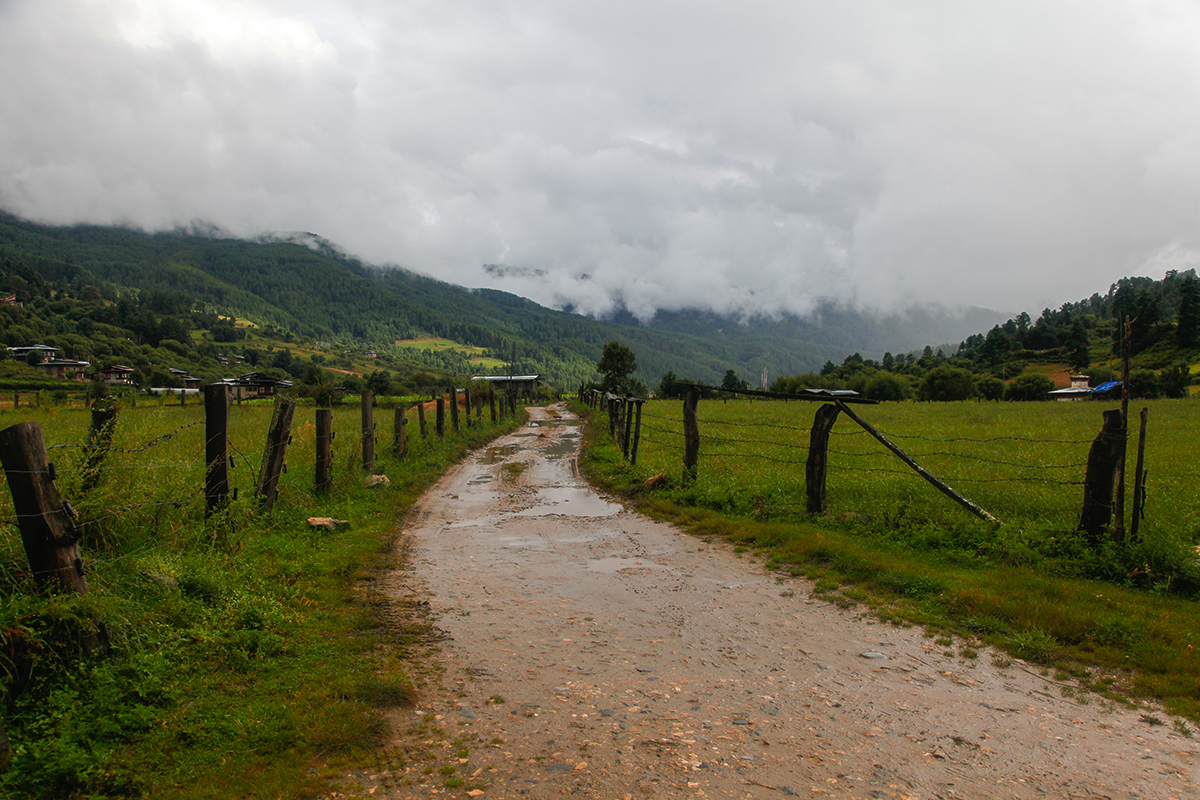
Tea is more than a drink; it’s a way of life, a journey and a path. There is no need to hurry. Take your time to look around you. The path we travel on our tea journey is part of the experience, as it leads us to the top of a mountain. It invites contemplation. To understand tea, you must understand the path that leads to it. You have to want to explore it and to get to know everything about it. The road to tea teaches us about tea itself: its inaccessibility, its climate and soil, even its flavours. As we observe the path and the landscape, tea reveals itself to us. En route to Trongsa in the Black Mountains of Bhutan, I pause to gaze in awe at the wetlands of Phobjikha Valley. If I wait a few days, the black-necked cranes will appear in the sky as they do every year, returning to settle here at the end of their long migration. They follow the same route every year, flying south from Tibet to escape the cold. Professional and amateur ornithologists await their arrival, counting them to ensure they are all present. My tea route crosses the path of those black-necked cranes. Tea shows us different landscapes and phenomena. It is the end of September, and the cranes will arrive in a few days. I wait, and watch for them.

Share on Facebook. Tweet this!

A new book on tea

14 November 2025
previous arrow
next arrow
Slider

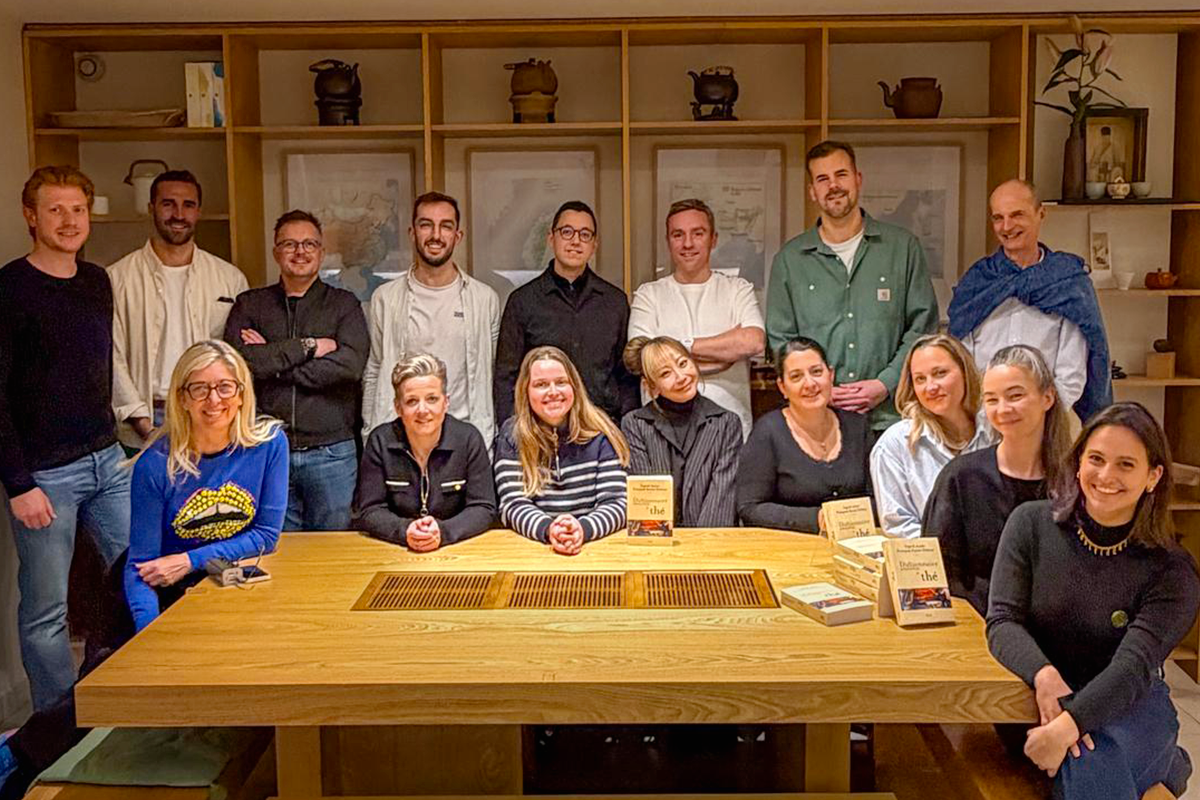
For twenty years, I’ve dreamed of adding the subject of tea to Plon’s “Dictionnaire Amoureux” collection – and now I’ve done it! (Translator’s note: this French series of essay-style “lover’s dictionaries” covers a variety of topics from the perspective of passionate specialists.) The publisher wanted a pair of authors to offer two different viewpoints, so I suggested my friend Ingrid, who agreed to write the book with me.
Tea is a journey, a horizon, a form of literature. It is the perfect partner for the silence of writing, the colour of ink and dreams, the inner world of the imagination. Tea takes us by the hand, touches our hearts and elevates our lives. It sets the pace yet stretches out the moment. Tea and writing dance together throughout life in a series of shifting embraces. In this Dictionnaire Amoureux du Thé, the word amoureux is key, as it evokes the passionate impulses in us all. Ingrid and I write about tea’s important role in our lives, while Ingrid’s beautiful illustrations perfectly complement the text.

© Guillaume Czerw

Share on Facebook. Tweet this!

Tea in Bhutan

31 October 2025
previous arrow
next arrow
Slider

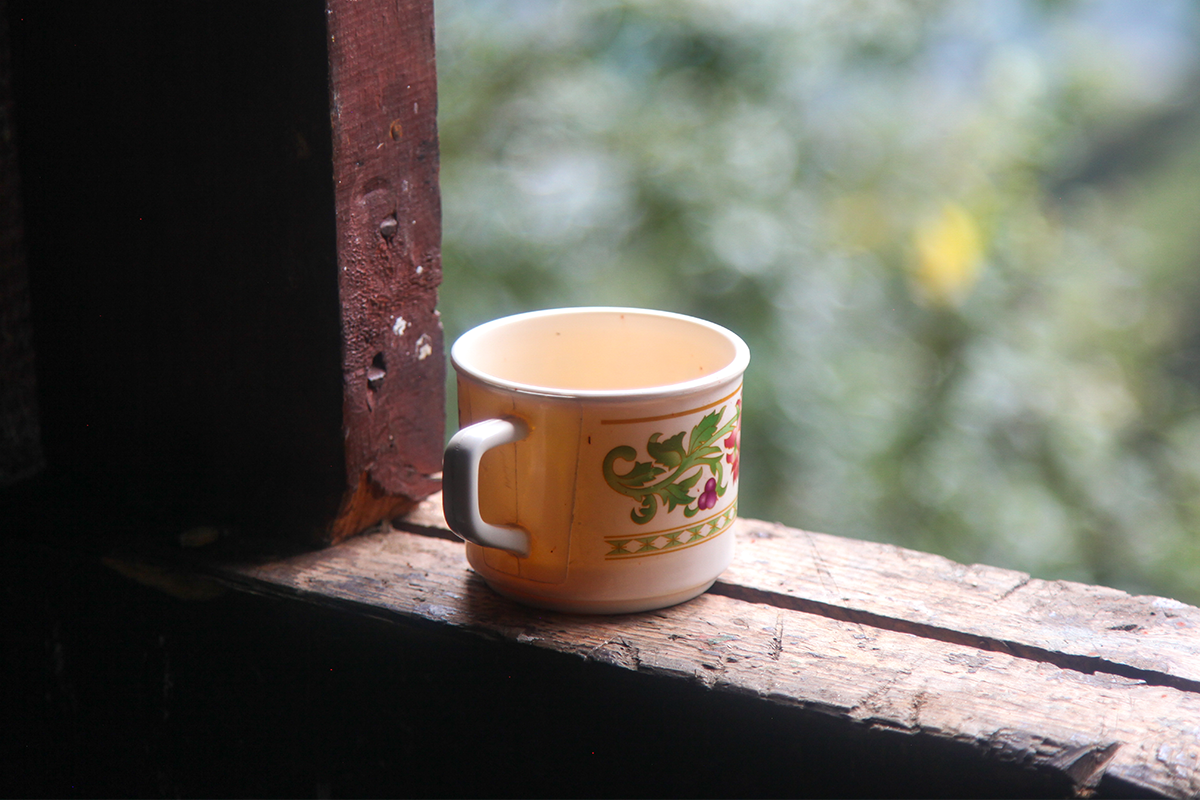
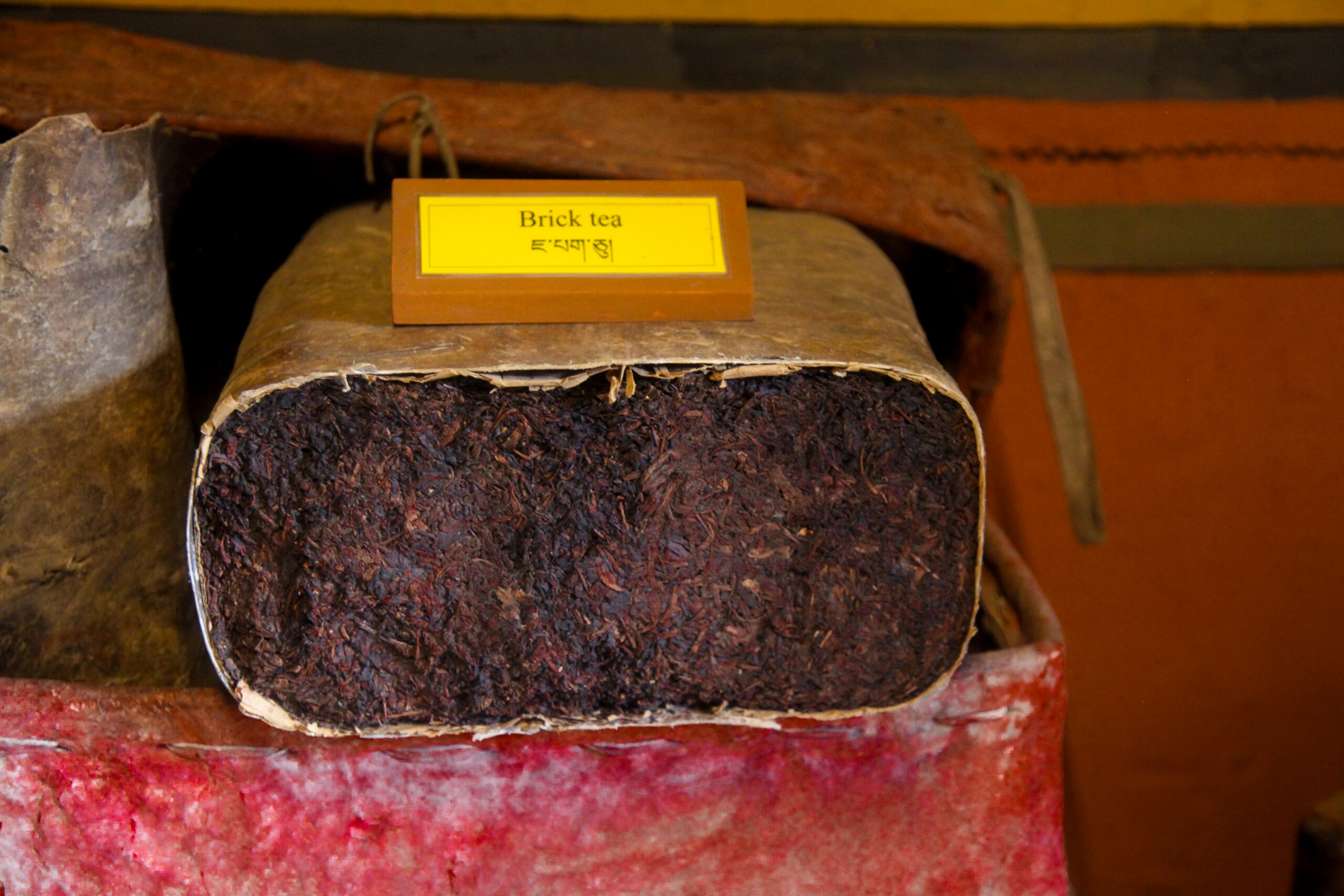
People in Bhutan have always drunk tea brought in from Tibet and China by yak. However, just under twenty years ago, following a visit from a young South Korean agronomist, two large tea plantations were established in the village of Samcholing in central Bhutan. Thanks to this expert’s advice, green tea is now cultivated at altitudes of over 1,800 metres, producing teas that resemble those from South Korea in their smooth, vegetal intensity. A few years later, a Thai enthusiast introduced the production of black and semi-oxidised teas to the region. In Samcholing, all the tea plants are grown from seed, and around forty farmers now belong to the cooperative. Rinchen and her husband Kinzang, who lead the group, dream that the region’s teas will one day rival the finest in the world and that tea plants will gradually cover the surrounding mountain slopes. Not far away,  a young woman named Denchen, helped by her mother, sells teas of various colours with the support of rural development charities. The overall volumes are modest: the annual production of these two entities amounts to barely two tonnes. Palais des Thés is proud to be the leading foreign importer and is on a mission to promote Bhutanese tea in France and around the world – a challenge it relishes.

Share on Facebook. Tweet this!