Cooked Pu Erhs: an autumnal palette

29 September 2017
Cooked Pu Erhs: an autumnal palette

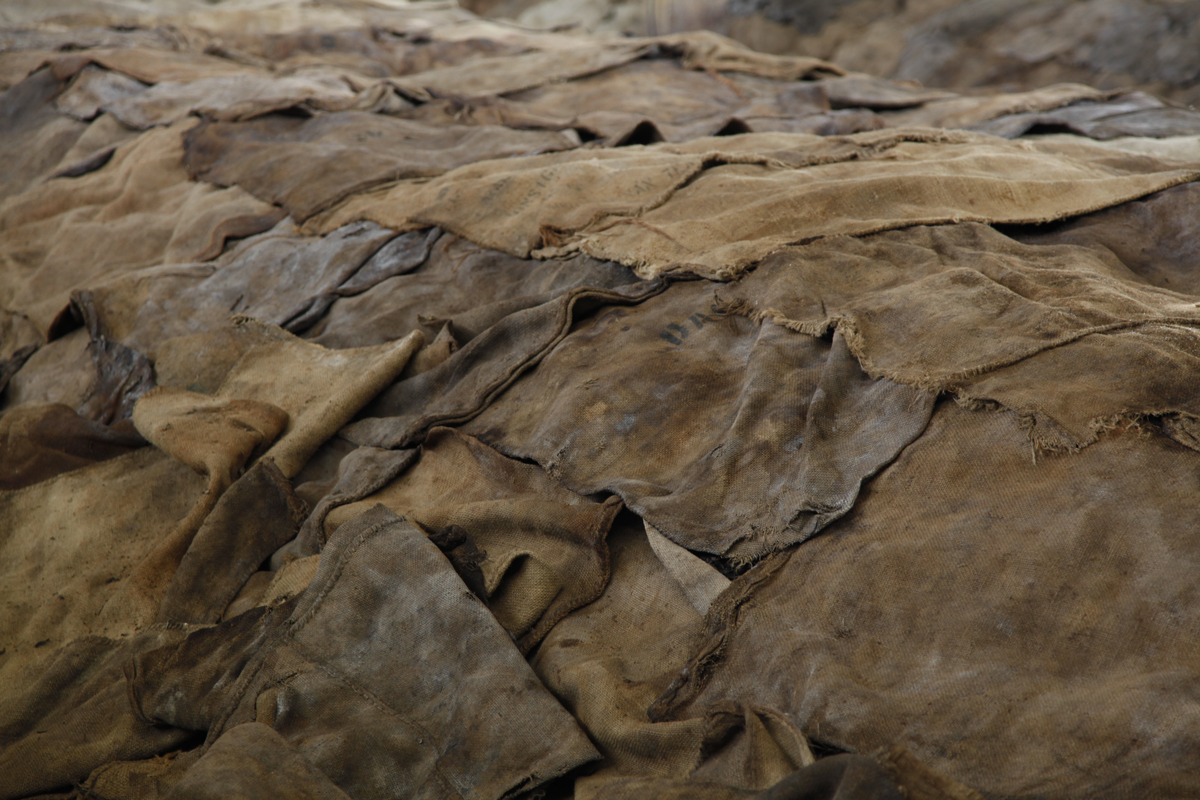
What possible connection could there be between these tattered old cloths and tea? Simple: these thick cloths are used to cover piles of tea leaves, keeping the oxygen out. In the damp, dark environment, the tea will ferment. This is a crucial step in processing cooked pu erh teas. Every day, someone will check the temperature of the leaves, letting in a bit of air if they get too warm. They will also dampen the leaves several times over the forty days or so of ripening, covering them again immediately each time.  In the cup, cooked pu erh teas develop notes of wood, undergrowth, caves, damp earth, straw, humus, leather, and liquorice, and it makes me smile to think that these cloths with their shades of brown express the same sense of autumn as the scent bouquet of the teas they cover.


Share on Facebook. Tweet this!

Head in the clouds

22 September 2017
Head in the clouds

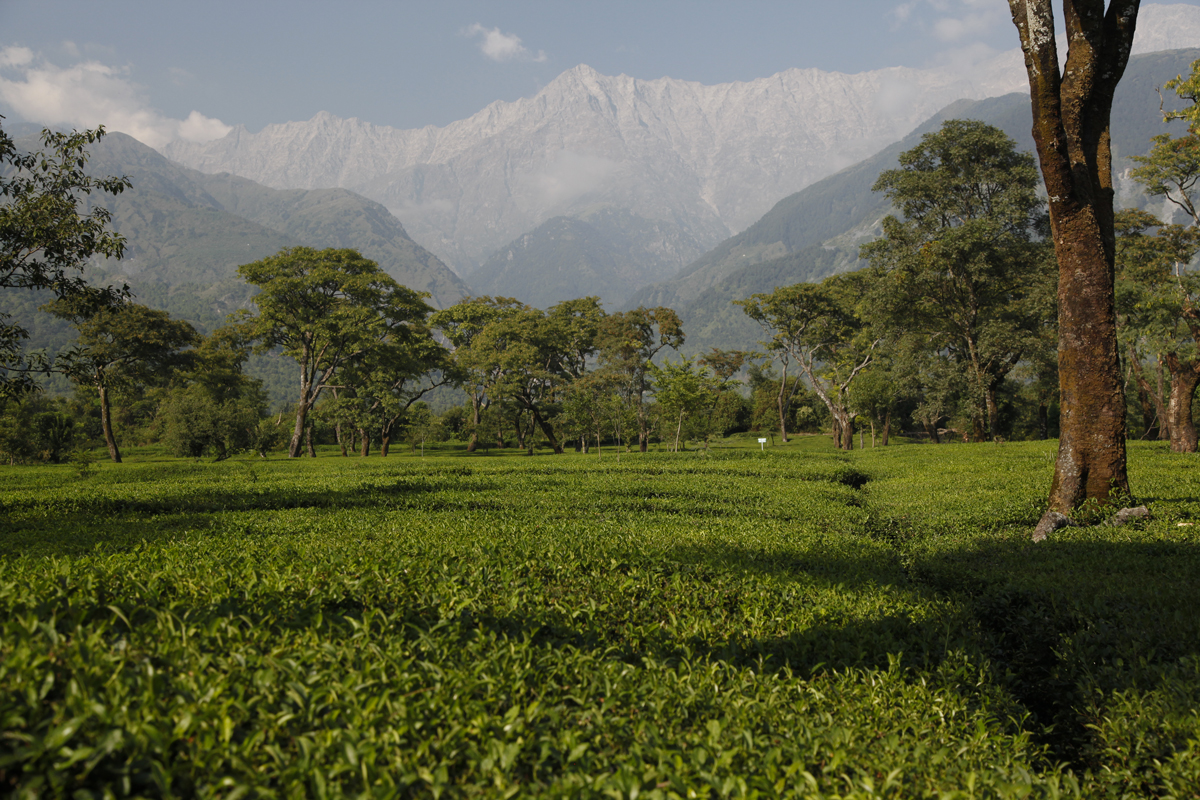
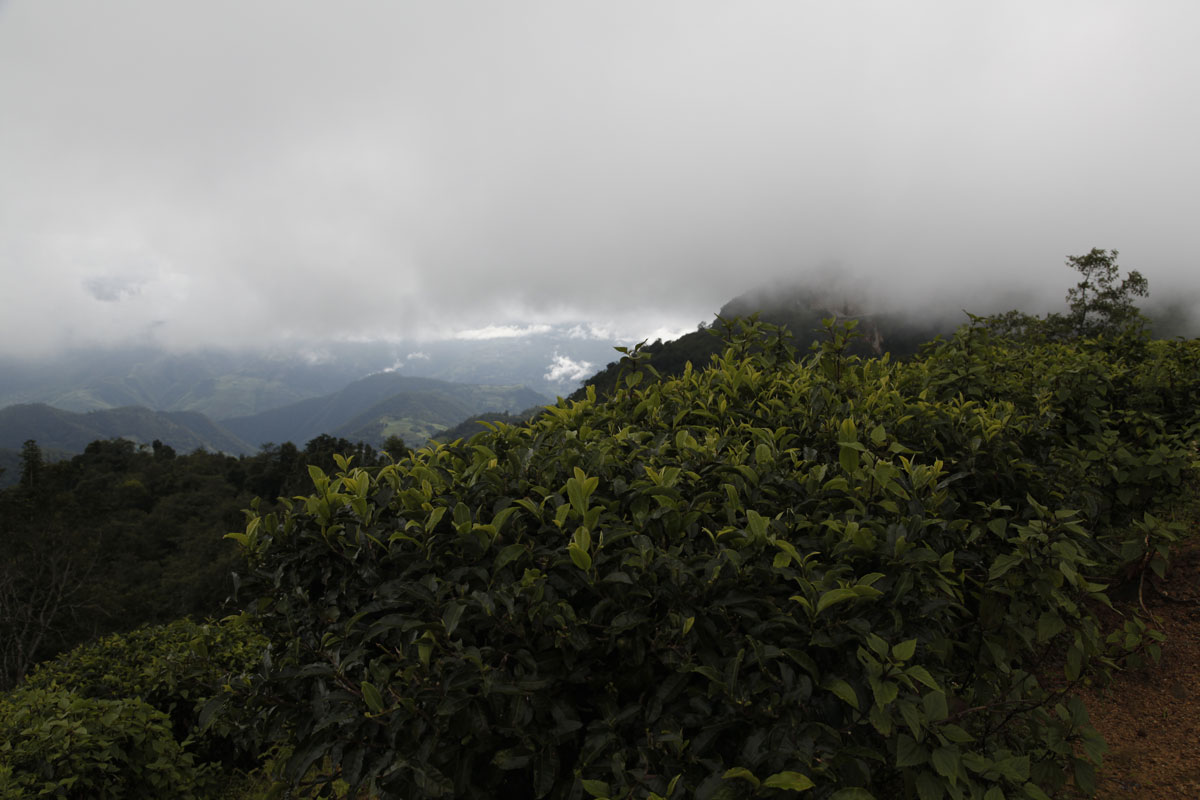
The mountains covered with tea plants rise so high and the clouds sometimes fall so low that there is no room left for the sky. The clouds cover the green blanket of tea plants with mist, envelop them in a layer of cotton wool, caress them, and then disappear. I could stay for hours, in each tea field I walk through, contemplating the beauty of the landscape. And the more I climb, the greater the reward. Tea doesn’t grow above 2,000 to 2,200 metres, but at those altitudes the views are breathtaking. If the mist lets you see them.

Share on Facebook. Tweet this!

Make tea not war

15 September 2017
Make tea not war

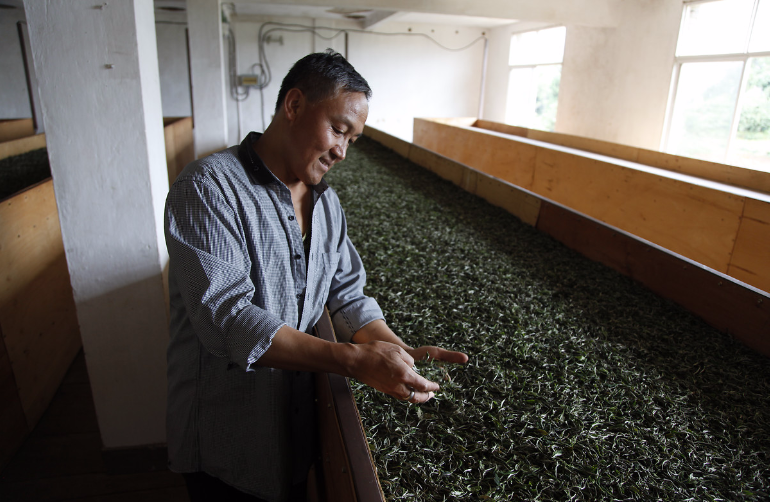
I got to know Xuan Dong Wu this summer. I met him in the Ming De factory he manages and where, that day, he was overseeing the withering of the tea leaves with the greatest attention. Xuan Dong Wu loves his job. He has not always been in the tea business. He started out in the army, and fought in the Sino-Vietnamese War in the early 1980s. He then returned to the village where he was born, and where tea provides the majority of work. He makes white teas, pu erhs, and black teas that are considered the best in Yunnan. He likes to introduce new ideas, and is responsible for several of our Mao Chas, the intermediate teas used to made Pu Erh. Xuan Dong Wu is a shy man, and didn’t say much when I asked him what he wanted me to write about him here. He simply told me about his life, and what he likes. He said he likes making tea with his heart and with his efforts, he said he wanted to do his best and make the best teas possible. And then he plunged his hands back into the withering leaves, and didn’t take his eyes off them. 

Share on Facebook. Tweet this!

Rolling Mao Cha

8 September 2017
Rolling Mao Cha

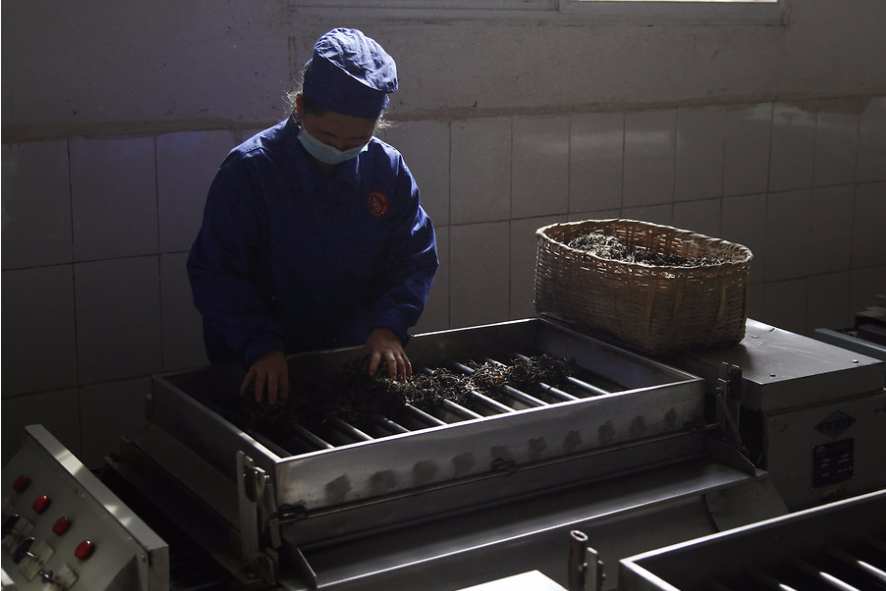
Mao Cha – the raw tea from which Pu Erh is made – increasingly undergoes a rolling stage. Right after the leaves have been withered then heated in a wok, they are placed in a machine that shakes them from side to side, rapidly and regularly. The leaves hit the vertical sides and gradually their shape changes – they curl up gently lengthwise.  Rolling takes place with most teas, it shapes the leaves. With green teas, for example, it breaks down the cells and releases the aroma compounds that oxidise or ferment.

Share on Facebook. Tweet this!

Tea and style

1 September 2017
Tea and style

It’s true that preparing tea consists simply of placing tea leaves in contact with water, an encounter that produces a delicate, fragrant drink. The process can be more or less straightforward, more or less delicate. In China, in the space of barely 20 years, preparing tea using the gong fu method, which must be done slowly and with self-control, has become incredibly popular. It is often young women who perform the task. They are always elegant, and every movement is precise. You watch in admiration as their agile fingers trace beautiful flowing arcs in the air before depositing a few drops of the precious nectar in your tiny cup.

Share on Facebook. Tweet this!

Les 4 étapes du mao cha

25 August 2017
Les 4 étapes du mao cha

La fabrication d’un mao cha se fait en 4 étapes. Rappelons tout d’abord que l’on nomme mao cha le thé qui va servir à fabriquer un pu erh, que celui-ci soit cru ou bien cuit. Précisons également que la façon de faire le mao cha a évolué avec le temps.  Un simple flétrissage suivi d’un séchage au soleil est devenu plus complexe au gré des modes et de l’engouement incroyable des Chinois pour leurs thés sombres. Aujourd’hui, voilà comment cela se passe. Après avoir récolté les feuilles, on les laisse se flétrir durant environ 2 heures. Puis on fixe les feuilles au wok (photo) à 200 degrés durant environ 30 minutes. Ensuite, on va rouler les feuilles durant 10 minutes avant de les laisser sécher toute la journée au soleil. En théorie, le mao cha est destiné à être compressé, mais il n’est pas interdit de le déguster tel quel et de savourer ses notes minérales, fruitées, végétales et animales.


Share on Facebook. Tweet this!

The situation is dangerous in Darjeeling

18 August 2017
The situation is dangerous in Darjeeling

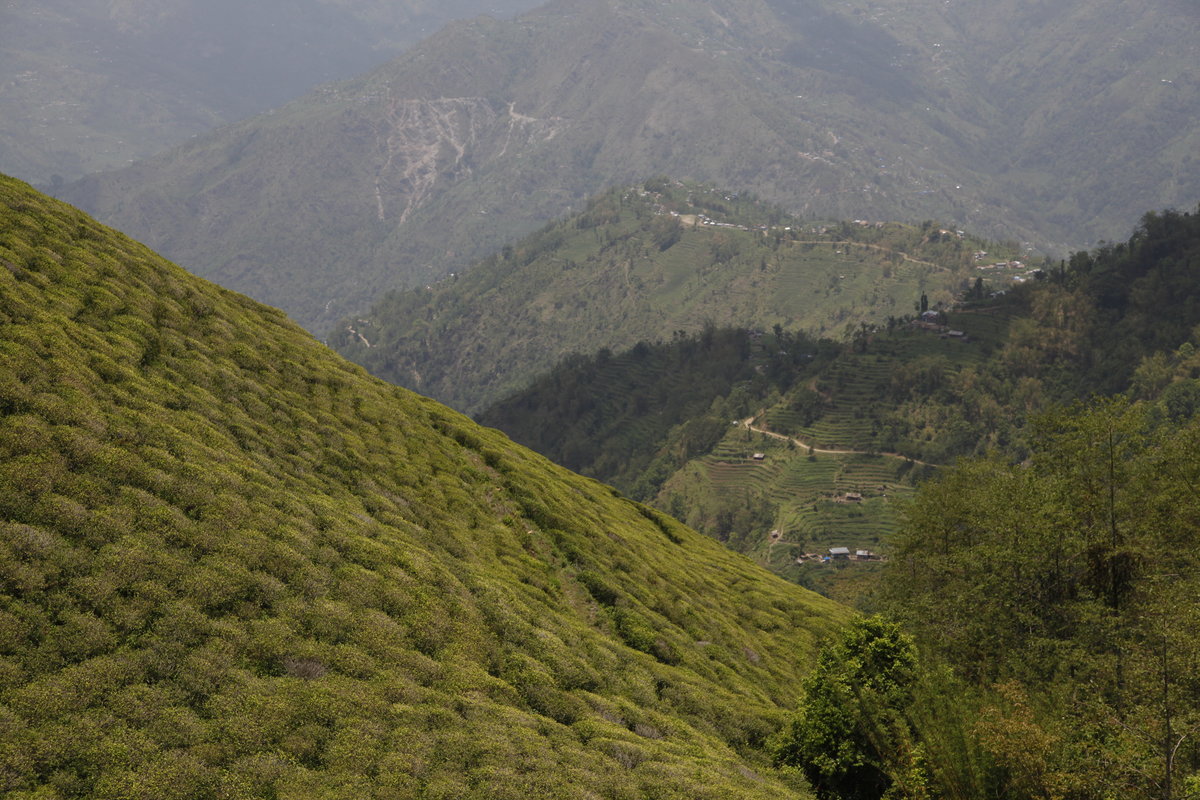
The situation in Darjeeling has become dangerous. All the shops have shut, the hotels have closed, the roads are blocked. Work has ground to a halt on the tea plantations. It has been like this for 70 days. We are facing a major shortage. Worse, clashes with the army have left some dead. I don’t know if a political solution will be reached between the central government, the leaders of West Bengal and the separatists. I don’t know if demands to create a new state, Gorkhaland, within the Union of India, will lead to anything. What I do know is that the plantations are under threat and that it will take several weeks to get back to a situation where they can start producing tea again. It will require a massive effort in terms of clearing the ground and pruning before the bushes can grow in the right way for harvesting. The summer crop is already spoilt. The autumn harvest could be saved if the conflict ends quickly. Otherwise, we will have to stop tasting Darjeelings for a while, and instead send positive thoughts to everyone living in those mountains; the people I know well and am so fond of, who do not deserve to live through such difficult times.

Share on Facebook. Tweet this!

A black tea factory that is now a museum, in Taiwan

11 August 2017
A black tea factory that is now a museum, in Taiwan

The island of Taiwan is famous for its Oolong teas. They are oxidised to varying degrees and so develop notes that are more vegetal, or on the contrary, more woody. But these teas, which are also known as blue-green teas, do not represent all of the island’s production. There are also green teas and black teas in Taiwan. Regarding the black teas, here is the building where they were processed, at the time of the occupation and when the Japanese were toying with the idea of making Taiwan one of the world’s biggest producers of black teas. The Japanese wanted to compete with British teas made in India.

Share on Facebook. Tweet this!

Nepal is still waiting to be rebuilt

4 August 2017
Nepal is still waiting to be rebuilt

In Nepal, the effects of the earthquake are ongoing. Whole villages are still in ruins, their inhabitants living among these ruins, in houses that have half-collapsed, covered over with a tarpaulin for a roof. In Kathmandu, only the old town was affected. There too, there is no sign of reconstruction. A significant number of the capital’s most beautiful monuments have been reduced to dust, and surrounding houses are in a fragile state. While they await repair, they are being propped up by wooden struts, and signs warn people of the risk of collapsing buildings.


Share on Facebook. Tweet this!

Analyzing the wet leaves

28 July 2017
Analyzing the wet leaves

When we taste tea, we pay attention to the leaves at every stage. Of course we are interested in the liquor, which we drink, and we also examine the dried leaves: are they whole or broken? Do they contain buds? What colour are the leaves? Are they all similar? Lastly, the infused leaves can tell us a great deal. We smell them, and press them, as Nirananda Acharya is doing here. Often, the smell of the wet leaves can tell us as much about the tea as drinking the liquor itself. The wet leaves inform us about every stage of the processing. We can pick up on the slightest defect, or on the contrary, we can revel in the wonderful bouquet.

Share on Facebook. Tweet this!