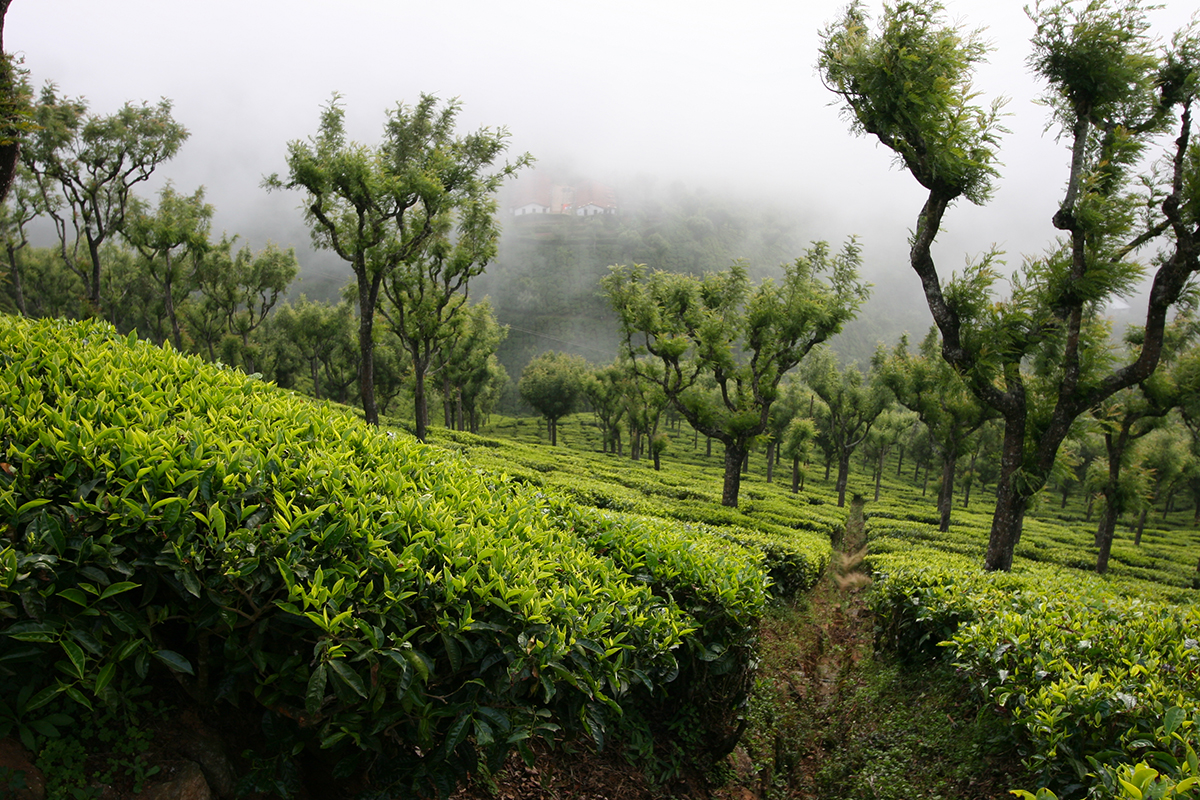
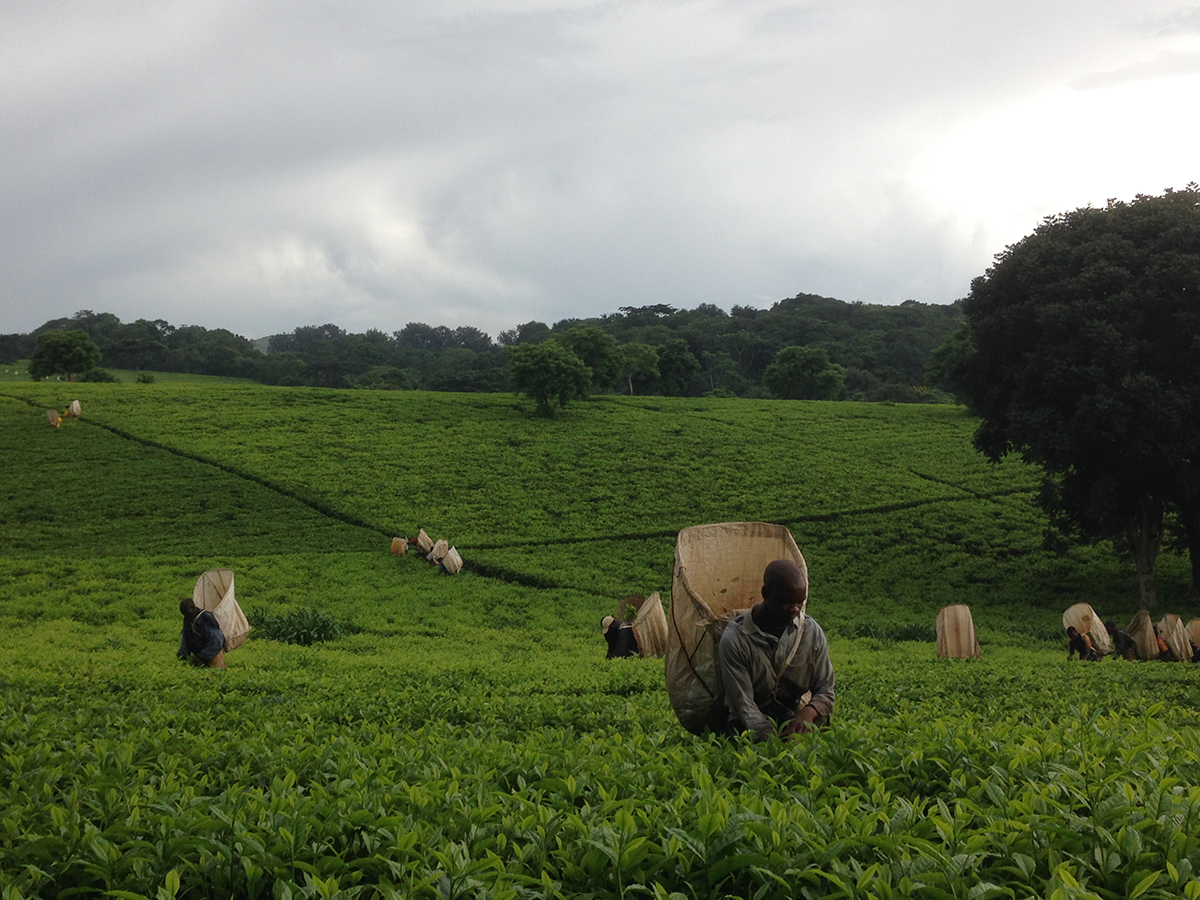
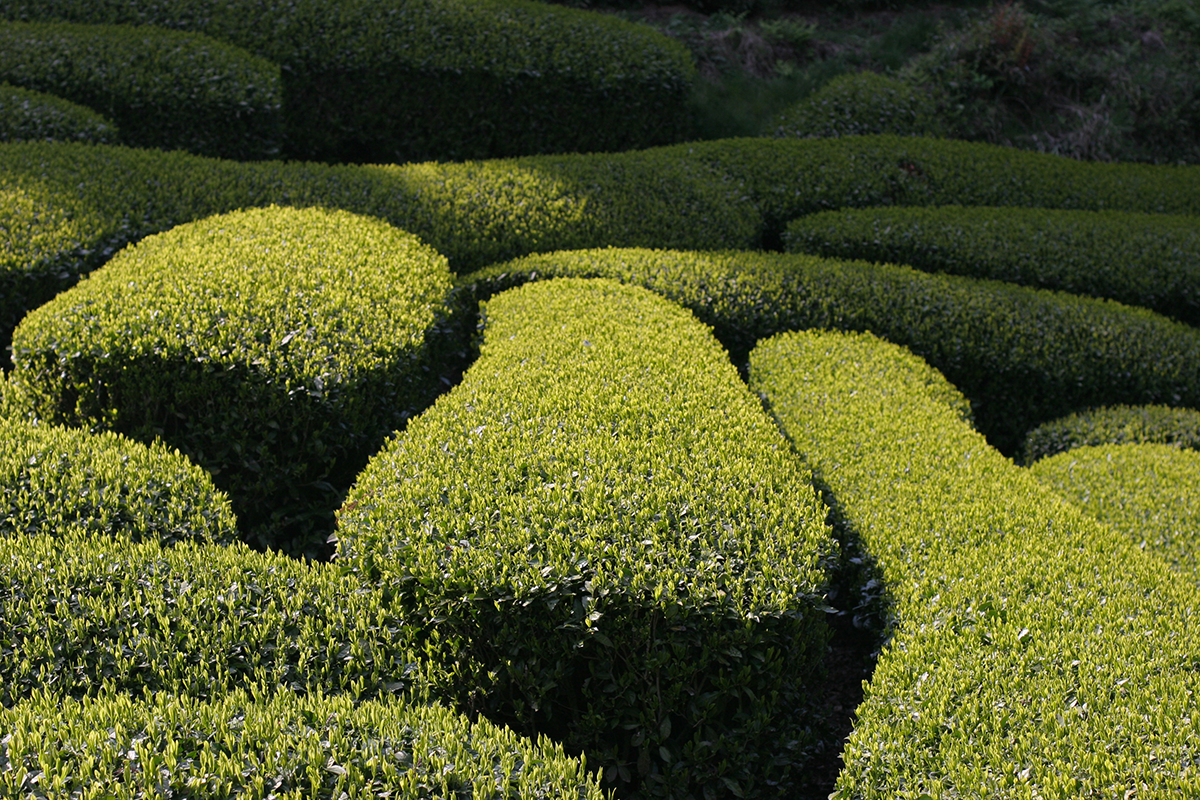
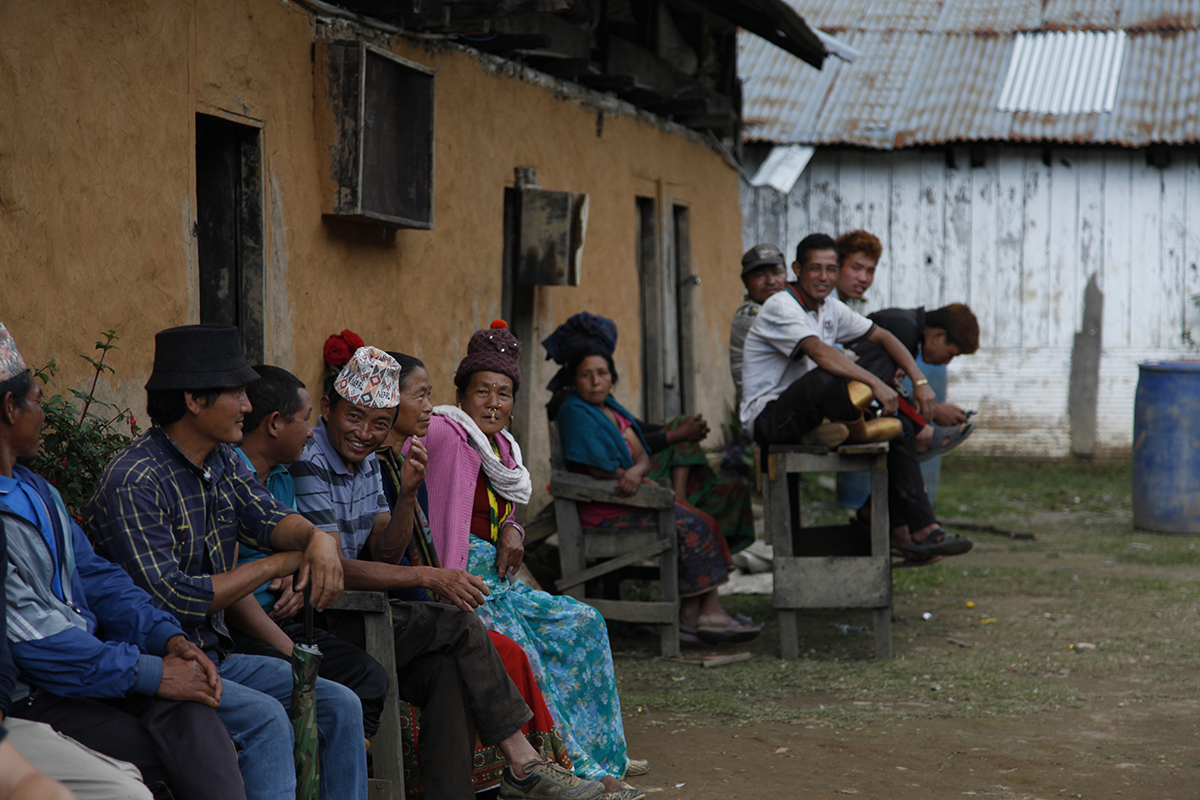
Some teas are produced on a vast estate with up to a thousand people living on it. Some are produced by a co-operative of small producers. And some are produced on a simple farm, like here, at Pathivara. Different farms have different social structures, and I prefer the ones on a human scale. A far cry from the cliché of the planter living cut off from the world in a magnificent bungalow (inherited from the days of British rule), when tea is produced on a farm, villagers often spend the evening there too. They sit around together, chatting, chatting, chatting. Sometimes they drink, sometimes they play music, sometimes they dance. It’s life, quite simply.
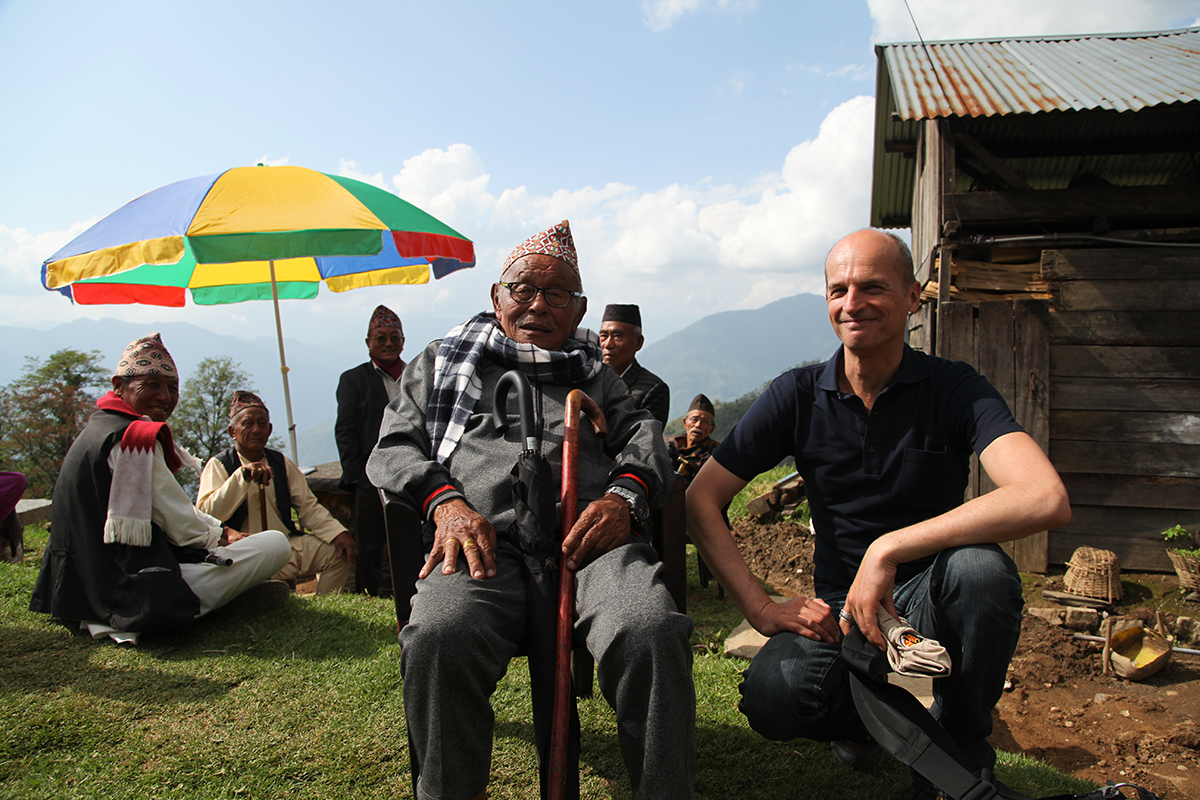
With the “father” of Pathivara
Among the plantations worthy of attention recently is Pathivara, in Nepal. Here, I’m with the plantation’s father, the man who started it. In just a few years, he’s succeeded in producing delicious teas, so far with very modest resources. What’s more, the teas are certified organic. A new building is going up; I laid the first stone on my previous visit. It will house more sophisticated machinery, although the team is already producing some very fine teas. Since the start of June, I’ve bought three batches: Pathivara Classic, Pathivara Black and Pathivara Dragon Yeti – these mountains are full of poetry. Each tea is very different, with very varied aromatic profiles. Here, poetry and gastronomy come together.
Less plastic
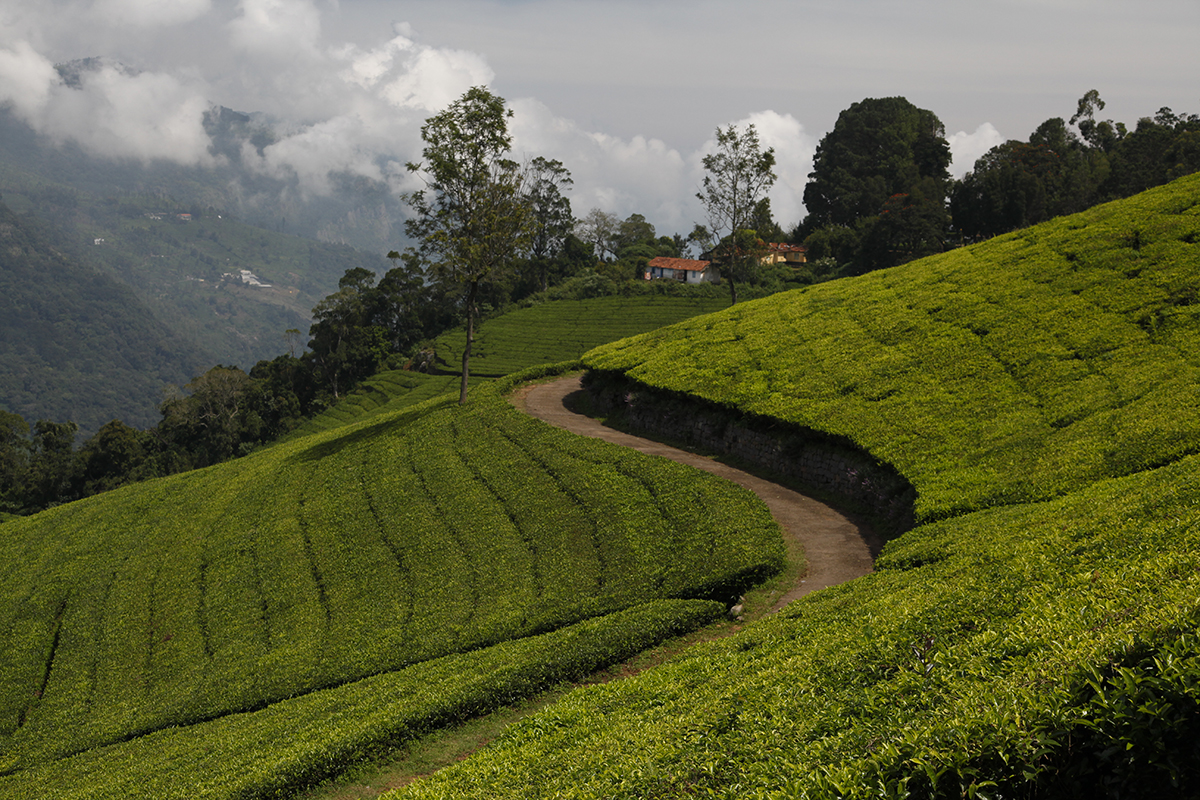
I’m concerned about the state of the planet, and the proliferation of plastic is one example of this. We might think of tea plantations as idyllic places high in the mountains, some on steep slopes, far from cities, surrounded by beautiful countryside. And all that is true. But tea requires a lot of manpower, and many people live in villages around the plantations. These people buy products that are often packaged in plastic, and this plastic needs disposing of.
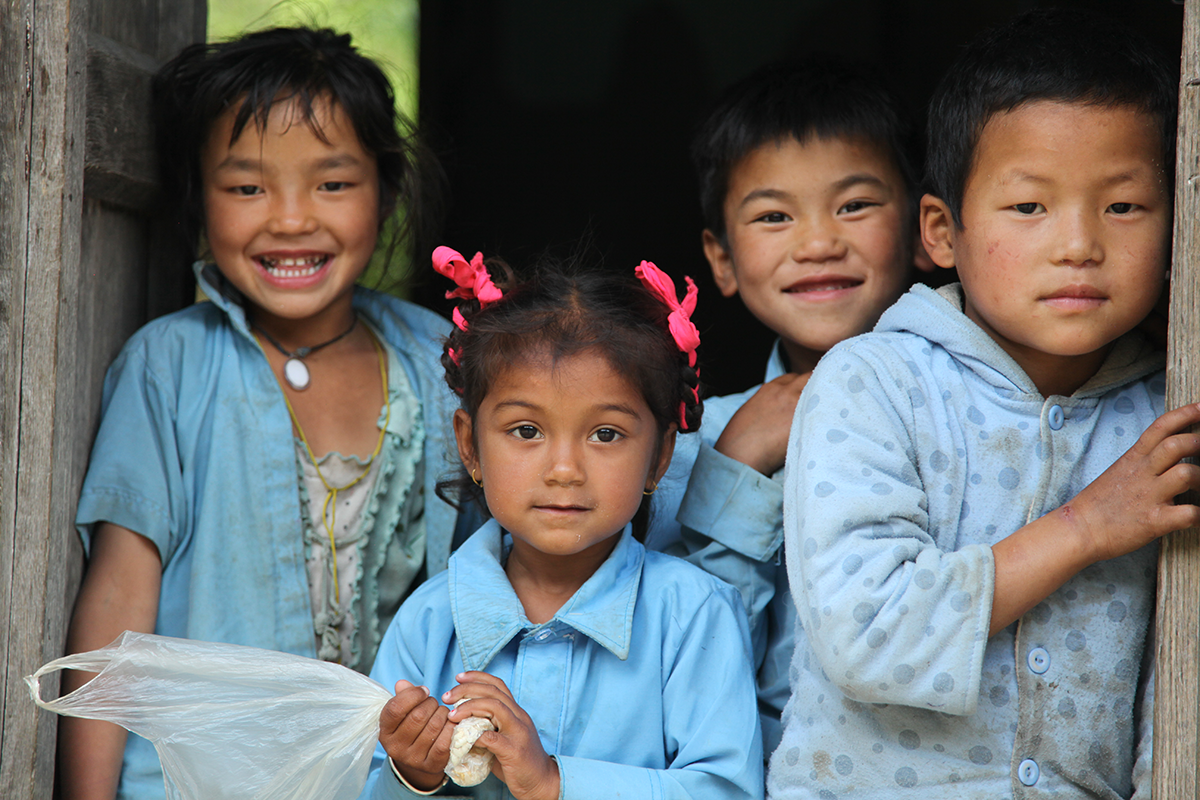
On the tea plantations, it’s not unusual to see rubbish lying on the ground between the rows of plants, simply because people don’t think about it and throw away a bag, a packet of cigarettes or biscuits, in the middle of the field. This waste accumulates! The ground is sometimes littered with it after people have eaten their meal. The best solution I’ve seen involves holding a litter-picking day, once a year, for all villagers, including children. The atmosphere is good-spirited, it makes people take more responsibility, and at school on the same day, they talk about the lifetime of the different types of rubbish. A plastic bag will last for 400 years!
My blog talks about encounters
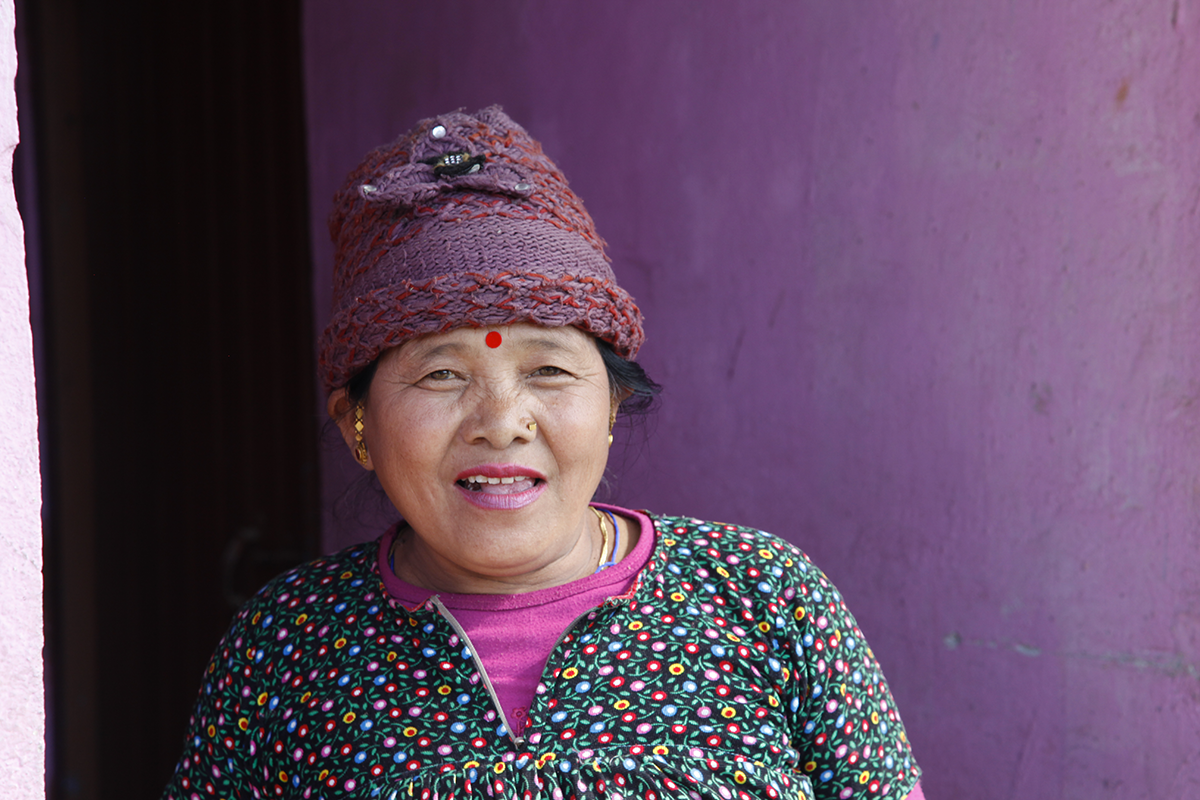
My blog is about tea, but it’s also about meeting people. I didn’t know this lady. She was just standing outside her house, opposite a tea factory. I liked her pretty purple hat and the touches of purple under her coat set against the purple backdrop behind her. I knew nothing about this lady, except where she lived; we simply smiled at each other and I held up my camera – by way of asking her if I could take her photo – and she agreed. And there she was, and here she is. I’m so happy when I’m travelling, walking down the lanes of remote villages, or through the fields. I’m so happy when I photograph them, these men and women… we exchange a few words, we laugh and often we sit a while together, on a bench, a step, a stone… any place will do. And we get to know each other – just a brief encounter – then I go on my way again. And to share them with you, these faces, these moments… as I see it, that’s just as important.
Progressing slowly
For me, tea is more than a goal, it’s a path. I can’t imagine ever knowing everything there is to know about tea. A lifetime isn’t enough. Tea is a path: what’s important to me isn’t arriving, but progressing. Progressing in my knowledge of the plant, in my knowledge of the art of processing the leaves, progressing on my journey through the tea fields to reach the villages where the communities live. Progressing slowly but surely, in a world where everyone is rushing.
Proud experts!
It’s no mean feat to obtain a Tea Sommelier diploma. First, the candidate must answer 24 open questions in just an hour. Then they must prepare, in front of three examiners, a tasting of six teas from among 22. The leaves placed in front of the applicant have no written indication of their type, colour or origin. Then they must perform a task chosen at random: prepare a matcha tea correctly, serve tea in a kyusu, or serve a pu erh using the gong fu method. That’s what this esteemed exam consists of, meaning that those who obtain the diploma are true experts! Here, I’m meeting some of them, with my assistant watching on. Bénédicte has infused a few premium teas, which we are discussing.
The first harvest is the best
Since the start of May, I’ve been tasting and choosing the best teas of the season from Japan. They’re called Ichibanchas because they’re the first to be harvested in the year. Japanese teas come from the regions of Shizuoka and Uji, and in the south of the archipelago. In the north of the country, the tea plant grown everywhere is Yabukita, whereas in the south, with its warmer climate, less Yabukita is grown. For example, here, near Kagoshima, the Yutaka Midori cultivar dominates, and represents nearly 60% of production.
Tea can be sprinkled over food
There are endless ways to use tea in cooking. For example, why not sprinkle it over food like a spice? Here, the aromatic, toasted, delicately woody and fruity notes of Jejudo Grand Oolong Impérial bring an exotic touch and a hint of crunch to this delicious burrata cheese. Sprinkle the tea over it and leave it in some green olive oil in the fridge for a couple of days. Enjoy it the Italian way: not too cold, as you sometimes see it served, but at a temperature of 20° to 22°C. To accompany it, infuse the same Korean tea in water at room temperature for 30 minutes and serve in small glasses such as vodka glasses.
Teas that are good for the health
My work has changed a lot in the past 30 years. Before, I would select teas, and then we had to get them here as quickly as possible if they were Grands Crus – we called them “rare and ephemeral”. I would visit every farm, of course, but that’s where the work ended.
Today, our demands – and I’m talking about our own demands just as much as our customers’ – in terms of health, food safety and environmental respect, are so much higher. It’s no longer enough to find teas that are remarkable for their gastronomic qualities. They must also meet strict standards – happily, European standards are the strictest in the world. Food safety is better. Flavour and health have become inseparable, for which I’m grateful. Then it’s up to me to make sure you can taste these rare teas as soon after harvest as possible.
When you travel alone it’s easier to meet people
I mostly travel alone. I depart alone, I return alone. This solitude encourages me to approach others. I’m more easily accepted by them, to be among them. Alone, you open up to others. We all need other people. Without a travel companion, you make more of an effort to adopt the culture of the people you meet. Alone, you’re more vulnerable, more permeable, more receptive. And that’s a good thing, because I travel to listen.