Assam, one of the the rainiest regions in the world

17 June 2011
Assam, one of the the rainiest regions in the world

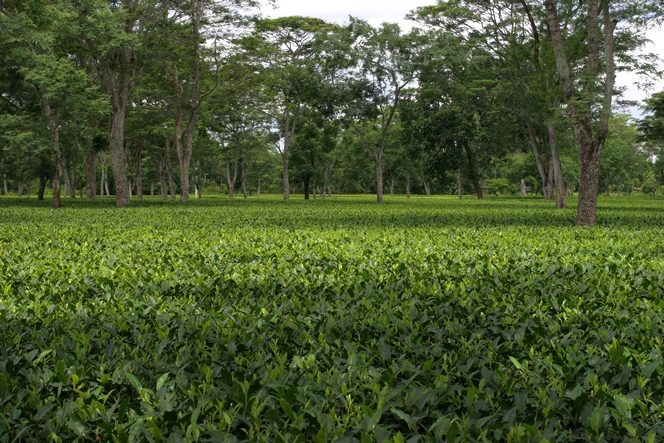
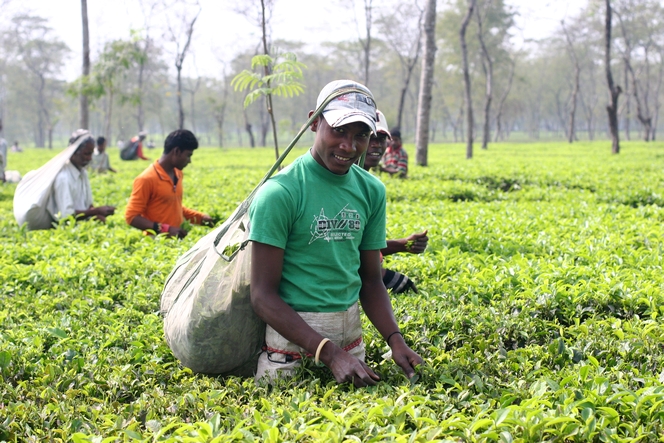
Assam is one of the regions in the world with the highest rainfall. So it’s no surprise that it’s so green here, from these tea plants growing so densely they look like a carpet, to the trees that shade them from the sun.

Despite the abundant rains, this region enjoys plenty of sunshine, which means the tea plants need protecting from the direct sunlight more than elsewhere. Hence the density of the trees.

Share on Facebook. Tweet this!

In Assam, tea fields adjoin the paddy fields

14 June 2011
In Assam, tea fields adjoin the paddy fields

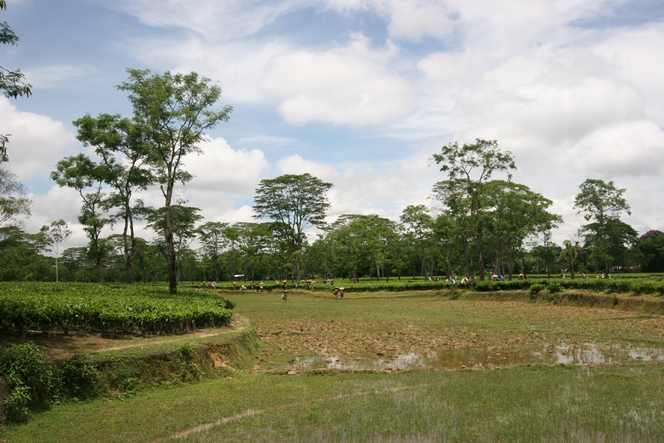
For years, I dreamt of just one thing: to go to Assam and see the famous tea plantations. And here I am! The political situation has greatly improved, and it is now possible to travel around this state in the north-east of India, which is generously watered by torrential rains and by the Brahmaputra floods. Here, the tea fields adjoin the paddy fields. However, a slight difference in level separates them so that the water does not stagnate around the roots of the tea plants, but drains away into the paddy fields.

Share on Facebook. Tweet this!

Last stage in the processing of Taiping Hou Kui

10 June 2011
Last stage in the processing of Taiping Hou Kui

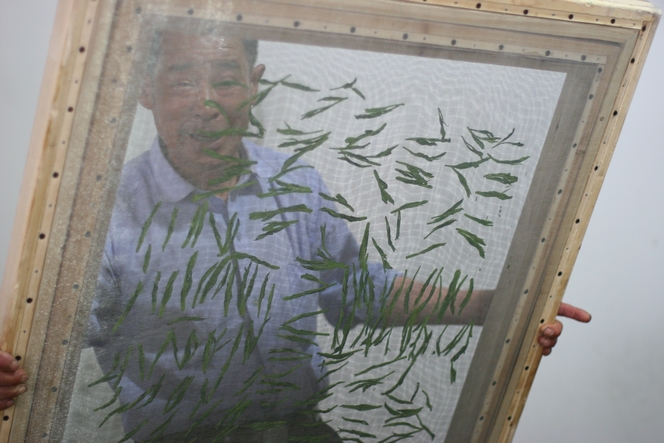
After being fired, then rolled individually by hand, Taiping Hou Kui leaves are placed between two meshes. Moments later, the upper mesh is covered with a cloth and pressed with a roller, to flatten the leaves.

This painstaking task does not take place for any other tea. In this photo I took during my last trip to China, you can see how proud this producer is, preparing for the last stage in the processing of this fine green tea, the drying. The leaves you see here are held in place between the two meshes, and have just been flattened.

Share on Facebook. Tweet this!

Tea harvesting by the Adivasis in India

7 June 2011
Tea harvesting by the Adivasis in India

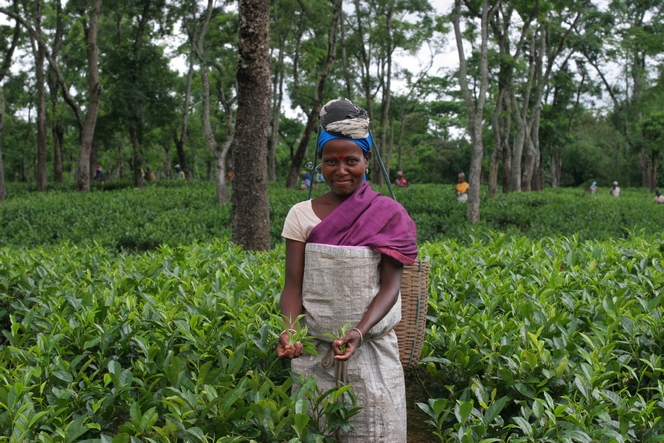
In the Dooars region of India, tea is often harvested by the people known as the Adivasis. Often despised by other Indians because they are right at the bottom of the social ladder, they benefit from positive discrimination, along with the lower castes. They don’t get much attention, which is another reason to talk about them here.

The Adivasis are one of India’s biggest tribal populations. They descend from the aborigines and live in the north-east of the country.

I took this photo at Meenglas, near Mal Bazaar, a few kilometres from the border with Bhutan. The Dooars region doesn’t produce very good quality tea, but that’s not important here. It was the smiling faces of these workers that I wanted to tell you about, not the rather coarse leaves filling their bags.

Share on Facebook. Tweet this!

Splendid view from Kuwapani tea garden

3 June 2011
Splendid view from Kuwapani tea garden

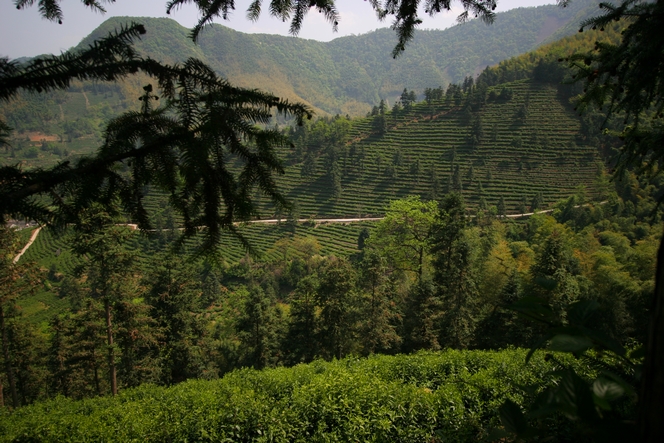
The plantations in the valley of Hile, in Nepal, were established recently. The oldest garden among Kuwapani, Guranse and Jun Chiyabari was created not much more than ten years ago. This might in part explain the quality of their tea, because the bushes they chose to plant on these mountain slopes are recent cultivars, famous for their aromatic properties. In addition, each of these plantations has developed innovative techniques for rolling the leaves, which is unusual in Nepal and India.

These three plantations are also special in that they are situated right next to each other. In this photo I took of Kuwapani, you can admire its splendid views, of course, but you can also see the red roof of the Guranse factory, close by.

Share on Facebook. Tweet this!

Shivaite priest near the Darjeeling temple

31 May 2011
Shivaite priest near the Darjeeling temple

I left for Kolkata three days ago, and today I am in Jorhat, in Assam, a region still considered dangerous until very recently. The situation here has greatly improved and, at the moment, it finally seems possible to visit this state in the north east of India, near Myanmar.

In India, whether you are a follower of Vishnou or Shiva, it is common to ask for the blessing of a priest before you undertake such a journey. This is the face of a young Shivaite priest who practices every day near the Darjeeling temple. Just don’t ask him to smile: he makes up for his tender age with an unwavering impassivity.

Share on Facebook. Tweet this!

In Nepal, cheese dries like laundry on a line

27 May 2011
In Nepal, cheese dries like laundry on a line

I was in Nepal recently and accepted an invitation I had received on numerous occasions to enter a house, often a farm. And I have had many opportunities to admire these strange forms hanging above my head like laundry on a line. It is difficult to know which is more incongruous, the electric bulb or these sticks.

But what is this stuff the colour of fresh butter?

In fact, it is cheese, drying out until it becomes as hard as rock.  When it comes to cutting it, no less than a pair of pincers is required. Chewing it is no easier: even just a tiny piece left to soften for ten or twenty minutes in the mouth is still inedible. It requires enormous patience to actually chew it and extract its minimal flavours.

Share on Facebook. Tweet this!

Undisturbed tea trees in the setting sun

24 May 2011
Undisturbed tea trees in the setting sun

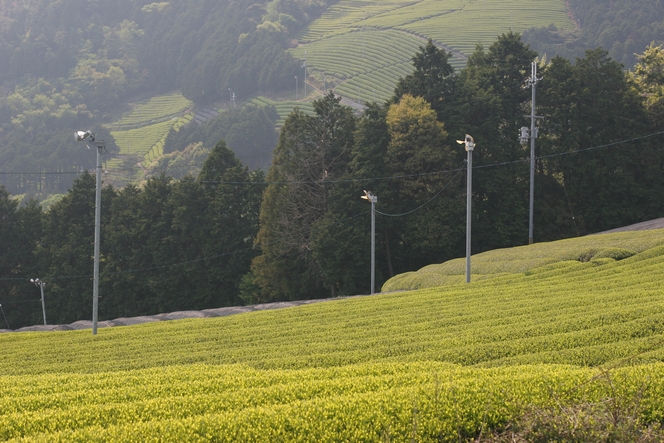
Last month a strike affected all of Nepal’s tea plantations, and for more than ten days the tea trees were left to grow undisturbed. This explains why, in this photo taken at Kuwapani, the delicate yellow colour of the new shoots reflects the light of the setting sun in such abundance. Over on the right of the fence, the grass is so closely shorn because the region’s many stags and roe deer have not joined in the movement, and show no signs of stopping work.

Share on Facebook. Tweet this!

Makalu : the fifth highest peak in the world

20 May 2011
Makalu : the fifth highest peak in the world

I have just spent three days in the region of Nepal where the country’s best teas are produced. It is a valley to the east of Kathmandu from where, on a clear day, you can see the fifth highest peak in the world, Makalu.

The tea in this high valley is produced by just three plantations: Kuwapani, Guranse and Jun Chiyabari, all equally prestigious. They are situated right next to each other, at an altitude of around 2 000 metres, and this is the village of Hile, opposite.

In three days, I have only enjoyed such a clear view of this village twice, despite it being just a few hundred metres away. So I’ll have to come back another time to see Makalu!

Share on Facebook. Tweet this!

The red panda or firefox, a creature of the Himalayas

17 May 2011
The red panda or firefox, a creature of the Himalayas

Yes, the firefox! For those who use the well-known web browser of the same name, you’ll have seen this long-tailed mammal every day, curled around the icon on your computer screen.

For the rest of you, this is what the panda looks like. It is much smaller than its Chinese cousin and, fortunately, a bit less endangered. It can be found in Darjeeling and throughout the Himalayas.

I didn’t just stumble across it while walking in the forest though. I’m not particularly keen on zoos, but I knew that one lived at the Darjeeling zoo, along with some mates, and I wanted to see it. It has beautiful fur you want to stroke, like its neighbour in the next cage, the snow leopard. I certainly wouldn’t stick my hand between the bars surrounding its other neighbour, a fearsome looking Siberian tiger whose mouth is so big I could fit my whole head inside, right up to my shoulders.

If you are in the area, do pay a visit to the Himalayan Mountaineering Institute , which honours those who have climbed Everest, starting with Tenzing Norgay, of course, who was from Darjeeling.

Share on Facebook. Tweet this!