Drains dug into the soil to protect tea plants

22 July 2011
Drains dug into the soil to protect tea plants

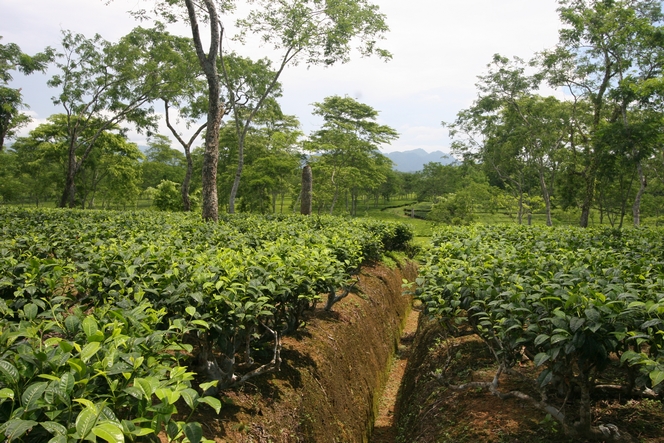
The tea plant enjoys humidity, but it hates having water sitting around its roots. How awkward! To keep its feet dry when the ground is flat, like here in Assam, drains are dug into the soil.

Switching locations from the plains to the peaks, I want to tell you about the mountain blocking my view right now. It marks the start of Nagaland, the sparsely populated region that borders Assam. The Nagas are a friendly people, but due to one of their ancient customs, thankfully now abandoned, they are sometimes known as “Head Cutters”.

Share on Facebook. Tweet this!

The inchworm is an enemy of the tea plant

19 July 2011
The inchworm is an enemy of the tea plant

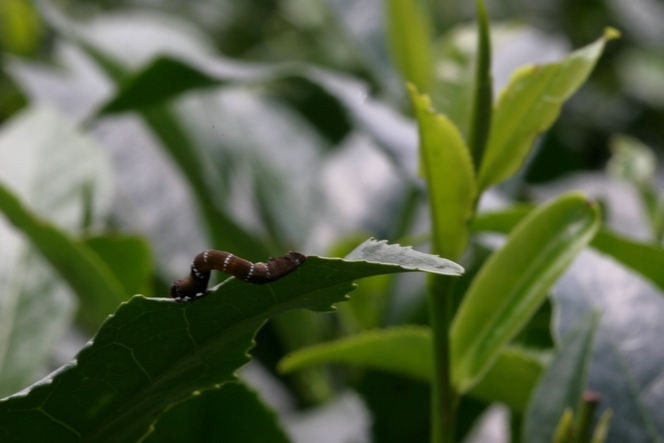
Among the enemies of the tea plant, the inchworm features in prime position. With a ferocious appetite, it can munch its way through quite a few leaves in a short space of time. Getting rid of them isn’t easy, especially on organic plantations. Birds are the principle predators of this creature, whose name derives from its strange gait: it advances by taking calculated “steps”, measuring out each one with apparent expertise.

Share on Facebook. Tweet this!

“Delmas Bari” : a tea plantation named after me

15 July 2011
“Delmas Bari” : a tea plantation named after me

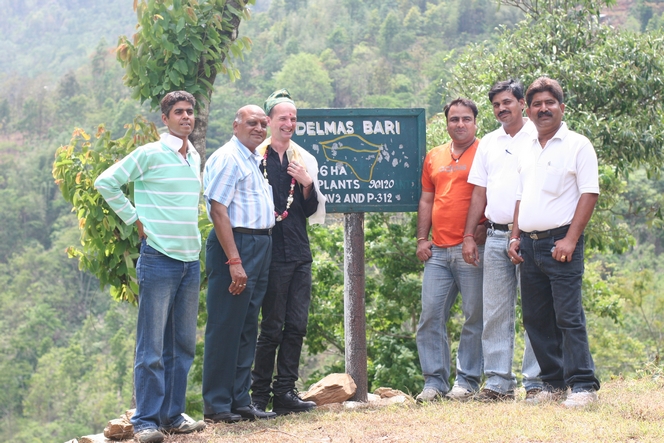
One day, when I was in Darjeeling, I was surprised to find that a plot on the North Tukvar plantation had been named after me. It was a new plot, mainly planted with the AV2 cultivar which I am particularly fond of.

This gesture from G. Somani, superintendant of North Tukvar and Puttabong, touched me greatly, and from time to time I return to “Delmas Bari”. The tea plants have grown, they look magnificent at the moment. The place has a unique charm about it. A small stand provides shade where you can enjoy a cup of tea and take in the incredible beauty  and utter tranquillity of the surroundings. I feel quite at home there!

Share on Facebook. Tweet this!

Zhaji : a hamlet that has kept its soul

12 July 2011
Zhaji : a hamlet that has kept its soul

Every time I go to China, I wonder what else will have changed in the cities and countryside that I know. The rapidity of change in the country takes your breath away, as you gaze upon a street you no longer recognise, or a forest of skyscrapers that in less than a year has grown faster than a copse of bamboo.

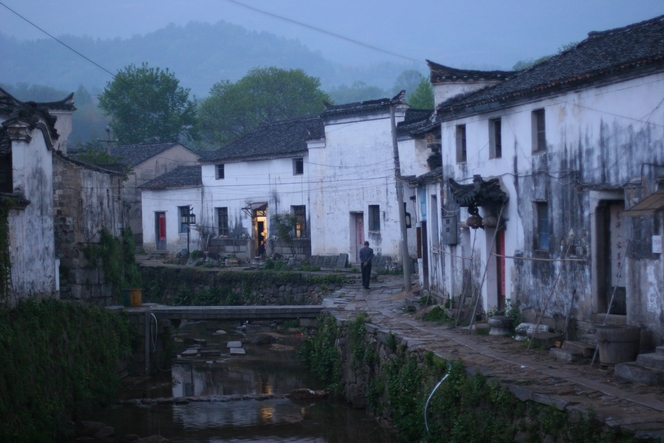
But off the beaten track, there are still hamlets that have kept their soul. Here, in Zhaji (Anhui province), nothing has changed for a very long time, and every evening after his meal, Mr Li walks beside the river before returning home for a last cup of the famous tea he produces.

Share on Facebook. Tweet this!

Machines used in the tea bag industry

8 July 2011
Machines used in the tea bag industry

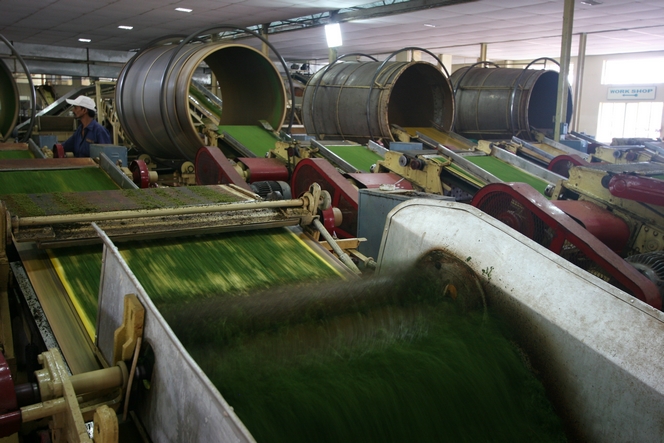
Assam tea plantations are unusual in that they produce “orthodox” tea, processed according to the traditional method, but they also produce “CTC” tea, which stands for “cut, turn, curl”. CTC tea has none of the qualities of a fine tea. It is produced by machines, which I have photographed for you. This tea doesn’t interest me much, and for good reason: one of its uses in the tea bag industry is to bring colour quickly to the cup and express strength.

Nonetheless, the process of making CTC tea is interesting: as it passes through the various machines, the leaf gradually gets smaller and smaller until it is just a tiny round ball.

Share on Facebook. Tweet this!

Charming tea plucker on Dufflating Tea Estate

5 July 2011
Charming tea plucker on Dufflating Tea Estate

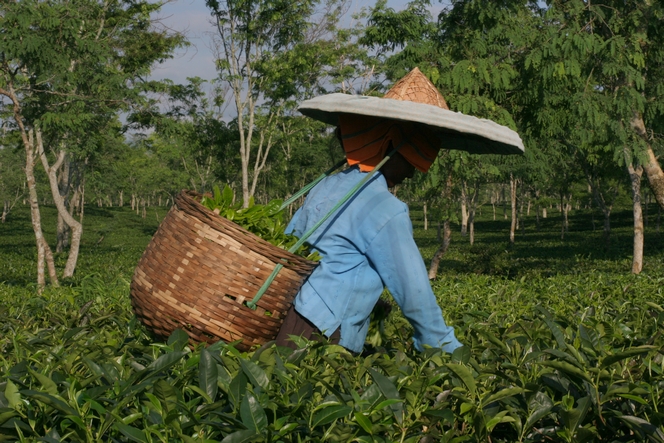
The yield per hectare here in Assam is four times higher than in Darjeeling, and totals two tonnes a year. Each tea plant produces such a quantity of leaves that between March and November, the shoots on each bush are plucked at least once a week. A record! Yet this charming tea plucker on the Dufflating Tea Estate does not seem overwhelmed by the scale of the task; in fact she looks quite happy.

Share on Facebook. Tweet this!

In search of the best quality Taiping Hou Kui

1 July 2011
In search of the best quality Taiping Hou Kui

Hou Chun, the Village of the Monkeys, is worth the trip. Having taken a boat to get to this mountainous region that is inaccessible by land, I have to climb this path which looks innocent enough to start with, but later runs along the edges of precipices. If you suffer from vertigo you must raise your eyes and gaze upon these magnificent mountains covered in tea plants and a jungle that mainly comprises bamboos.

In Hou Chun, just once a year, for around 25 days, they produce the best quality Taiping Hou Kui.

Share on Facebook. Tweet this!

The art of tasting tea with or without milk

28 June 2011
The art of tasting tea with or without milk

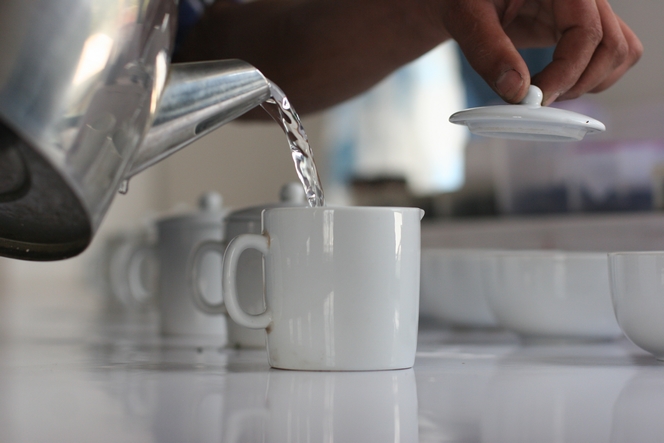
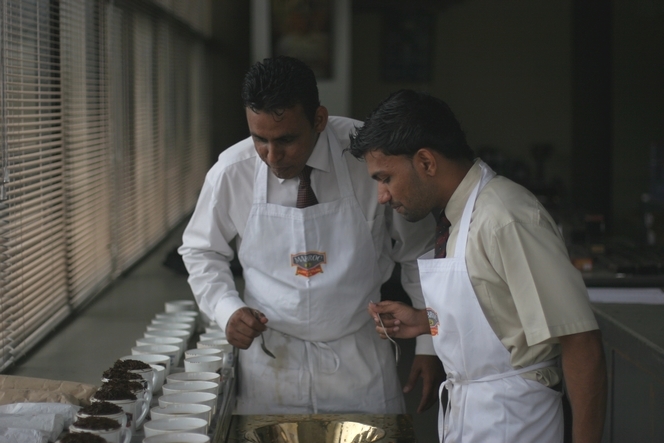
At the Amgoorie Tea Estate, tea is tasted both with and without milk. This is because some of the tea produced by this plantation is particularly full-bodied, and is appreciated by British consumers. So by lightening each cup with a cloud of milk, we are tasting the tea in the same way as the customer.

While adding milk is sacrilege for the finest teas, it is natural for more powerful brews. The milk reduces the astringency and sensation of bitterness.

Share on Facebook. Tweet this!

Japan : drink the best teas with complete peace of mind

24 June 2011
Japan : drink the best teas with complete peace of mind

I have chosen this photo of a lovely landscape, taken at Wasuka near Nara, to tell you that it would be a shame to miss out on the Japanese spring teas, the famous ichibancha, this year. Le Palais des Thés has sent all batches of its Japanese tea to be analysed by a laboratory, which will check whether their radioactivity levels comply with European standards. Only once we have received the results can we start distributing the teas to our various stores. In the stores, you will be able to ask to see the laboratory test results for the tea you want.

So you will be able to drink the best shinchas with complete peace of mind. Japanese farmers have suffered enormously this year due to the tsunami, and we must not abandon them, or their deliciously delicate teas!

Share on Facebook. Tweet this!

In Amgoorie, the factory is remarkably clean

21 June 2011
In Amgoorie, the factory is remarkably clean

The factory at the Amgoorie Tea Estate (Assam) has a remarkable size. It is the pride and joy of the planter there, Amar Nain, who designed it. The light, clean space make a change from the rather dilapidated, dimly lit buildings I often visit.

On the floor are pyramids of teas of different grades, waiting to be packed after a final quality check which is carried out by hand, leaf by leaf.

Share on Facebook. Tweet this!