From plant to cup

The tea plant that didn’t stop growing

15 July 2014
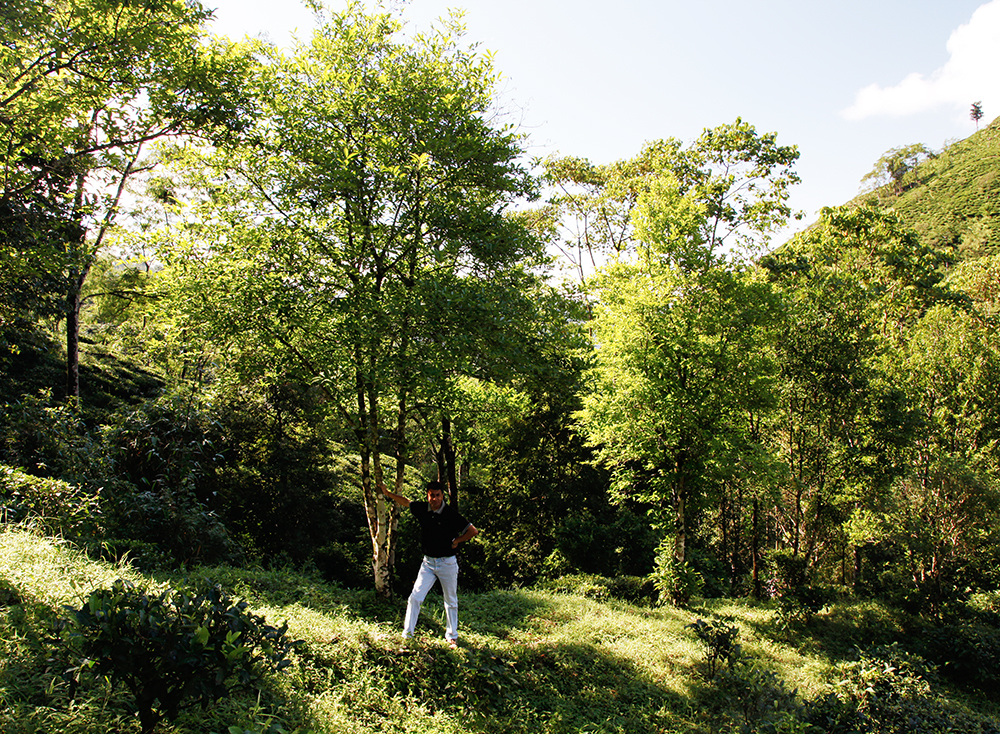
The tea plant that didn’t stop growing

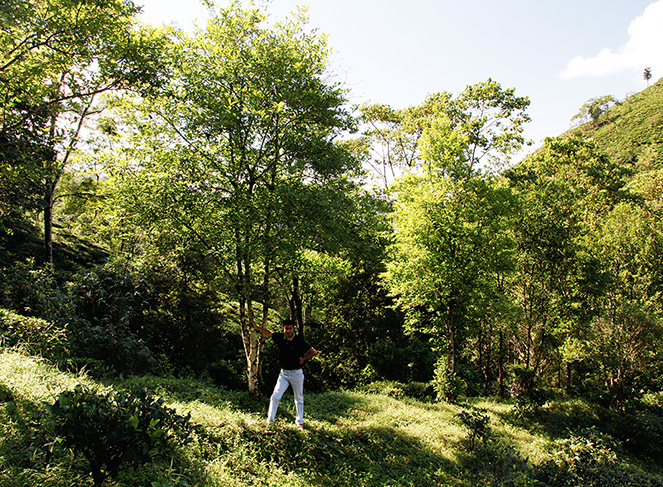
Due to the harvesting of its leaves, a tea plant does not get bigger; instead its trunk thickens. So a tea field looks more like a bonsai forest. But left unchecked, Camellia Sinensis and Camellia Assamica can grow to a height of several metres. Here is Rudra Sharma, the planter at Poobong in India, in front of one of his wild tea plants.

Share on Facebook. Tweet this!

Like a Flying Carpet

20 June 2014
Like a Flying Carpet

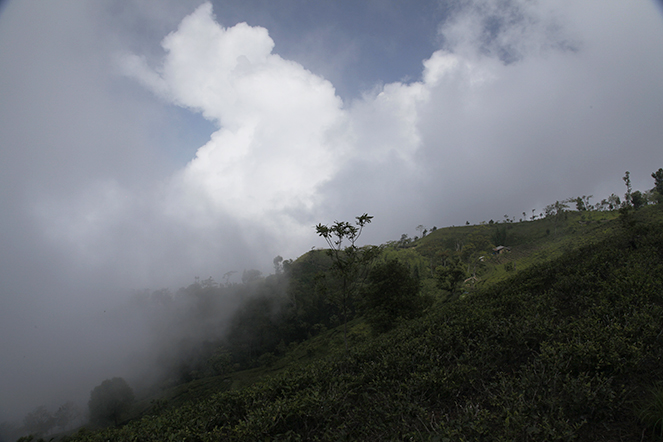
The Mist Valley plantation takes its name from the lingering mist that envelops the mountains in this region of Nepal. However, from time to time the wind blows away the fog, the clouds dissipate and the sky clears completely. Then this magical landscape is revealed, with the tea fields that appear to hang in the sky, undulating like flying carpets, ready to carry you off over the Himalayas.

Share on Facebook. Tweet this!

Himalayan mist

13 June 2014
Himalayan mist

I am writing to you from paradise,
From a plantation at the end of the world,
Right at the bottom of a valley in Nepal.
A plantation worth finding after hours of walking,
Hidden in the Himalayan mist,
A plantation that makes its tea from the crops of an association of small producers,
A plantation so isolated that the number of visitors can be counted on one hand,
An unknown plantation whose teas are nonetheless worth the detour.
A plantation named Mist Valley.

Share on Facebook. Tweet this!

Special time spent with tea pluckers

6 June 2014
Special time spent with tea pluckers

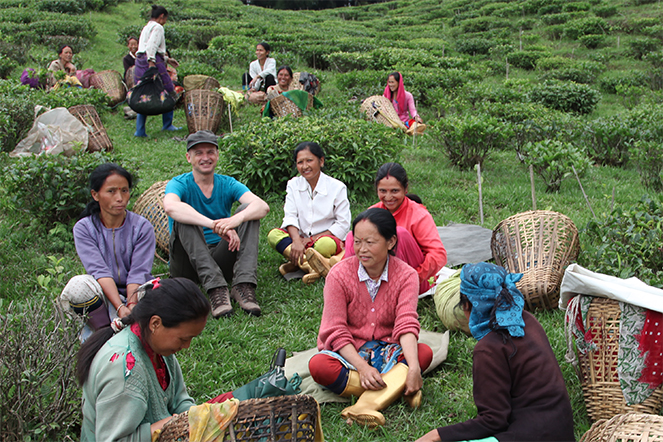
The lunch break offers a special opportunity to sit down with the tea pluckers and get to know them. They don’t often get to see buyers, and are even less likely to have a conversation with them. It doesn’t take long before shyness turns into spontaneity. These are special moments which I enjoy very much.

Share on Facebook. Tweet this!

First visit to Poobong

30 May 2014
First visit to Poobong

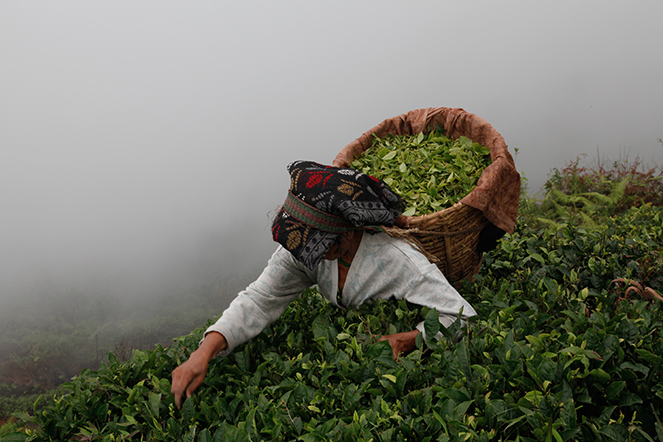
Vertiginous slopes and lingering mists form the scenery of Darjeeling. Out walking, a tea plucker appears in the thick fog. She climbs amongst the tea plants with astonishing agility. Poobong, a long-abandoned and inaccessible plantation, is gradually coming back to life. I am visiting it for the first time.

Share on Facebook. Tweet this!

The frenzied pace of the spring harvests

23 May 2014
The frenzied pace of the spring harvests

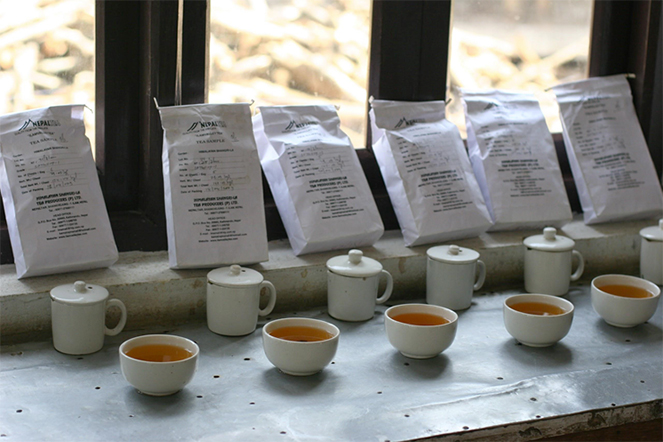
My selection of first-flush Darjeelings is over, the Nepalese season is in full flow, and then it’s the turn of the new-season China teas, before the first Japanese Ichibancha are ready. Between 1 March and 10 May every year, I can taste more than 100 teas every day, not counting the ones I infuse several times, when I’m deciding between different batches. The peak of this pleasant activity, which I always look forward to, takes place around the end of April. At this time of year, so many samples pile up every morning in the packages sent by express mail from Nepal, India, China and Japan, that I sometimes don’t know which way to turn.

Share on Facebook. Tweet this!

Two “grand cru” teas from Nepal to try soon: Mist Valley and Sandakphu

9 May 2014
Two “grand cru” teas from Nepal to try soon: Mist Valley and Sandakphu

Three plantations in Nepal are currently producing teas that in my view are worthy of the “grand cru” appellation. But in the past year, it has to be said that Guranse, Kuwapani and Jun Chiyabari are no longer alone in offering exceptional teas. Mist Valley and Sandakphu, both situated in Ilam Valley, are making teas of remarkable flavour quality. These teas will be ready to try in a few days, and are excellent value for money.

Share on Facebook. Tweet this!

Rolling Darjeeling leaves

18 April 2014
Rolling Darjeeling leaves

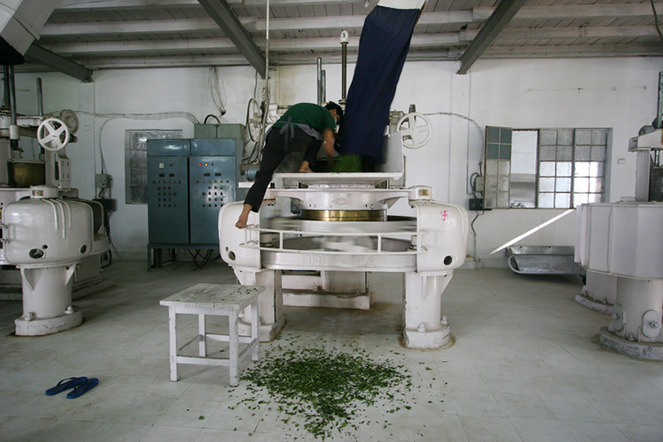
When you read tasting notes on Darjeeling teas, you learn that the leaf can be more or less rolled, depending on the batch. This is what the rolling looks like. As soon as the leaves have finished wilting, on the upper level of the building, they are dropped (see photo) into this container, which has a press. Rolling, as it is performed in Darjeeling, takes just a few minutes. It prepares the leaves, by lightly crushing them, for the following stage: oxidation.

Share on Facebook. Tweet this!

The teas and landscapes of Assam: an incredible contrast

11 April 2014
The teas and landscapes of Assam: an incredible contrast

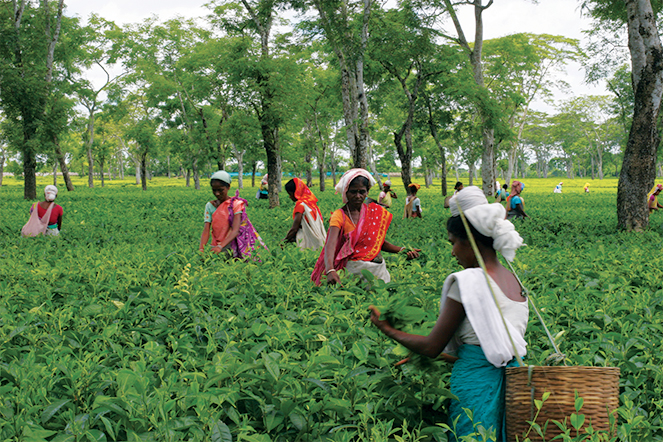
Assam teas have scents of honey, tobacco and spices and a very pronounced aromatic profile, unlike some of the flat countryside in this region. The teas are particularly astringent, and here too, the vocabulary used to describe this sensation contrasts with the words we might use to depict the landscape. Astringency is marked by a contracting of the tissues of the palate, while this beautiful field of tea relaxes me as soon as I see it.

Share on Facebook. Tweet this!

Spring harvest in Nepal

4 April 2014
Spring harvest in Nepal

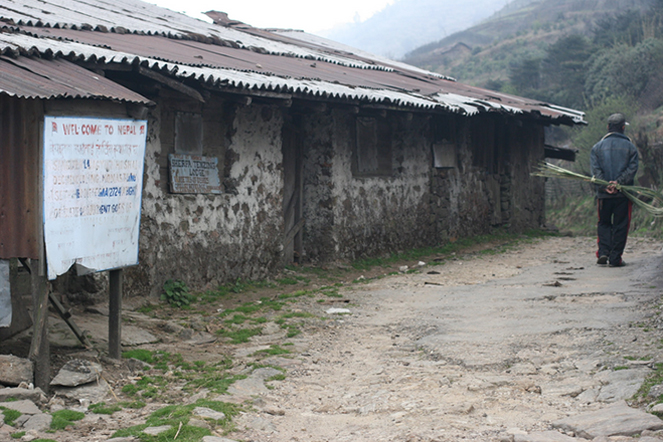
Every year, the first-flush Darjeelings open the season, followed by the spring harvests in Nepal, then China and Japan. I have now started tasting the first samples of Nepalese teas. They come a few weeks after the Darjeelings, due to the harsher climate. Yet the two regions are not so far apart, barely a few days’ walk, and you could pass from one country to another without noticing it unless you pay attention to the signs.

Share on Facebook. Tweet this!