From plant to cup

Small plantation in the south of Sri Lanka

20 September 2013
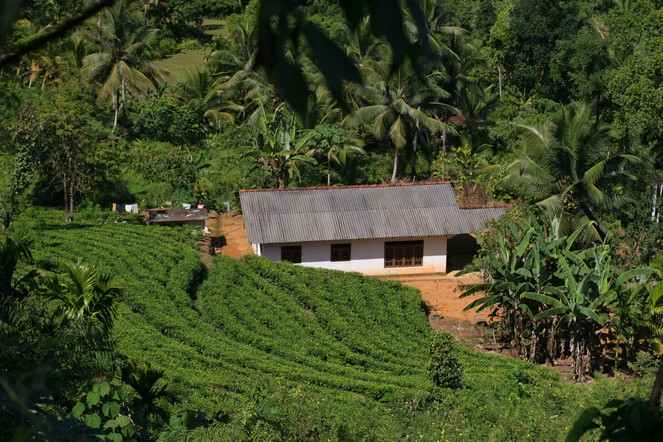
Small plantation in the south of Sri Lanka

From one country to another, one region to another, the organisation of tea production varies. Sometimes I visit huge plantations that cover whole mountainsides. But many independent farmers grow their own tea plants around their house, like here in the south of Sri Lanka.

Share on Facebook. Tweet this!

A very special tea plantation

6 September 2013
A very special tea plantation

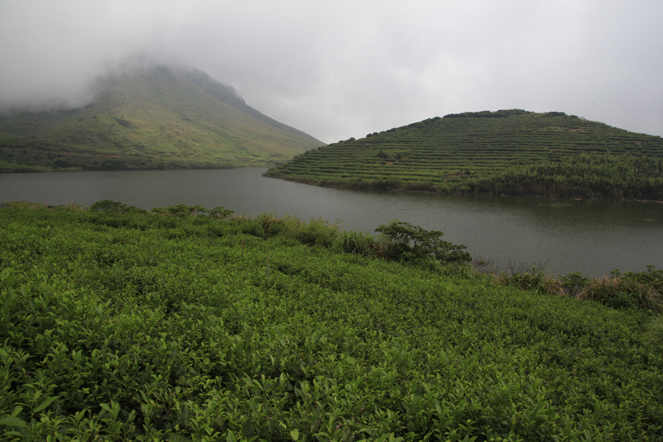
Some tea plantations are really worth a detour. The one pictured here is situated on a tiny island off the coast of China. It is deserted apart from a handful of inhabitants and a few wild sheep. The island has an atmosphere of profound and palpable harmony.

Share on Facebook. Tweet this!

The jasmine flowers that scent our tea

30 August 2013
The jasmine flowers that scent our tea

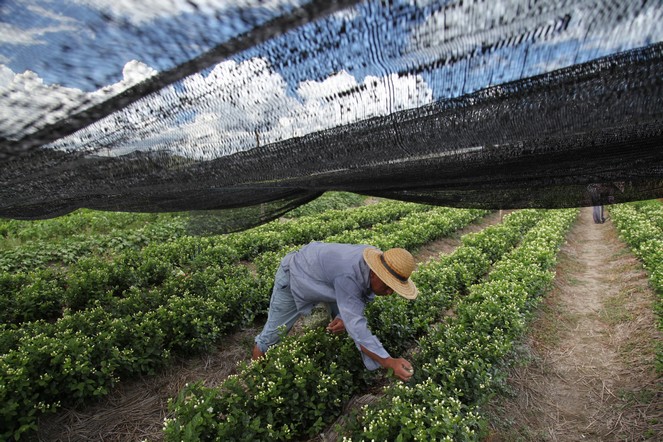
It is difficult to imagine the amount of work that goes into making the tea we drink. To produce one kilo of a top quality jasmine tea, for example, it takes 2.5 kilos of jasmine flowers, no less. With 100 flowers, you can make just 25 grams. So no fewer than 10,000 flowers, individually picked by hand, are needed to scent a kilo of tea. And the plucking of flowers in the time-honoured tradition, which I witnessed last week in southern China, sometimes takes place in scorching temperatures.

Share on Facebook. Tweet this!

Scenting tea with jasmine

23 August 2013
Scenting tea with jasmine

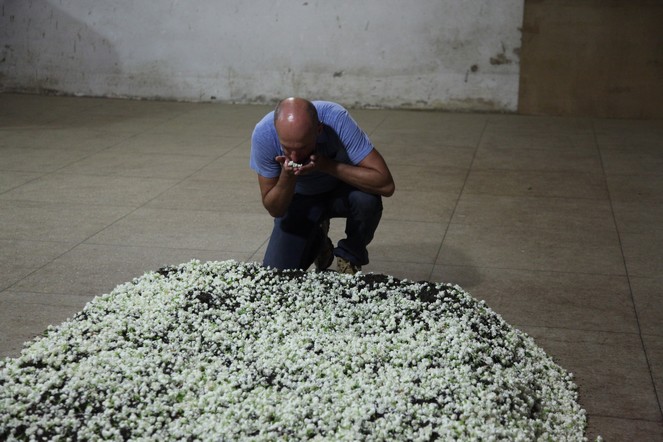
In China, the finest jasmine teas in the world are produced at the end of the summer. They come from Fujian province. The tea and flowers are combined at night, because the jasmine flower is special in that it waits until the evening to open and release its incredible fragrance.

Share on Facebook. Tweet this!

The steep slopes of Darjeeling

9 August 2013
The steep slopes of Darjeeling

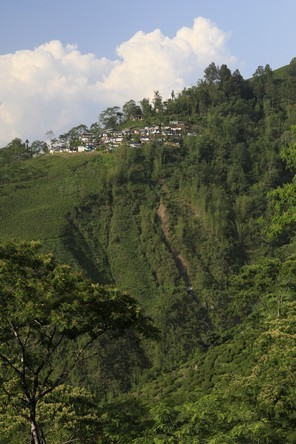
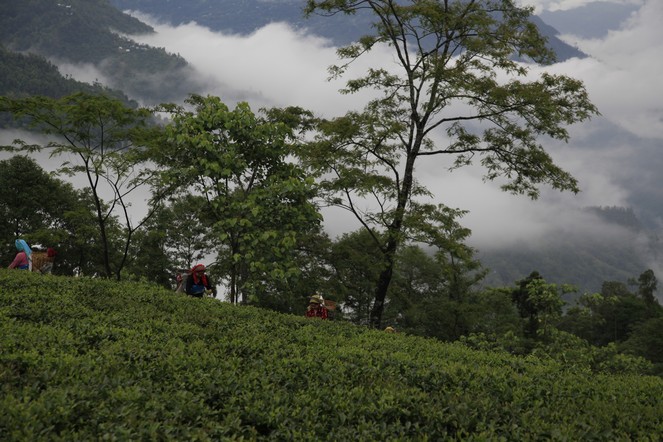
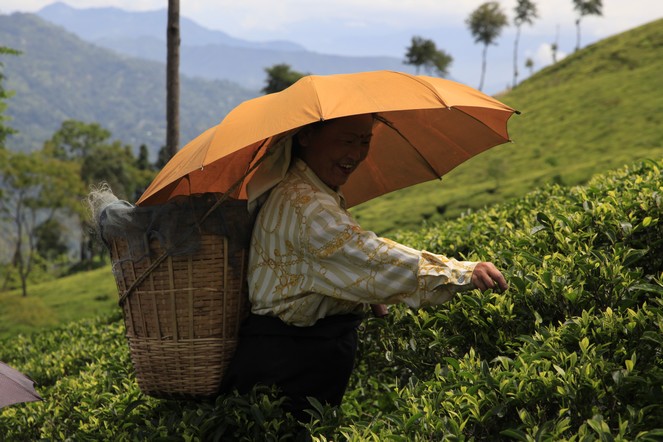
Camellia sinensis grows very happily on steep terrain, as it doesn’t like water stagnating around its roots. In some regions of the world, like Nepal, or here in Darjeeling, the slopes are very impressive. As I travel around the countryside I often discover a little village clinging onto the hillside above a field of tea. Sometimes you wonder how the pluckers manage to harvest the leaves in such conditions.

Share on Facebook. Tweet this!

Big blue sky above the tea plants

12 July 2013
Big blue sky above the tea plants

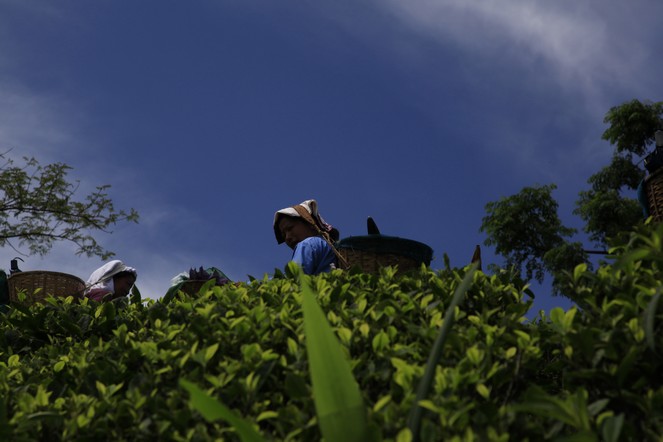
It is not just France enjoying a clear blue sky at the moment. Camellia sinensis is happy in weather that sees rain alternating with cloudless skies. However, it also has a fondness for spells of mist.

Share on Facebook. Tweet this!

Assam teas are worth a detour

5 July 2013
Assam teas are worth a detour

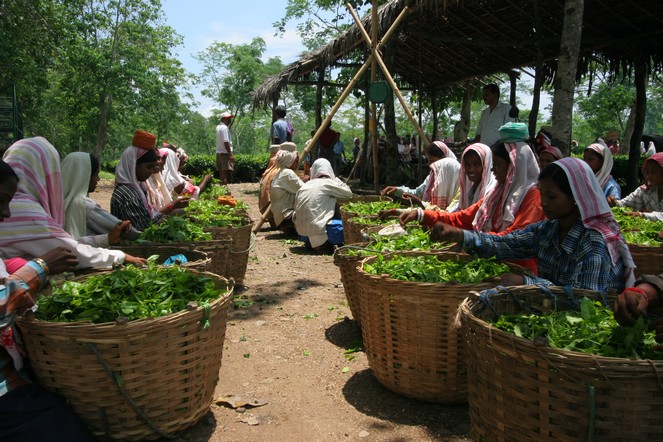
Powerful and full-bodied, Assam teas are worth a detour. Yet these teas are still not that well known. If you like Burgundy wines, I recommend them. You will find the same astringency and lovely finish in the mouth, the spicy, woody notes sometimes accompanied by tobacco and honey aromas.

Don’t these cheerful pluckers make you want to learn more about their tea?

Share on Facebook. Tweet this!

Rain in Darjeeling

7 June 2013
Rain in Darjeeling

After several days of fine weather, the rain has returned, incessantly, in Darjeeling. Day and night. Heavy rain – without a break. Sometimes accompanied by strong winds and hail. With rain like this, nobody can produce good tea because the leaves grow too quickly.

Luckily, just as the rains started I bought three incredible batches: Puttabong Clonal Queen DJ232, Puttabong Kakra Muscatel DJ223 and North Tukvar Delmas Bari DJ101.

Share on Facebook. Tweet this!

Start of the “second flush” harvest in Darjeeling

31 May 2013
Start of the “second flush” harvest in Darjeeling

For the past two nights it has rained in Darjeeling and the surrounding area. By early morning, the sky is clear and the first rays of sun fall on the wet ground.

It is the ideal weather for “second flush” teas as the harvesting begins.

Share on Facebook. Tweet this!

Visiting fine tea plantations in China

10 May 2013
Visiting fine tea plantations in China

Among the best-known green teas in China are names such as Huang Hua Yun Jian and Yongxi Huo Qing. A couple of weeks ago I decided I wanted to visit the villages that produce these two rare, delicate teas. I have a weak spot for the first one in particular.

It is difficult to imagine the number of hours it took me to get there, over mountains and passes, before finishing the journey on foot along a path of stone and mud. It just proves that the finest teas are worth it.

Share on Facebook. Tweet this!