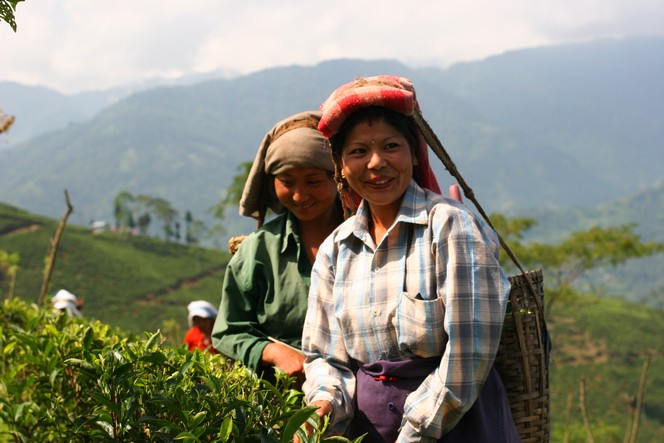
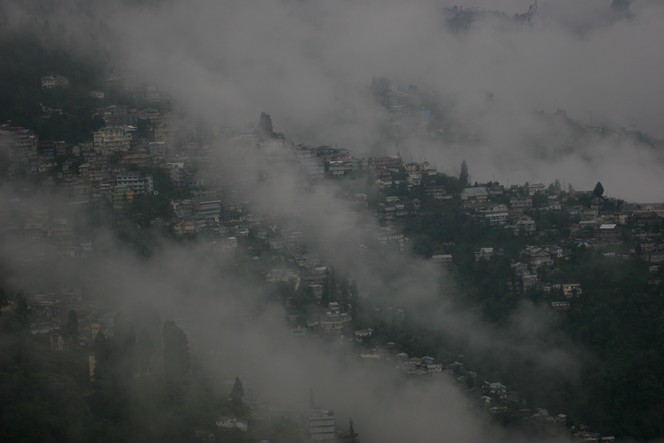
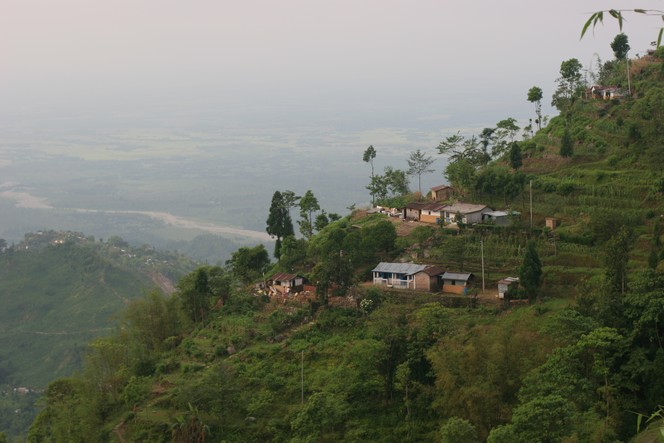
Carine Baudry, head of the Tea School, has just returned from Darjeeling. The trip was organised by the school to allow some of the students to visit the plantations and gain a first-hand understanding of how tea is made. Carine and her eight students stayed in the beautiful surroundings of a tea garden and observed every stage in the production process. They met several planters and were able to ask plenty of questions. They also visited Delmas Bari and admired the breathtaking landscapes of this Himalayan region. And there were plenty of opportunities to meet the smiling tea pluckers, like the two women pictured here.
Darjeeling hit by a hailstorm a few days ago
The day before yesterday Darjeeling was hit by a hailstorm, which was not good for the tea plants. What with the late start to the season due to the lack of rain, and the violent weather attacking the tea leaves, the planters don’t know which saint to turn to.
They’ve had enough of these insults from the skies. And they don’t want to see any more tea plants battered in the space of a day.
My favourite tea plant: “Ambari Vegetative 2”
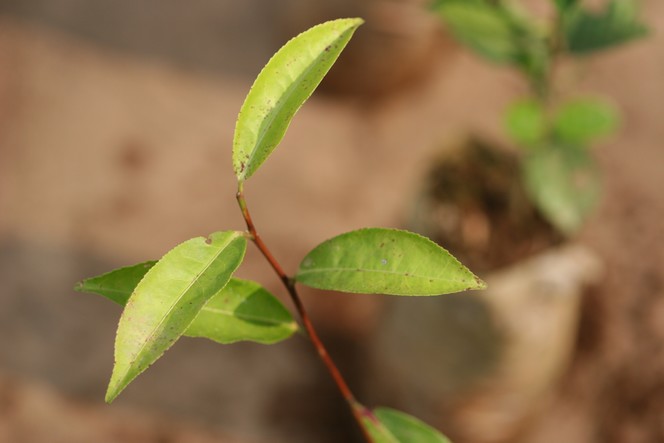
Now that the Darjeeling First Flush season is well underway, today I’d like to introduce you to my favourite tea plant in this region. Its name is AV2, short for “Ambari Vegetative 2”. Despite its slightly spindly appearance, this cultivar produces the best teas.
I’ve just bought a single lot, Puttabong DJ7 “Clonal Queen”. Its producer reserves this prestigious name for lots plucked exclusively from AV2 plants. So this is not a blend. It has remarkable delicate aromatic notes that are both vegetal and floral.
I taste about 50 teas a day
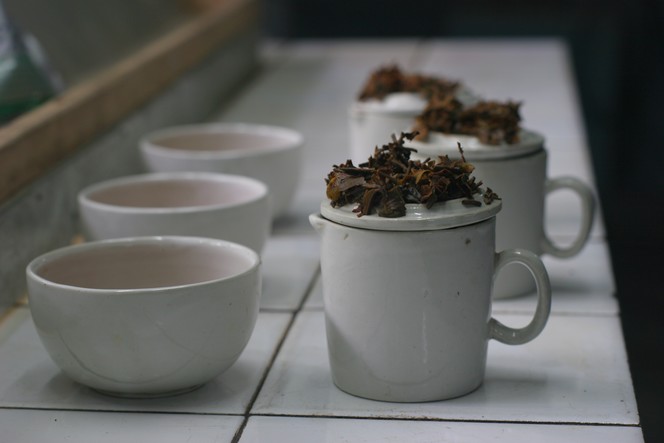
This March I’ve tasted about 50 samples of tea a day. The first flush Darjeelings launch the season, followed swiftly by the Nepalese teas. A little later it’s the turn of the new-season China green teas. Then the Japanese Ichibancha. The teas are tasted blind, of course. The ritual is always the same: having smelt the infusion, you suck in the liquor and swish it around your mouth. You analyse the texture, the flavours, the aroma groups. You take your time. You taste and you taste again. You have to concentrate… Except for when a photographer bursts into the tasting room and captures the moment.
The meaning of the word “clonal” on a label
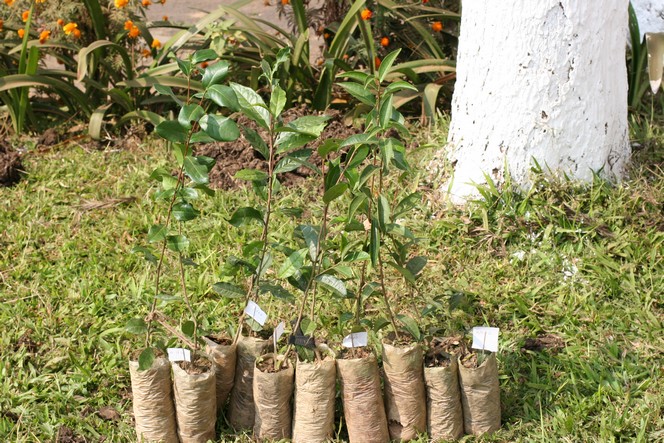
In the same way that wine can be made using different grape varieties, tea comes from different plants, each with its own characteristics. In this photo you can see the main cultivars used in the Darjeeling region (India). When a particular lot of tea is made solely from these varieties, Indians call it “clonal”. The word “clonal” on a label does not mean the tea comes from a cloned plant, but simply that the leaves were harvested from very specific cultivars. Some of these cultivars have been developed by an agronomic research institute and are known for their excellent quality and flavour.
The first estates to harvest are at low altitudes
In Darjeeling, at the beginning of every spring, the first estates to harvest are those situated at the lowest altitudes. They enjoy more clement temperatures. This is what the region looks like at the exact place where the immense plains of India take over from the foothills of the Himalayas. Here, you can see the Longview Tea Estate, and you can make out the ochre-coloured stone bed of the Balasun river.
New samples of tea have just been delivered
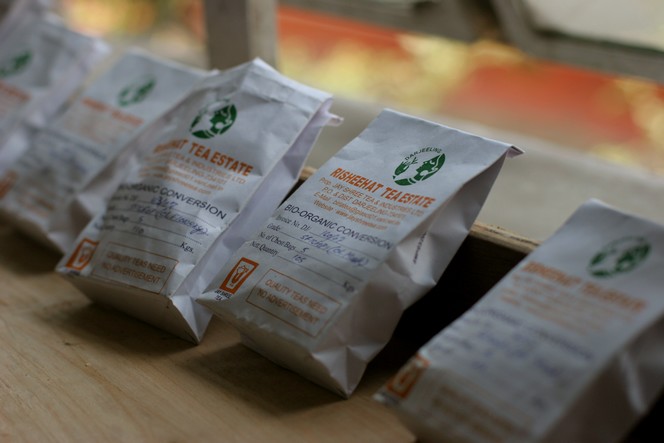
For the past two days samples of tea have been delivered in large numbers at my tasting room. As soon as they arrive I taste the contents of the little bags on which are marked the name of the garden, the lot number, the grade and the quantity of tea produced.
This is it! In Darjeeling, the season is now properly underway.
Weather delays tea plucking in Darjeeling
Because of the cold and then the lack of rain, the tea plants are growing very slowly in Darjeeling. As of mid-March, only a few lots have been produced, and it will be a while before there’s a good selection available.
I have bought three lots so far though: a very small amount from Teesta Valley, which I’ve already talked about; the first plucking from Mission Hill, which develops a lovely length in the mouth, and lastly, the Hillton DJ1 with its aromas of cut grass and raw vegetables, which has an incredible intensity.
First flush Darjeelings: the good way to infuse them
If there’s a group of teas that is particularly sensitive to the infusion time, it’s the Darjeelings. Thirty seconds too long and your tea will be bitter due to excessive astringency. First flush Darjeelings must be infused correctly: the water should be around 85 degrees and the infusion time should be between 3’30 and 3’45 maximum. With Darjeelings, the flavour and aroma balance is very delicate, so to appreciate them fully, you’d be wise to heed this friendly advice.
While you’re waiting for your tea to infuse, you can follow my example and have fun taking a picture of the timer. This rather rustic one reigns in the tasting room on the Barnesbeg Tea Estate (India).
I’ve just bought the first tea of the year
I’ve just received the first samples of the Darjeeling spring teas, or “first flush”. The buds on the plants are very small, and the shoots are still a little slow due to the generally cool winter. The temperature is still too low to allow an abundant crop. Nonetheless, certain planters have produced some wonderful teas.
I’ve just bought the first tea of the year – a very small lot of just 15kg – from the Teesta Valley Tea Estate. This is a lovely plucking, with leaves just lightly rolled, giving a fresh infusion that is both vegetal and fruity, and a supple liquor with pronounced vegetal and almond notes. A pure delight.
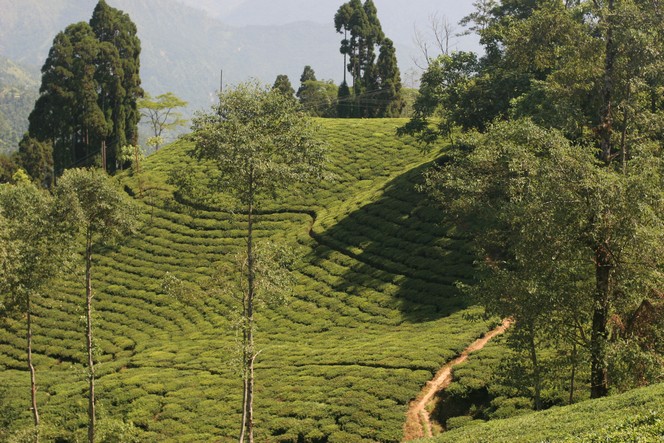
To accompany your tea tasting, here is a view of the Teesta Valley Estate itself. It offers the same roundness and sweetness as well as the famous vegetal note… It’s as if the landscape itself was reflected in our cups.