Master Tea Sommeliers: a shared passion

24 November 2023
previous arrow
next arrow
Slider

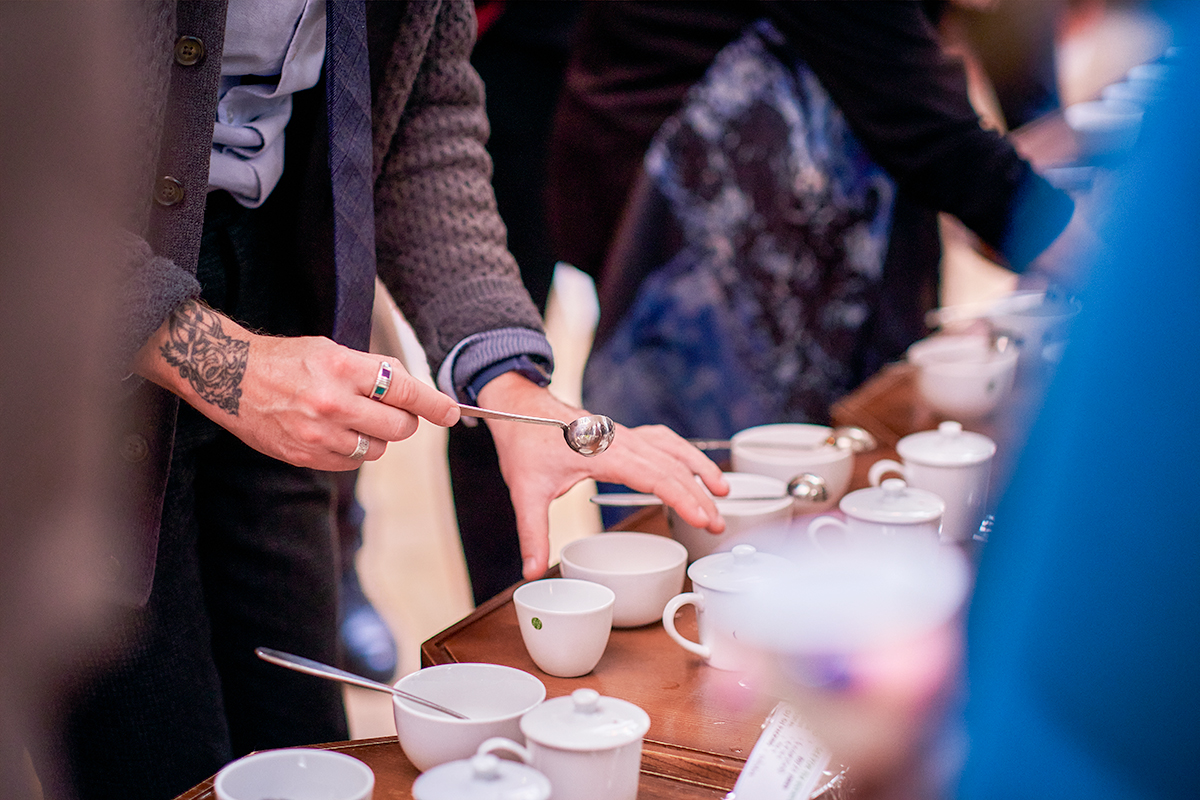
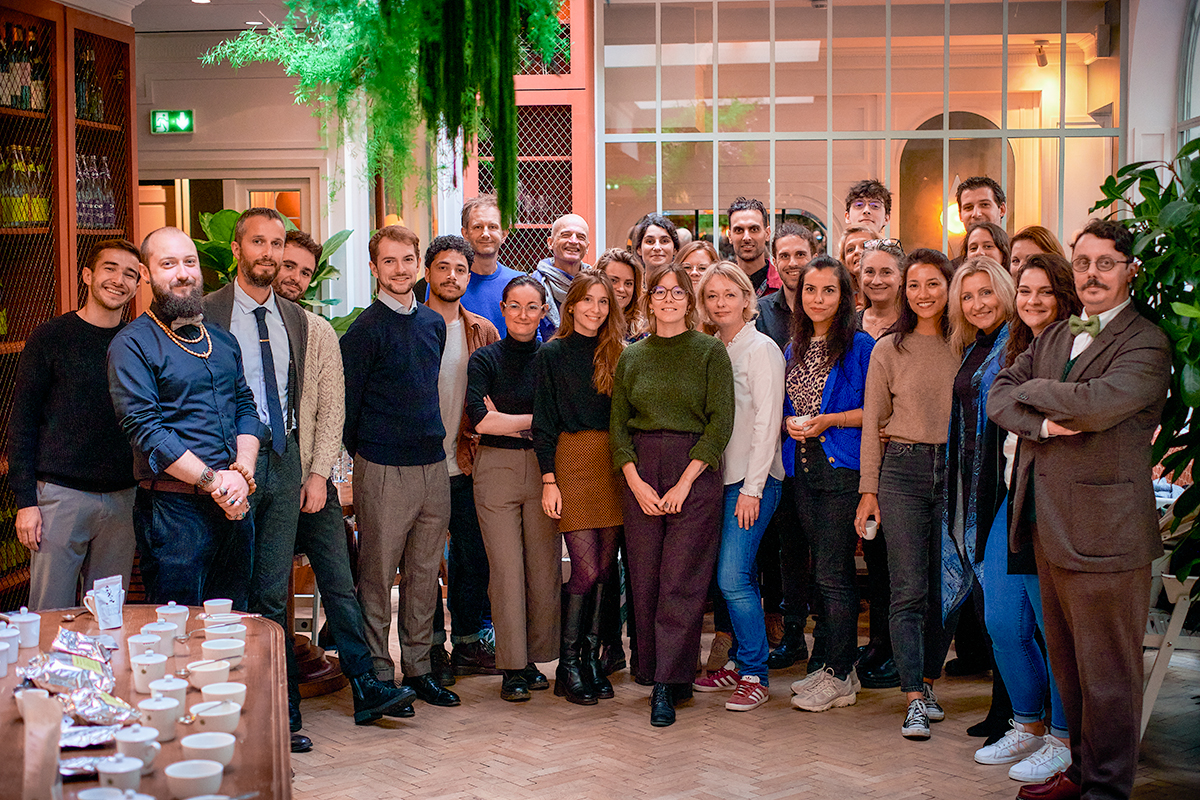
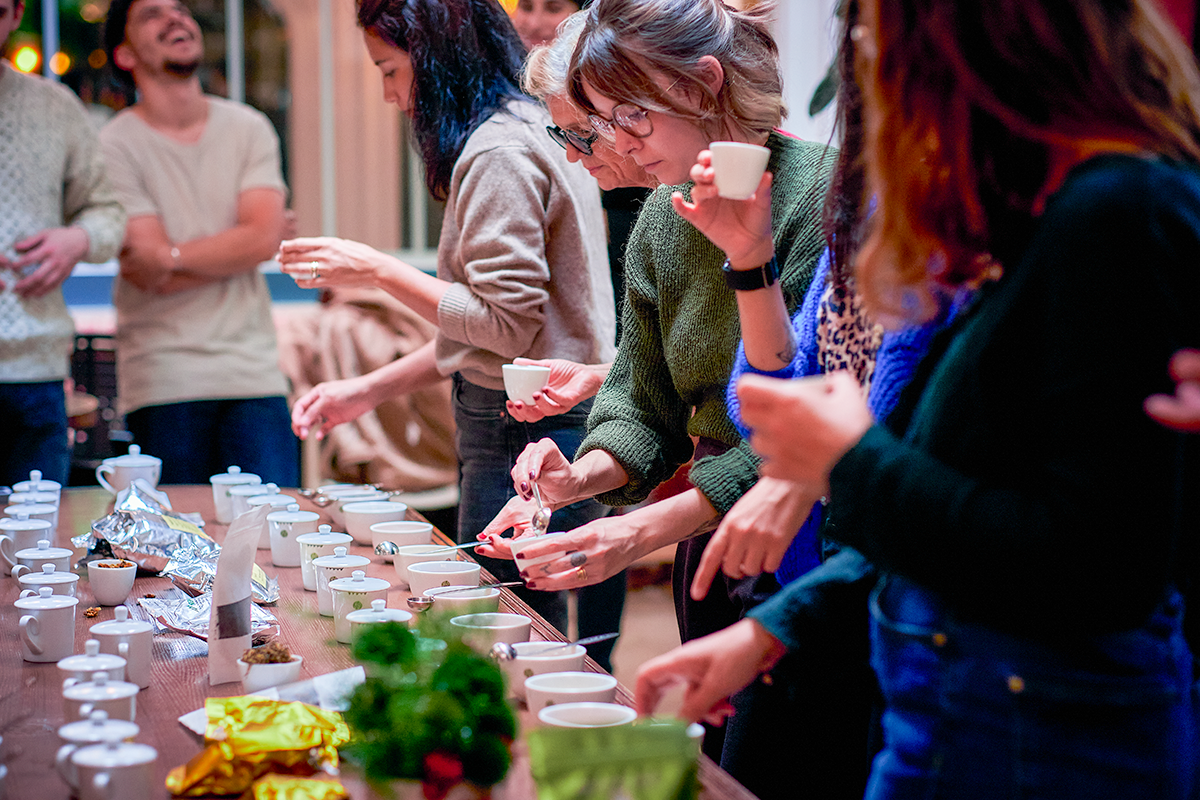
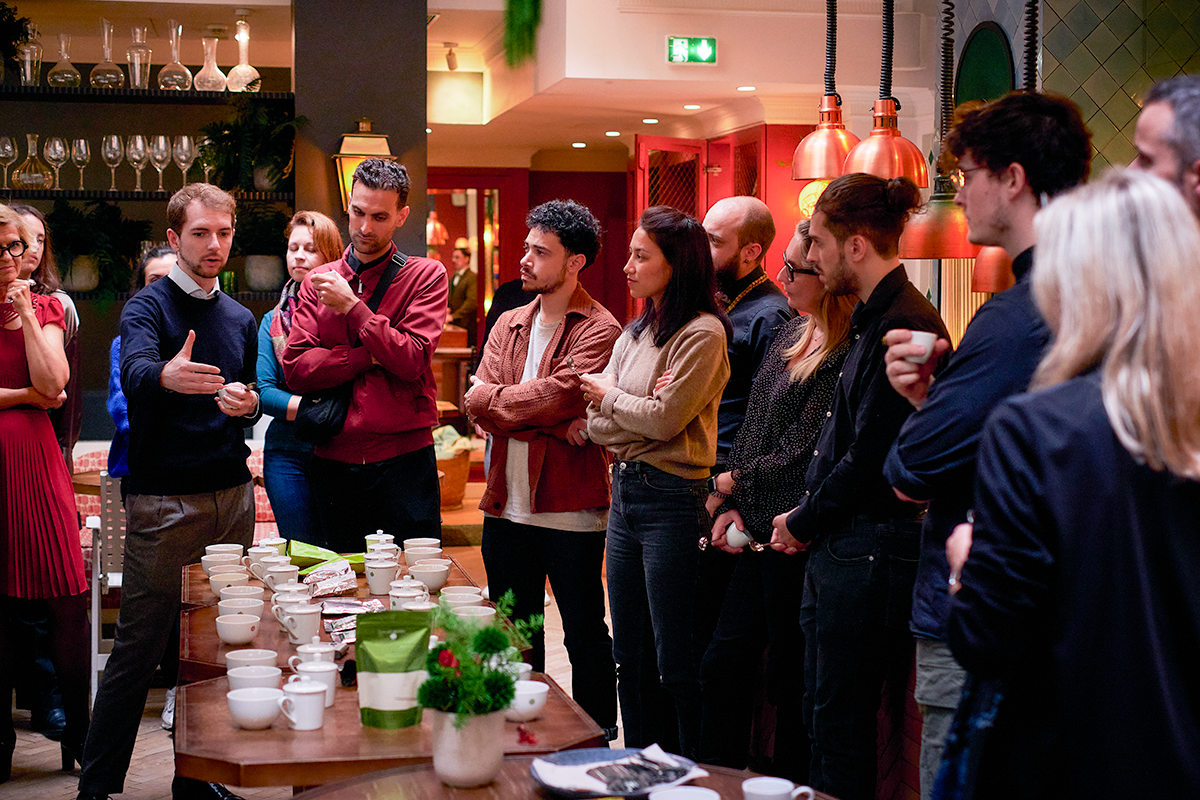
Once a year, Palais des Thés brings together its Master Tea Sommeliers. These connoisseurs represent the highest level of expertise. They have acquired an impressive amount of knowledge and earned this coveted and demanding diploma. We are proud to dedicate a day to these experts, a day of shared and diverse experiences. Together, we taste teas and celebrate a mutual passion.

(Photo: Louise Marinig)

Share on Facebook. Tweet this!

Small producers and large estates

17 November 2023
previous arrow
next arrow
Slider

In Darjeeling, a region I’m particularly fond of and have visited many times, there are large estates built by the British in the mid to late 19th century, as well as a number of small, local producers who own a few acres or collect the leaves harvested by neighbouring farmers. Some work on abandoned plantations. In these cases, the whole family harvests and then processes the leaves using artisanal methods, sometimes with great success. These initiatives include the Yanki Tea Farm and the Niroula Tea Farm.

Share on Facebook. Tweet this!

A lifetime

10 November 2023
A lifetime

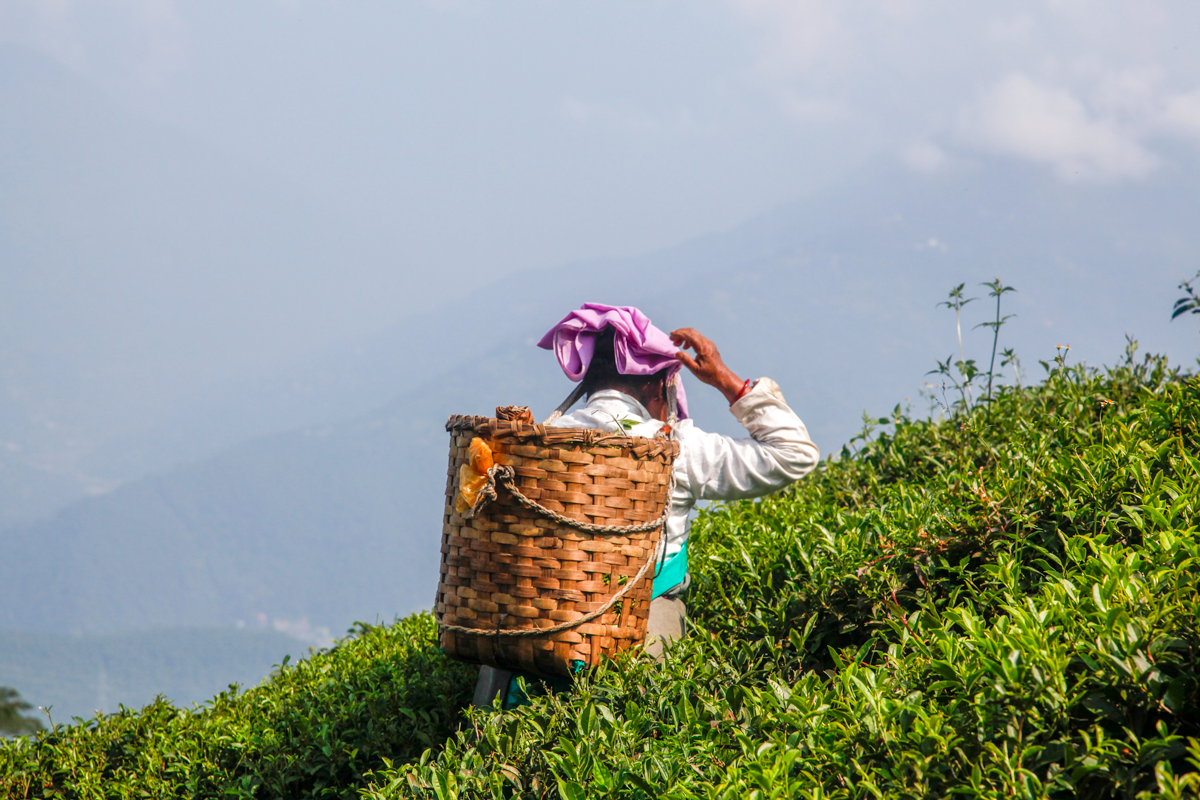
I will spend my life photographing the people who work with tea. Observing them, loving them, walking beside them, sitting next to them. Paying close attention to their every move. Waiting for the right light. Saying a few words in their language, if I can. Finding things to share. Or just staying silent and taking in all the air I can into my lungs, then even more, and feeling that air circulate around my body.

I will spend my life photographing people looking at me, people blushing or laughing. People who want more, who rush over to see the screen of my camera when I’ve taken a photo. And others who are more distant. I walked behind this woman carrying a full basket for a long time, trying to capture her attention, but she turned her back on me and walked away.

Share on Facebook. Tweet this!

The second nose

3 November 2023
The second nose

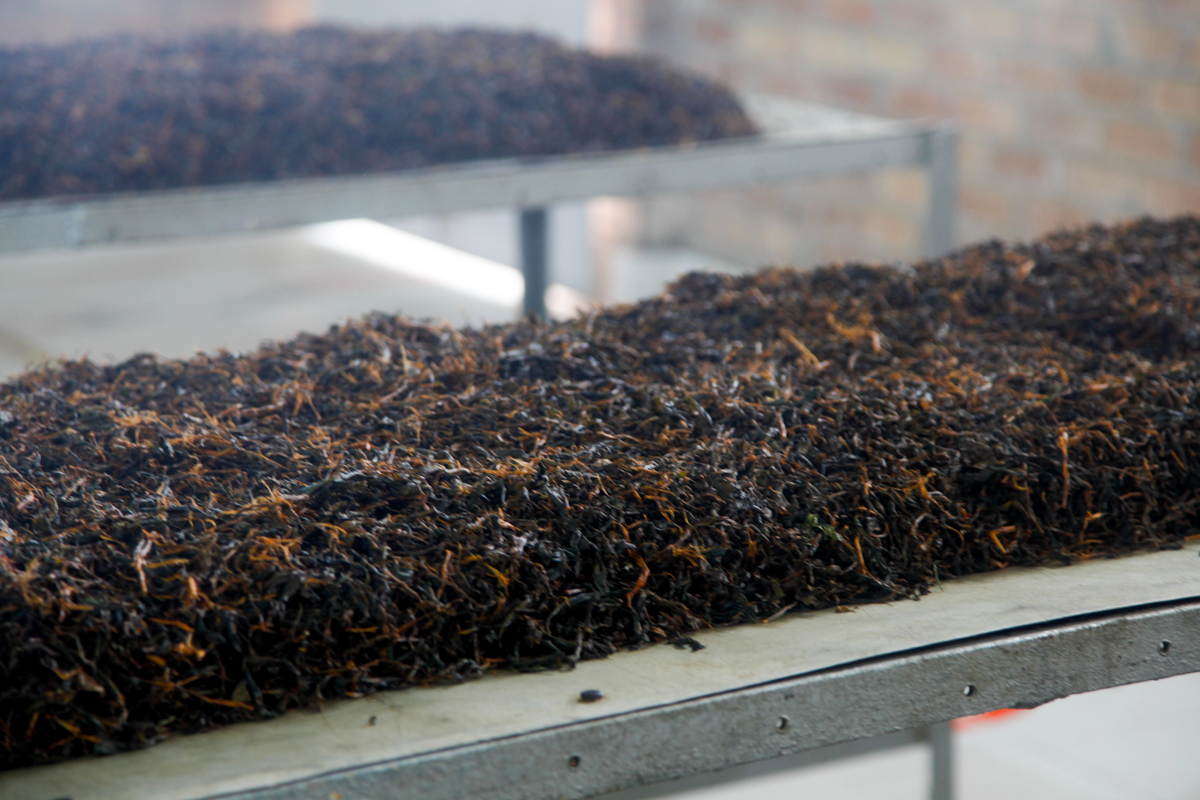
One of the trickiest stages in making black tea is achieving the right level of oxidation. The leaves are left to wither for a good ten hours or so, then tossed to bruise them and break down their structure. Then it’s time for the oxidation process, which requires humid conditions. During this stage, the leaves change colour from green to brown. Their aromas also change radically, developing notes of wood, stewed fruit and spices, among many others. When should oxidation be stopped? In Darjeeling, producers use the “second nose” principle. At the beginning of the oxidation process, the tea leaves give off an intense aroma that gradually fades after a few minutes, only to return in full force a while later. This return of aroma is known as the second nose. It signals that it’s time to stop oxidation as the perfect level has been achieved. All that remains is for the leaves to be dried, sorted and packaged.

Share on Facebook. Tweet this!

Strike day

27 October 2023
previous arrow
next arrow
Slider

Today, on the eve of the biggest religious festival in the Indian state of West Bengal, workers at this plantation in the Dooars are on strike. They are demanding an increase in their annual bonus, which they use to buy gifts for their family and friends. The bonus is a significant part of their annual salary. Meanwhile, the tea bushes proudly support the bags and umbrellas. A few hours later, having achieved what they wanted, everyone returns to their belongings and the picking resumes.

Share on Facebook. Tweet this!

Tea shapes us

20 October 2023
previous arrow
next arrow
Slider

Yesterday, I had a long chat with Jeewan Prakash Gurung, one of Darjeeling’s oldest planters. He has been in the tea business for a record 48 years! He welcomed me to his plantation in Seeyok and together we tasted teas and talked until it grew dark. I was impressed and moved by his words: “Tea is not a product, it’s a culture!” His pride shone through when he talked about himself and his fellow tea growers: “I’m proud of Darjeeling teas, they’ve made us what we are today.” On the winding road back to Mirik, as I looked out of the wide open window of the Jeep at the mountains in the misty night sky, I thought about his words and realised something important. For some people, it is enough to make tea and to shape the tea leaves, while for others it is the tea itself that has shaped them and made them who they are. This reminded me of Nicolas Bouvier’s quote: “You think you are making a trip, but soon it is making you.

Share on Facebook. Tweet this!

The peaceful ryokan

13 October 2023
previous arrow
next arrow
Slider

Everyone finds happiness where they want it. I find it when I’m surrounded by nature, in places that are alive with silence. I enjoy crowds for a while, but in Japan, after experiencing once again the crush of people jostling to cross the streets in all directions at the famous Shibuya intersection, nothing pleases me more than to find myself far from the city, in a ryokan, a traditional Japanese inn. There, in the middle of nowhere, where I am attuned to the slightest sound and the materials that surround me – wood, rice straw, stone – I dissolve into the landscape and find my place among the trees, the breeze and the murmuring stream. With a bowl of tea in my hand, I close my eyes and slowly savour the powerful, vegetal infusion. I stay focused on the present moment. “We drink tea to forget the noise of the world,” wrote Lu Yu, the “Sage of Tea” as he is still known, and the author of The Classic of Tea.

Share on Facebook. Tweet this!

The leaf market

6 October 2023
previous arrow
next arrow
Slider

In Japan there are wholesale markets where farmers sell their tea leaves. In Shizuoka, you have to get up early and be invited in if you want to see the farmers selling their aracha, or raw tea. The buyers are traders, sometimes farmers themselves, who carry out a series of tests on the leaves before selling them according to a grading system, to meet the demands of their customers. Trading is done quietly. They taste, then negotiate as discreetly as possible, using abacuses.

Share on Facebook. Tweet this!

Precision mechanics

29 September 2023
Play
previous arrow
next arrow
Slider

The Japanese are remarkably ingenious when it comes to harvesting tea. In the rest of the world, the leaves are hand-picked by legions of workers, but in Japan, labour is really expensive and so the growers have to do it themselves. This means using machines, each as well designed as the next. The quality of production is not affected by this mechanisation, as the Japanese are generally meticulous and take great care to do everything properly. Once the leaves have been gathered at the processing site, a sophisticated tool with an electronic eye is used to check that their shape, size, structure and colour are of the required quality.

Share on Facebook. Tweet this!

Shade-grown tea

22 September 2023
previous arrow
next arrow
Slider

There are teas grown in the light and there are teas grown in the shade. Shade-grown teas are made from leaves picked from shoots that have been deprived of light for three weeks before harvest, allowing them to develop the amino acids and umami flavour so prized by the Japanese. Japan is the traditional home of shade-grown teas, the most famous of which is Gyokuro. Its intensity and incomparable sweetness literally coat the palate, provided it is brewed correctly, at a very low temperature (50°C) and for just one or two minutes. It is best sipped from a tiny cup, like nectar.

Matcha is another shade-grown tea that has become well known in France, particularly for its use in pastries. It is made from finely ground shade-grown tea.

Share on Facebook. Tweet this!