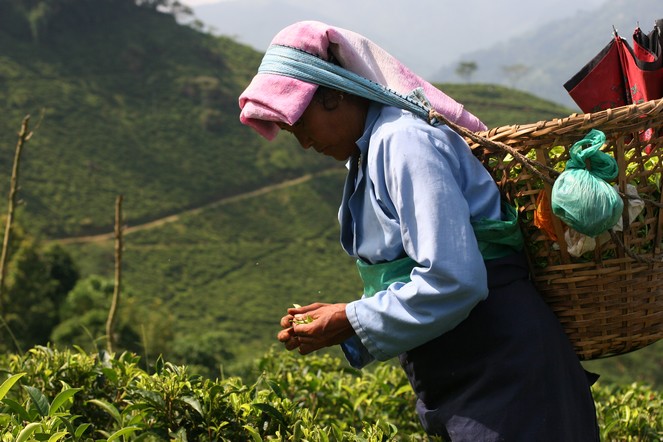
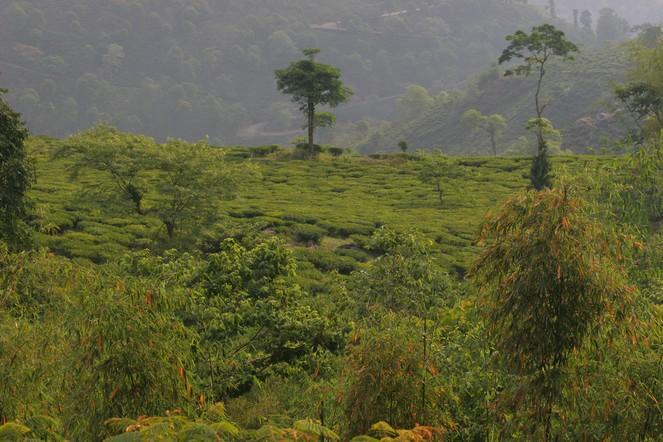
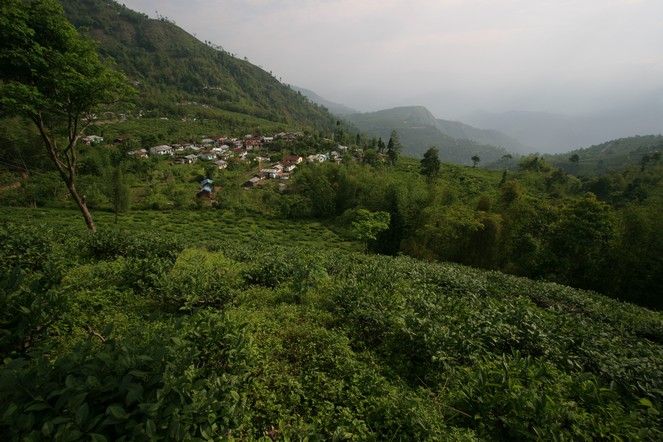
Don’t you think this landscape evokes calmness and tranquillity? Yet I took the photo in Darjeeling, a region that has been in political turmoil for more than 30 years. At regular intervals the local party calls for strikes in the hope of achieving some autonomy in the Indian Union, and the creation of a new state, Gorkhaland. Nowadays, all roads in the region are blocked, and the shops are shut.
A very special tea plantation
The jasmine flowers that scent our tea
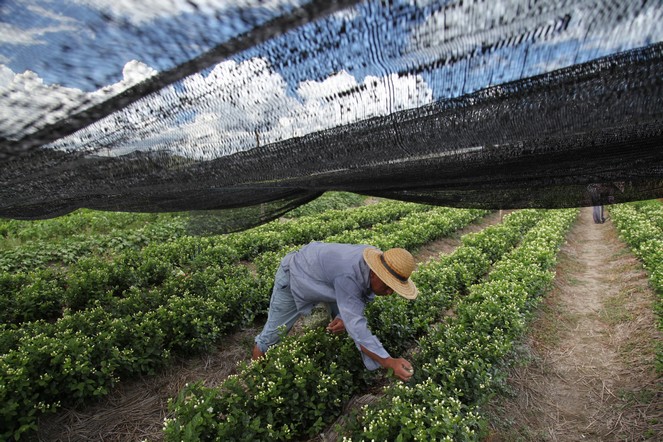
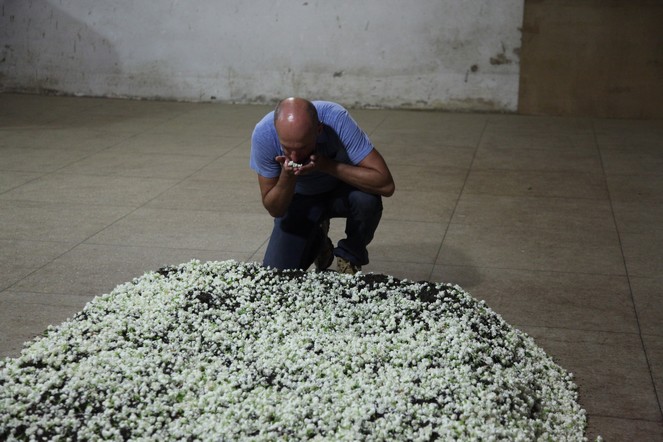
It is difficult to imagine the amount of work that goes into making the tea we drink. To produce one kilo of a top quality jasmine tea, for example, it takes 2.5 kilos of jasmine flowers, no less. With 100 flowers, you can make just 25 grams. So no fewer than 10,000 flowers, individually picked by hand, are needed to scent a kilo of tea. And the plucking of flowers in the time-honoured tradition, which I witnessed last week in southern China, sometimes takes place in scorching temperatures.
Scenting tea with jasmine
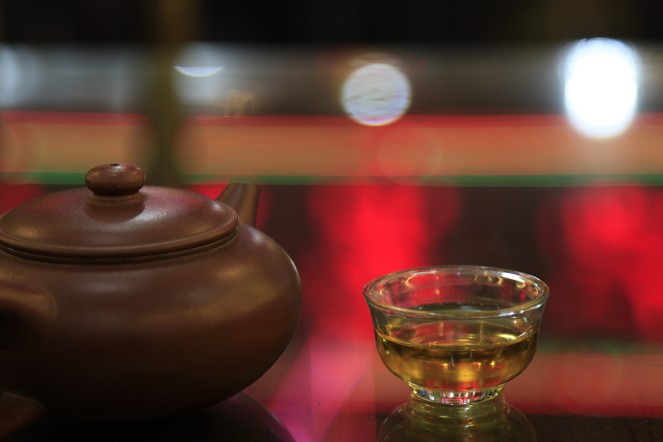
Evening tea in China
Instinctively, this photo makes me happy, because in Asia I discovered the pleasure of drinking tea in the evening, or even at night. In some western countries many people are reluctant to drink tea after 5 o’clock, but in China people enjoy it at any time, even late at night.
Sometimes, your cup is bathed in the warm reflections of the neon lights.
The steep slopes of Darjeeling
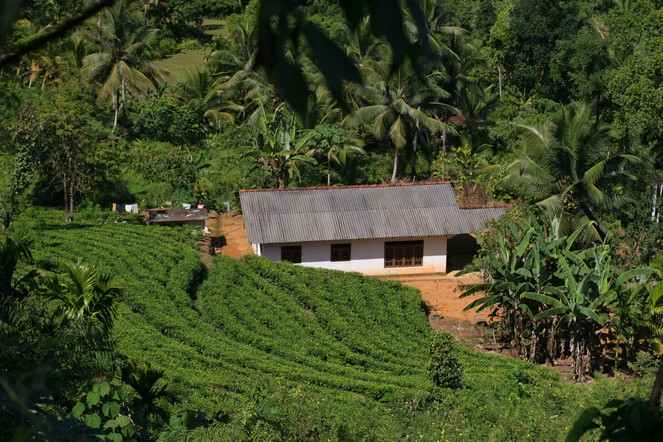
Camellia sinensis grows very happily on steep terrain, as it doesn’t like water stagnating around its roots. In some regions of the world, like Nepal, or here in Darjeeling, the slopes are very impressive. As I travel around the countryside I often discover a little village clinging onto the hillside above a field of tea. Sometimes you wonder how the pluckers manage to harvest the leaves in such conditions.
The Toy Train of Darjeeling sets off!
This summer, a number of you will be heading off on your travels. The Toy Train, too, is preparing for a scenic journey, as it leaves the station in Darjeeling. In eight hours it will be on the Terai plains, two thousand metres lower.
Different drinking habits
When it comes to tea drinking, customs change from country to country. In Burma, for example, tea is served slightly diluted with sweetened condensed milk. You can like or not like this way of doing things, but one of camellia sinensis’ many qualities is its tolerance and its ability to make the people of our planet want to adapt it to their own taste.
Tea awakens us to life
When I visit a monastery in Asia I always think of the important role the monks played in the spread of tea. Because tea has the ability to keep the mind alert, because it helps us learn, and assimilate knowledge, its use spread from monastery to monastery, from China to Korea, then from China to Japan.
What the monks tell us by carrying tea beyond borders in this way is that tea awakens us to life. It is good for our body, and good for our soul.