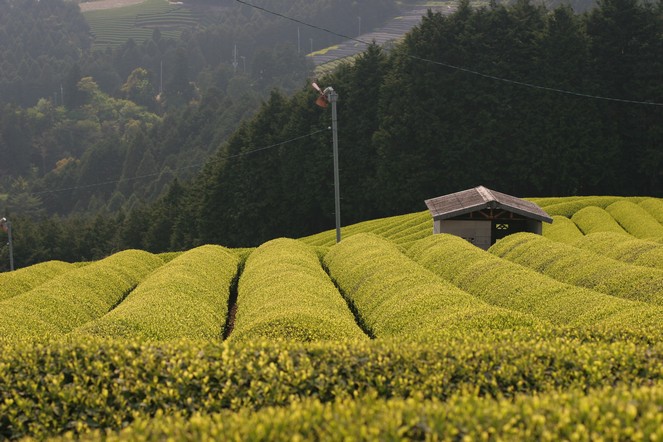
Because tea plants don’t like frost, Japanese tea fields are populated by strange shapes. When their blades are turning at the top, these fans prevent freezing air from stagnating above the bushes.
Tasting a fine tea using the Gong Fu Cha method
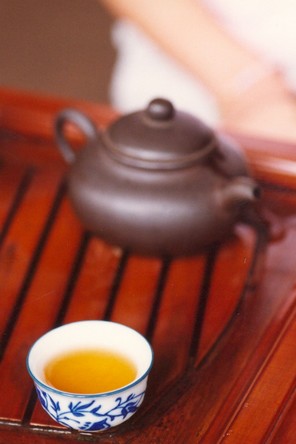
To appreciate a tea as fine as the Taiwanese “Black Pearl” I recently selected, there are two options: either use your usual teapot, or prepare it according to the Gong Fu Cha method. This involves placing the tea in a very small teapot and steeping the same leaves several times in succession. It is a different way of discovering the rich aromas of this fine tea, whose fairly sweet notes make it perfect for the season.
New Palais des Thés store opens in Bordeaux
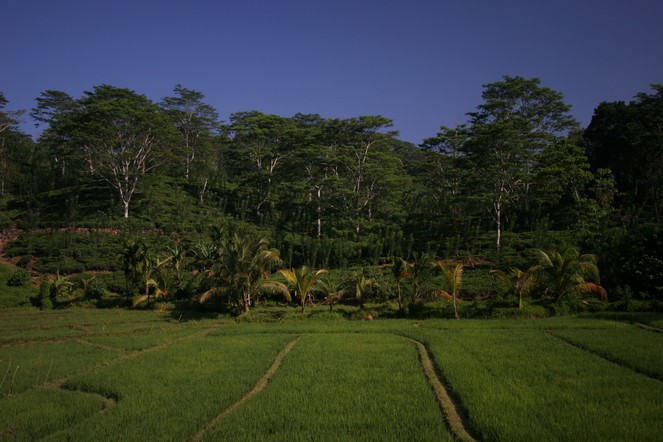
The day after the opening of the new Palais des Thés store in Bordeaux, I have chosen this photo with a nod to the region’s vineyards. I know the topography is different, but I must say that tea bushes and vines are very similar in terms of the lines they form within the landscape.
Tea: a simple, delicious and comforting drink
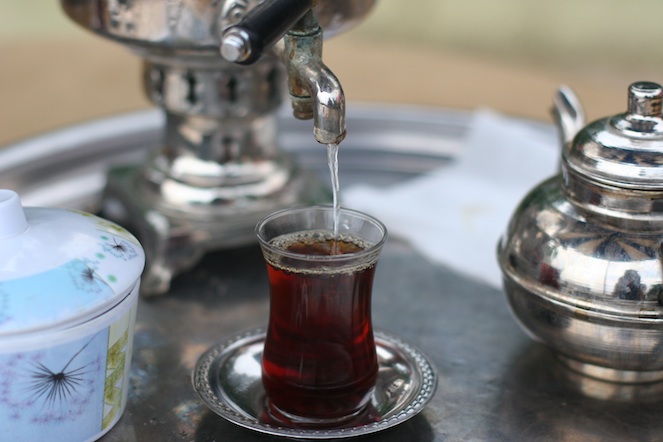
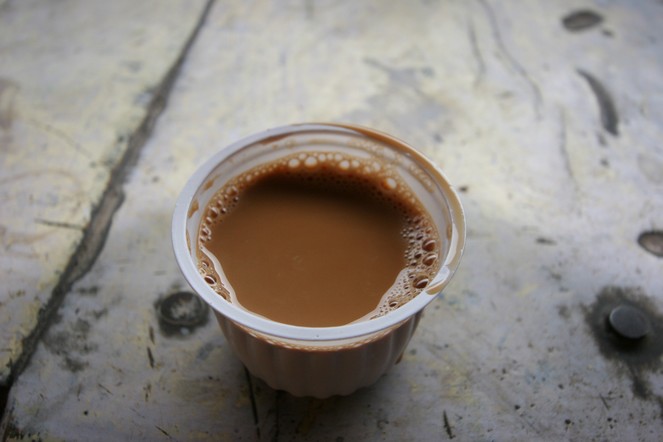
There are many ways to make tea and to drink it. Some ceremonies must be learnt, like the Japanese Cha No Yu. Other rituals have rules that are no less specific, like the British, Chinese, Moroccan, Tibetan and Russian customs, and many others. But we should never forget that for a quarter of the inhabitants of our planet, tea is the most simple drink there is. It is consumed without fanfare, anywhere, at any time of day or night; it is the most obvious thing in the world, both delicious and comforting; it is served in the street; it is tea, plain and simple.
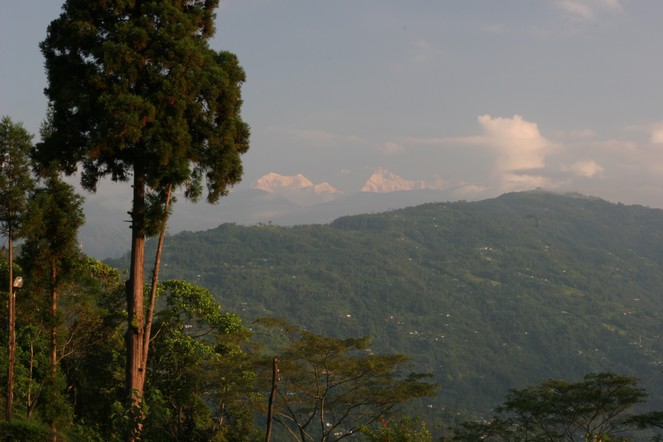
Autumn landscape in Darjeeling
The autumn colours of rooibos
The tea plant is an evergreen and its leaves do not change colour when cold weather follows the summer. So, to bring you some seasonal autumn colour, I have chosen an image of rooibos leaves spread out in very thin layers to dry on the ground, as they oxidise after being watered.
Teas from the Margaret’s Hope garden
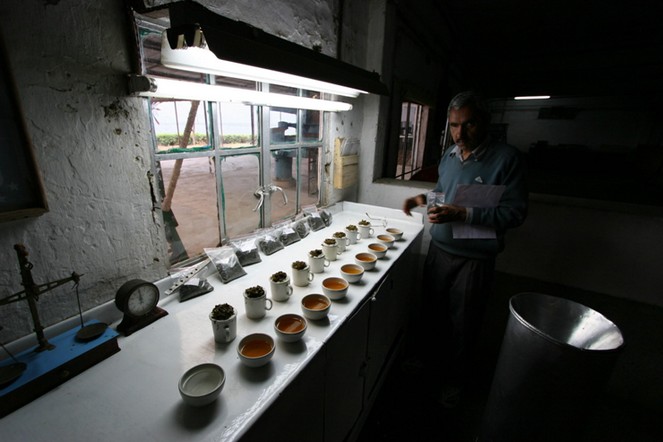
The Margaret’s Hope garden is one of the best known in Darjeeling. Its reputation is justified by the quality of its teas and also because, from time to time, this plantation products batches of a truly remarkable quality. Of course, you have to taste many samples before finding a rare gem, but that is exactly what my work entails: drinking large quantities of different teas every day.
Last spring I bought a batch from Margaret’s Hope that I am sure you remember if you were lucky enough to taste it. The planter called it White Delight. And I have just chosen a Margaret’s Hope DJ512 which has such an incredible floral bouquet it is worth the detour too. For connoisseurs, it comes from the varieties P312 and AV2.
Keeping tea
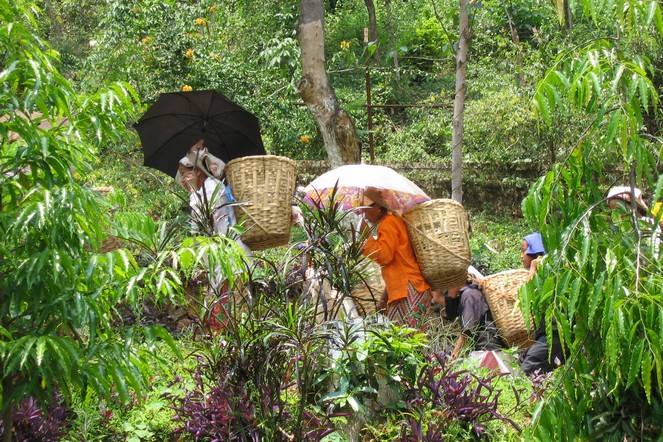
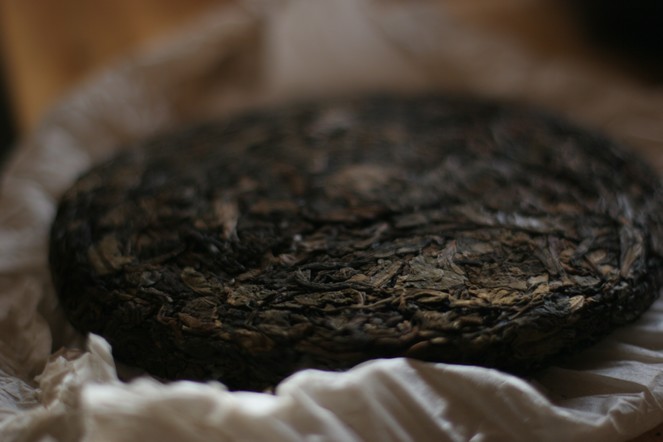
The optimal storage period can vary a great deal from one tea to another. Green teas from Japan and China do not last long, and just a few months after harvest the difference in flavour is noticeable. The same goes for first flush Darjeelings. On the other hand, what are known as dark teas, the famous Pu Ers, get better with age. Lastly, many black teas as well as the most oxidised of the Wulongs often retain their qualities for years. Like this Nepalese plucker whose smile, charm and generosity are impervious to the passing of time.
The autumn Darjeelings are arriving!
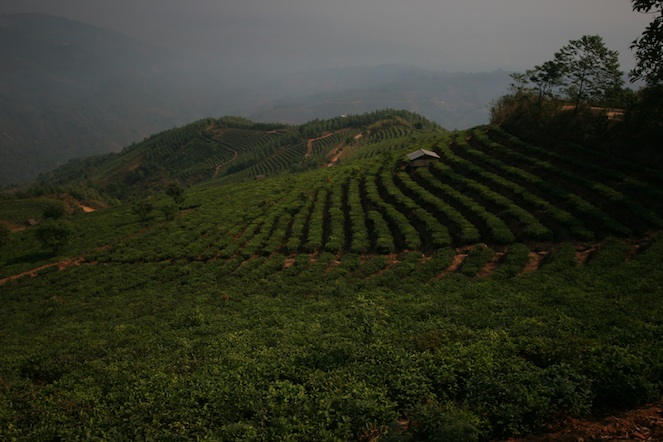
At the moment I’m tasting some delicious teas from Darjeeling. The autumn harvest (third flush) is early, and I have just chosen a Phuguri DJ168 as well as a Margaret’s Hope Pure Clonal DJ512; both are quite exceptional. They should arrive in France in about 10 days. As connoisseurs know, and to simplify a little, autumn Darjeelings are generally more woody than summer Darjeelings (second flush), which in turn are fruitier than spring Darjeelings (first flush). Whatever the season, though, these teas grow on mountains that offer breathtaking views.