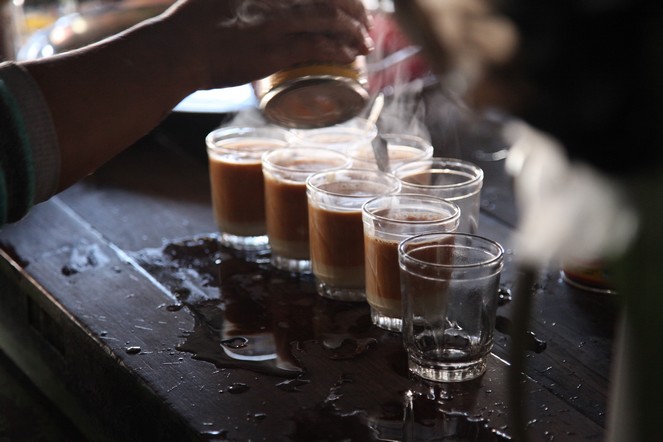
There are many ways to make tea and to drink it. Some ceremonies must be learnt, like the Japanese Cha No Yu. Other rituals have rules that are no less specific, like the British, Chinese, Moroccan, Tibetan and Russian customs, and many others. But we should never forget that for a quarter of the inhabitants of our planet, tea is the most simple drink there is. It is consumed without fanfare, anywhere, at any time of day or night; it is the most obvious thing in the world, both delicious and comforting; it is served in the street; it is tea, plain and simple.
Tea and food
Evening tea in China
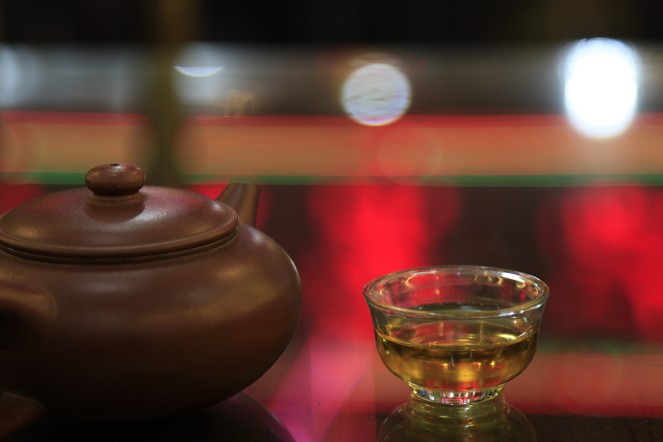
Instinctively, this photo makes me happy, because in Asia I discovered the pleasure of drinking tea in the evening, or even at night. In some western countries many people are reluctant to drink tea after 5 o’clock, but in China people enjoy it at any time, even late at night.
Sometimes, your cup is bathed in the warm reflections of the neon lights.
Different drinking habits
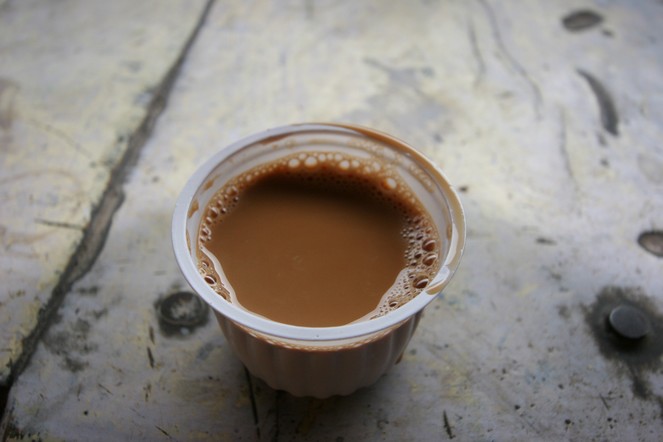
When it comes to tea drinking, customs change from country to country. In Burma, for example, tea is served slightly diluted with sweetened condensed milk. You can like or not like this way of doing things, but one of camellia sinensis’ many qualities is its tolerance and its ability to make the people of our planet want to adapt it to their own taste.
Delicious iced tea
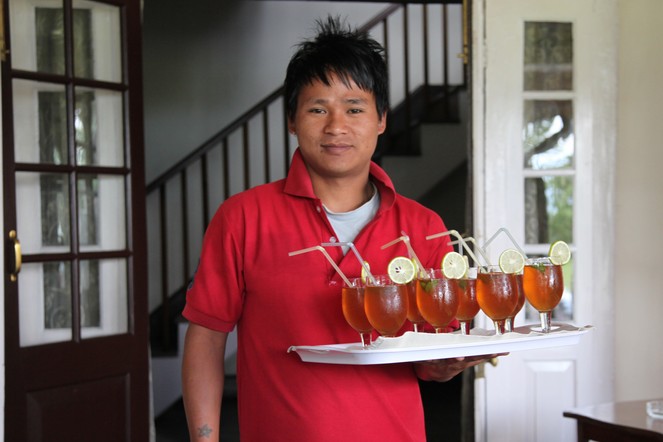
It’s summertime! I’d like to welcome you into the new season with a delicious iced tea. Steep your tea in water at room temperature and then chill in the fridge. Before serving, add a spoonful of honey, a slice of orange and perhaps a few mint leaves, and you will have a drink that is both delicious and refreshing.
There is nothing better than an iced tea to serve friends, young and old, like here on the veranda at Tomsong in Darjeeling. Here’s to tea!
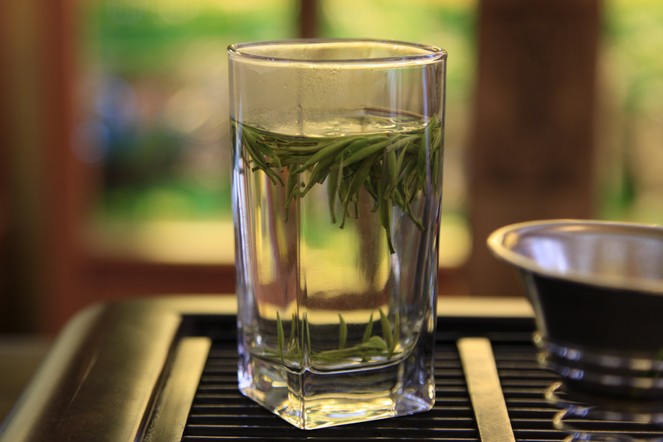
Serving tea in a glass
The importance of water temperature
Some teas suffer from being infused in water that is too hot. On this subject, I’d like to tell you that you cannot make a good cup of tea if the water has been boiled, even if it is then left to cool down. In fact, when water boils, the oxygen evaporates, and the tea leaves need this oxygen during infusion to release all their flavours and aromas.
Cooking and tea
Gradually, tea is coming out of its teapot: more and more chefs are using it as an ingredient in their cooking. First there was baking with matcha; now tea is making itself more at home in the kitchen as a flavouring for savoury dishes.
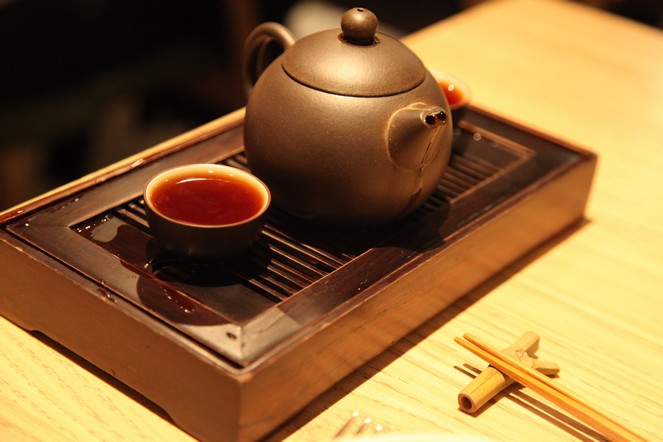
Tea is also served as an accompaniment to food, like here at Yam’Tcha, in Paris, where a pu erh is paired with a chicken dish, poularde de Bresse.
The best way to make a cup of first flush Darjeeling
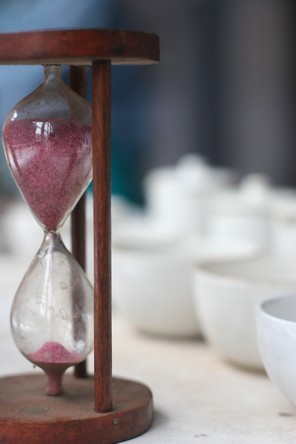
For those of you who are getting your first taste of a first flush Darjeeling, I’d like to remind you that these are rare and fragile teas that need to be prepared with care. The infusion time, for example, should not exceed three minutes and 45 seconds. A fine tea is all about harmony. We look for a balance between the textures, flavours and aromas. With first flush Darjeelings, the best way to find this harmony is to keep the infusion time to between 3’30 and 3’45.
Tea tastings
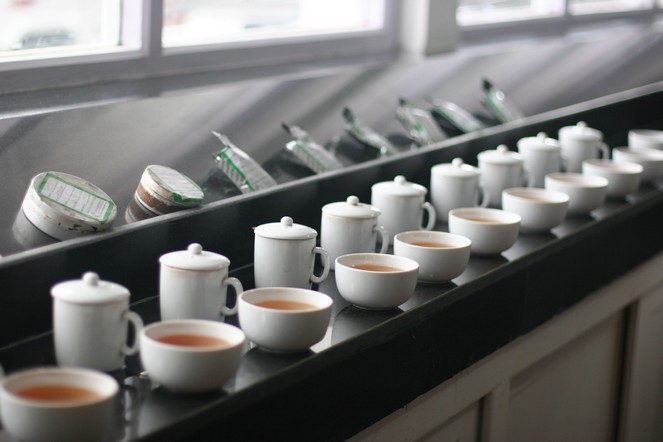
At the moment I’m tasting between 50 and 100 different teas a day.
I try them in series of about 10 or 12. When you taste so many teas at the same time, you spit them out, for obvious reasons. Most importantly, you taste each tea twice, and in a different order, so you’re not influenced by the qualities or flaws of the previous tea.
This is because when you taste several batches in a row, you have a tendency to pick out what is different about them rather than their similarities, and if I didn’t taste each one twice, I could miss out on some wonderful teas.
Rooibos tastings
There are different grades of rooibos, but not much difference between them. However, the “long cut” offers the most interesting experience in terms of fine flavours and powerful aromas. It is the most harmonious. It is the only grade I have bought for years.
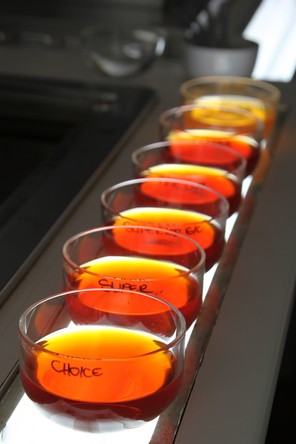
An amusing detail: for rooibos tastings in South Africa, the cups are lit from beneath in order to judge the clarity of the liquor.