
Have you ever tasted a Dan Cong tea? These famous wu longs are produced in Guangdong province (China), in the Feng Huang Shan mountains where I took this photo, facing in the direction of the sea.
Feng Huang Shan mountains, China
31 August 2012
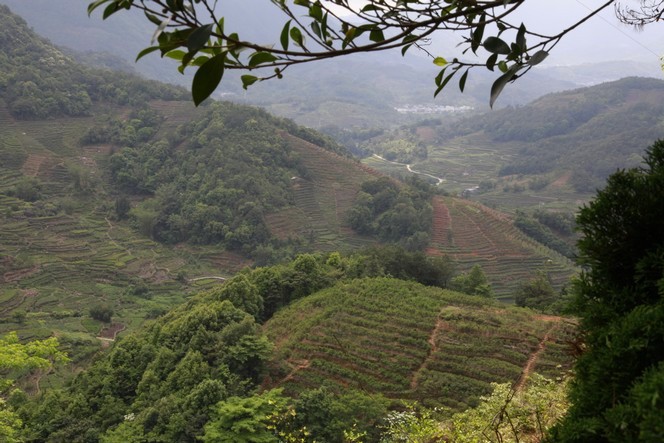
Have you ever tasted a Dan Cong tea? These famous wu longs are produced in Guangdong province (China), in the Feng Huang Shan mountains where I took this photo, facing in the direction of the sea.
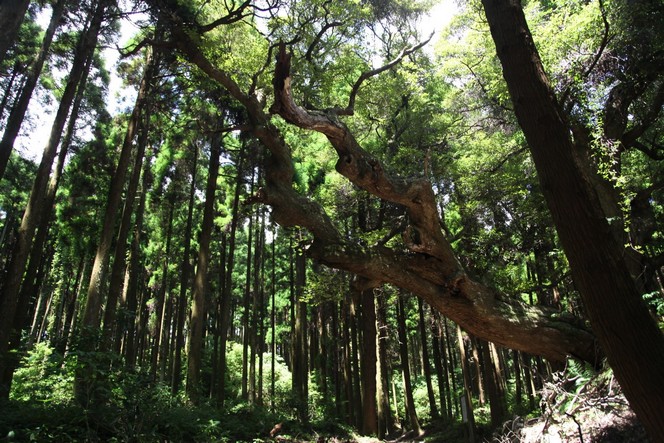
It is worth visiting Japan’s first tea gardens. These ones were planted on the island of Kyushu, apparently around the 17th century. They are very small gardens, situated on the mountainsides. To visit them you must travel through dense forests, mainly made up of magnificent cryptomeria trees. You walk along a narrow, well-worn path and then, coming across a clearing, you discover a tea garden.
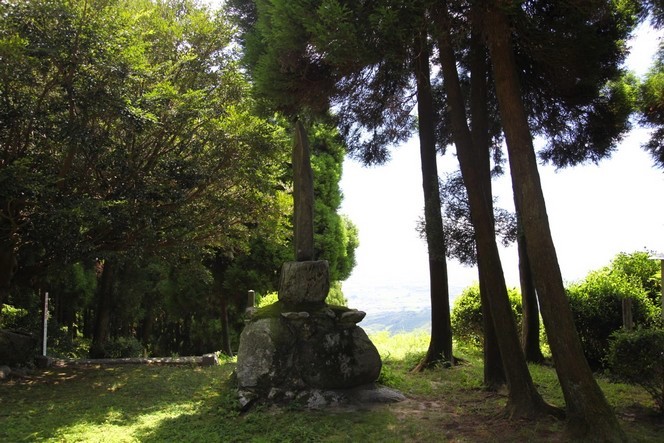
This stele may look unprepossessing, but for fans of Japanese teas it is worth a detour. The stone bears an inscription stating that it was in this place that the monk Eisai, who came from Long Jing in China, planted tea seeds he had brought with him. As for the rest, you can see the outlines of some Camellia Sinensis trees on the right. At the moment I’m on the island of Kyushu, near the city of Saga, where the story of Japanese tea began.
I should also mention that there are a few other similar stelae on the same mountain, bearing roughly the same inscription.
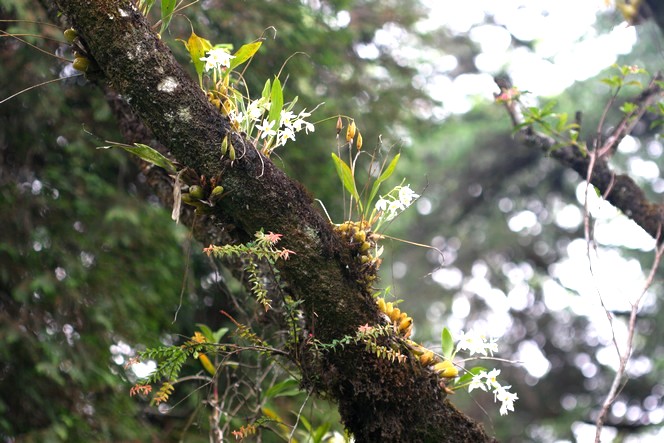
Spending your life in the tea fields does not prevent you from wandering around the tea plantations and raising your eyes to admire the nature around you. Here in Nepal, wild orchids grow right on the tree bark. Alongside them live many other delicately coloured flowers and mosses.
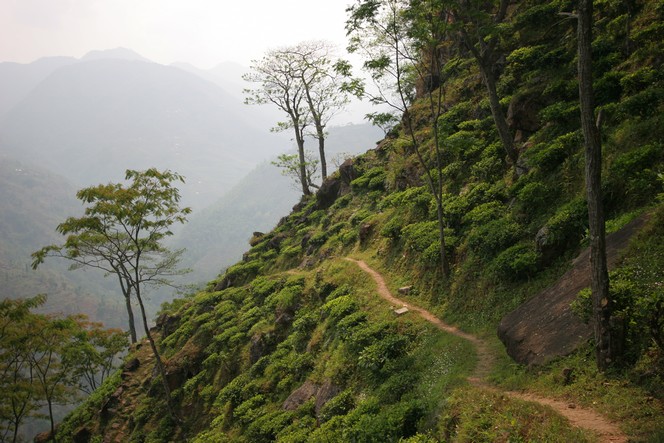
For the first time, a few weeks ago, I bought a lot of a spring tea from the Kanchenjunga Tea Estate. This Nepalese plantation, situated in the middle of nowhere – two day’s travel across the Terai Plain – is one of the most promising in the country.
While there, you can admire the incredible steepness of the slopes as you realise how difficult it must be to harvest the leaves on such a gradient. As for this narrow path which snakes around the side of the mountain, and along which I have seen villagers walking, laden down like mules, it is the only route for the inhabitants of other hamlets located a few days’ walk from here.
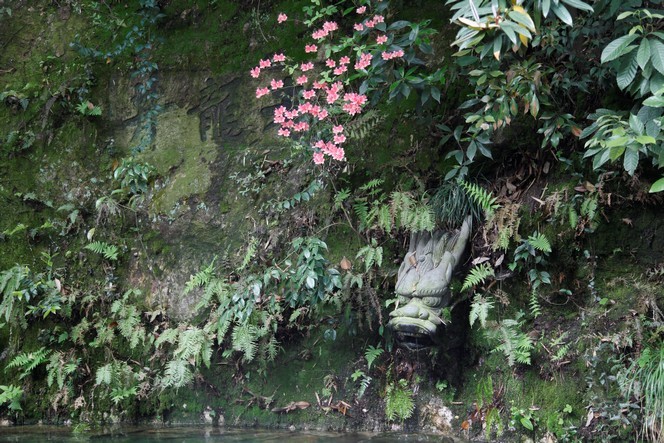
This is for fans of Long Jing. This is the source of the Dragon Well that gave its name to this prestigious tea and to the eponymous city. It is a few kilometres from Hangzhou (China).
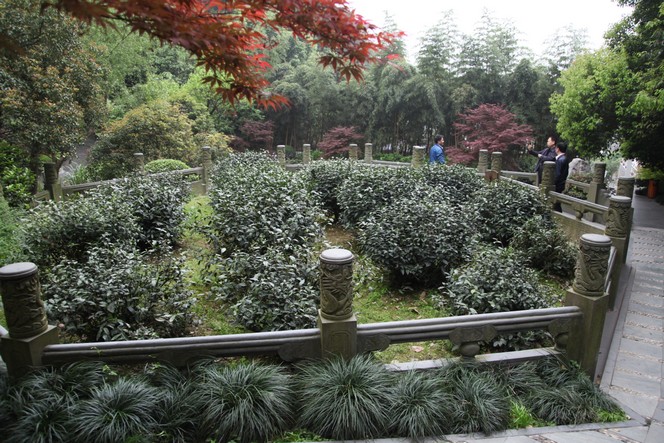
A visit to 18 imperial Long Jing tea plants is an essential stop on the tourist trail around this region. These tea plants owe their status to emperor Qian Long who wanted to demonstrate his love of the famous “Dragon Well”, which remains one of the finest China green teas today.
Supposedly dating back to the 18th century, I wonder whether these shrubs have not in fact been discreetly replaced since then, as some of the stems do not appear as old as that. But for the buyers, this seems of little importance given the price at which their small but ultra prestigious harvest of leaves sells for: 36,000 euros per kilo!
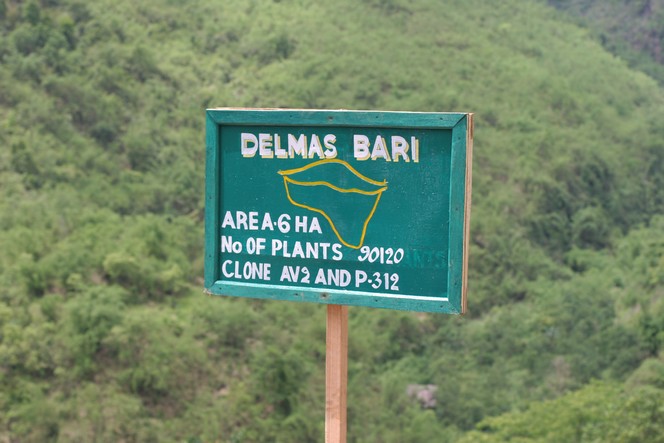
It must be nearly 10 years since a plot of land on the North Tukvar estate was given my name. In high season, these hectares produce a remarkable tea thanks to the skill of the planter, of course, but also because of the quality of the tea plants selected. They are among my favourites.
For the first time, a single lot of tea from this plot has arrived in Paris. For fans of delicate, fruity, vegetal notes and the fragrance of white flowers, this is its name: Darjeeling North Tukvar DJ14 Delmas Bari.
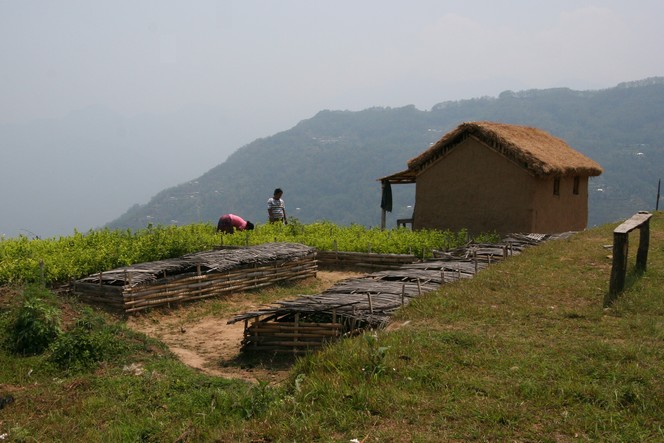
While many of you are taking advantage of the long weekend of the Ascension holiday to escape to the country, I’m in Paris at my tasting table with an impressive number of samples before me. I won’t have time to taste them all over the weekend. In Darjeeling, the harvests are over, but I’m now receiving new-season green teas from China, all very fine examples indeed. Every year, their vegetal aroma is like a big bowl of fresh air. I’m also getting sent most of the Nepalese teas which, in nearly a decade, have achieved excellent standards. New gardens are joining them and making themselves known. Excellence is worth waiting for – it has taken them years to reach this point. Just like these young tea plants, which are receiving such attentive care.
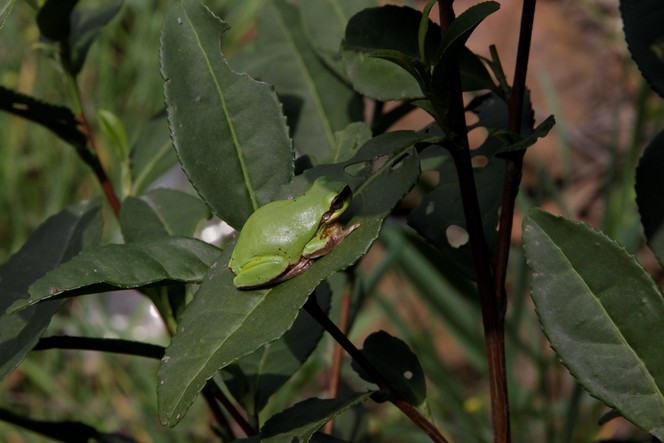
The leaves of the tea plant attract many predators, undoubtedly due to their delicious taste.
In addition to its gastronomic qualities, tea is supposed to promote wellbeing and serenity. This harmless frog, very much at ease, would surely agree.