Spare a thought for Nepal

27 May 2016
Spare a thought for Nepal

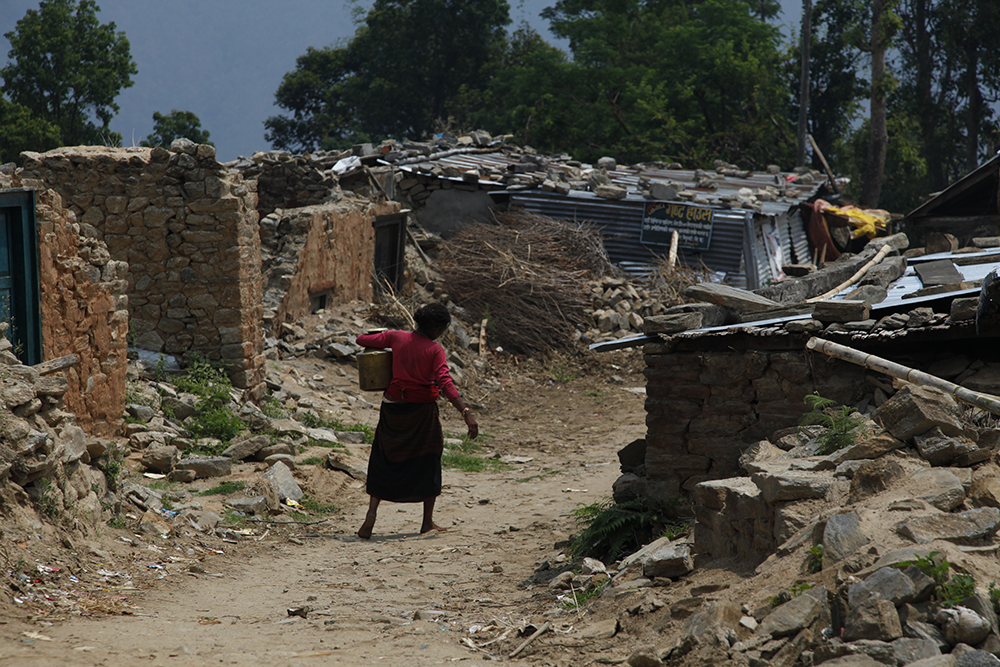
It’s more than a year since Nepal was hit by a powerful earthquake. And since then, for many villagers, life has not improved. In this country that is very rural and particularly mountainous, the aid they were promised has not been forthcoming. Many people are living in their houses as before: they have placed a makeshift roof over the ruins, and life goes on. But what will happen to them after the monsoon, what will they have left after the rainy season that turns everything into mud?

Share on Facebook. Tweet this!

Spring follows spring

20 May 2016
Spring follows spring

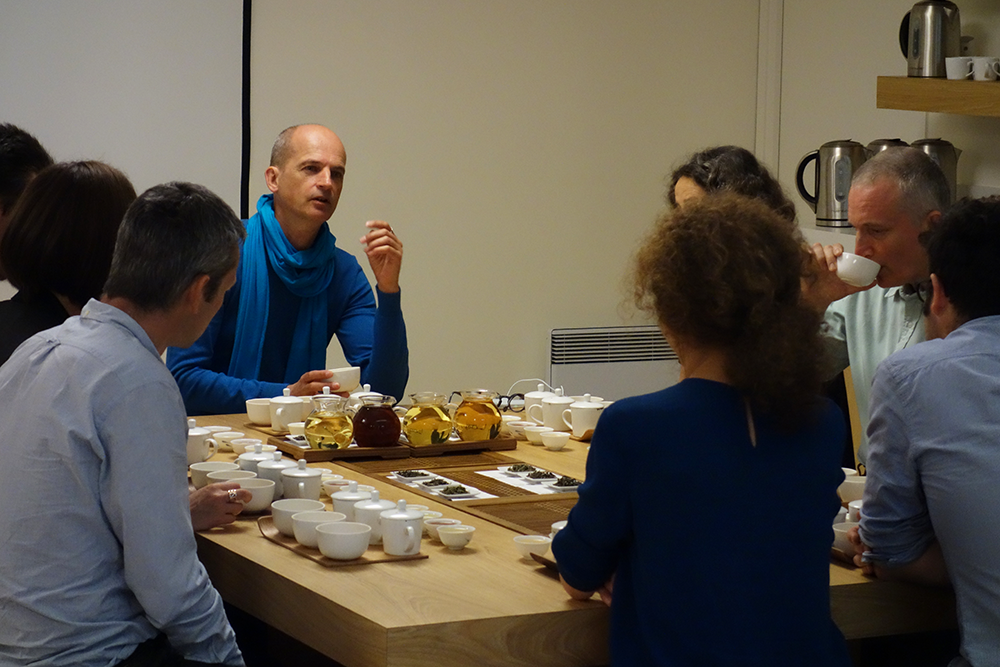
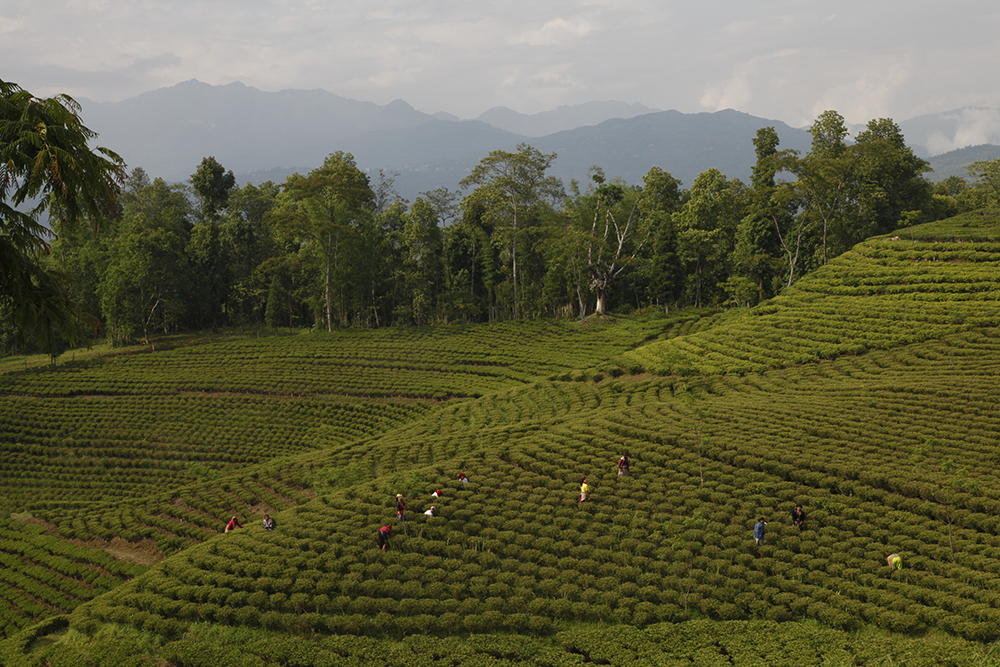
After Darjeeling, we turn our attention to Nepal, China and Japan, to enjoy their new spring teas. In Japan, we return to the farmers we know, and we also enjoy discovering teas from others. In China, we are guided by the traditional appellations, which are attached to a particular village. In Nepal, we know which plantations are capable of producing the best teas at particular times of year. There is sometimes an added difficulty though, like here at Kuwapani. The planter, who was an employee rather than the owner of the plantation, has left. What will the results be like under his successor? We’ll know the answer in a few months’ time. Meanwhile, let’s enjoy tasting the new teas this spring has to offer!

Share on Facebook. Tweet this!

Tea in your cocktails – a novel and delicious idea!

13 May 2016
Tea in your cocktails – a novel and delicious idea!

 
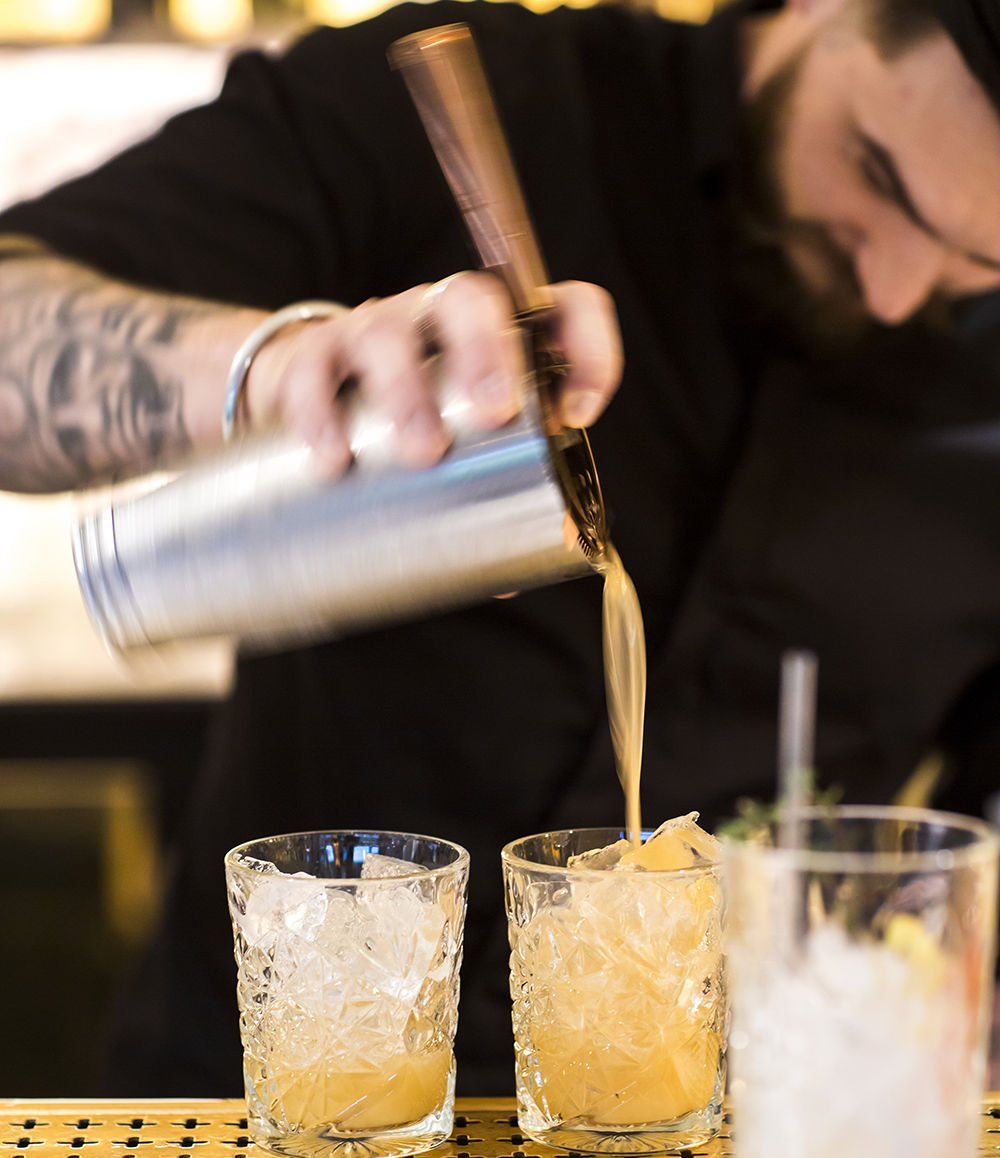
You can use tea in many ways. In cooking, if there is water, milk or single cream in a recipe, for example, you simply infuse the tea in the liquid and filter it. I’ll come back to that subject soon. You can also make cocktails with tea. If you’d like to try it, you can infuse tea directly in alcohol, though you may have to use more tea and steep it for longer. You can also prepare a strong tea in the usual way, and use it as an ingredient. Herbal infusions are also very good in cocktails. Philippe Carraz, head barman at the Alcazar, is pictured here mixing a delicious non-alcoholic cocktail made from agave syrup, fresh ginger, our Romantic Garden and a few sprigs of thyme. Let me know what you think.

Share on Facebook. Tweet this!

Chai is great!

6 May 2016
Chai is great!

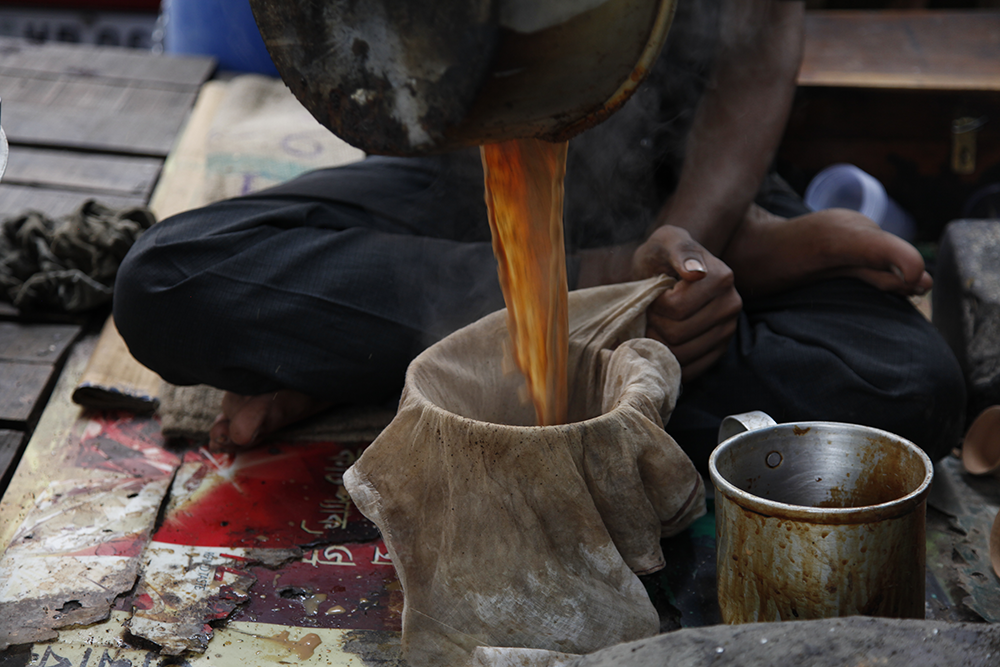
You know how they are, tea drinkers – they can be obsessive. They save a special teapot for a particular tea, they infuse some teas for exactly three minutes and 45 seconds in water at 85°C, others for just two minutes in water at a maximum temperature of 60°C.

So this photo I took in Kolkata makes me smile. Firstly, because I really enjoy drinking chai when I’m in India. Secondly, because all the tea-drinker’s principles have gone out of the window here. This chai wallah boils up his water, puts milk in his tea, adds a load of spices and works in basic conditions, seated on a scrap of cardboard placed on the pavement, without fanfare. And that’s what tea is about, too: simply made, with care, and an absolutely delicious drink in a cup. Chai is great!

Share on Facebook. Tweet this!

Tea leaves under a shelter

29 April 2016
Tea leaves under a shelter

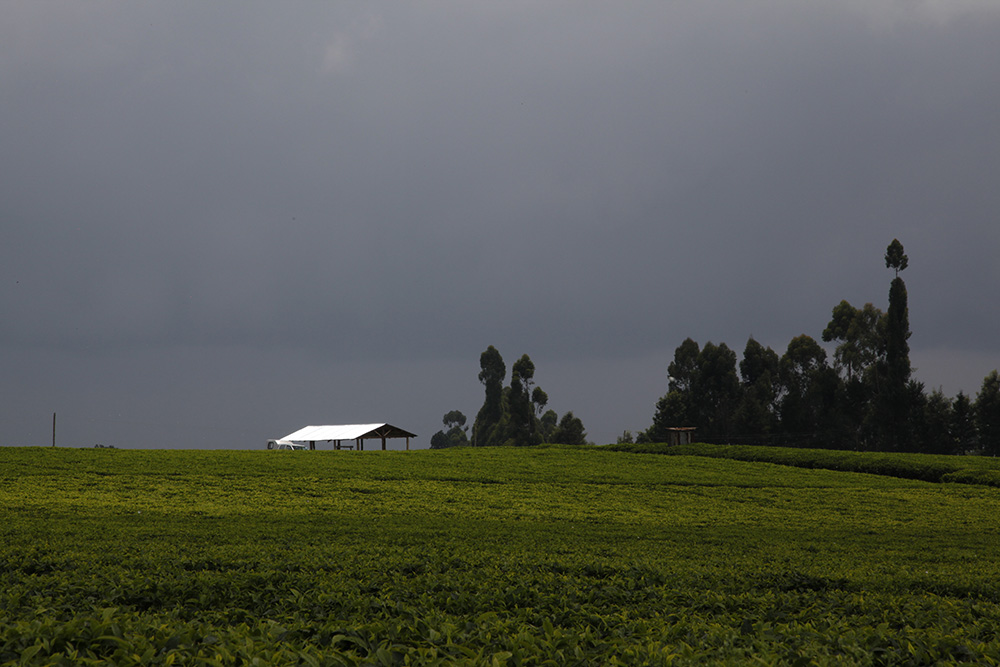
From the time the tea leaves are harvested to the moment they reach the factory for processing, they must not be allowed to start fermenting, as this could spoil the quality of the tea. So in various locations around plantations there are small shelters built to protect the leaves from rain until they are taken to the factory.

Share on Facebook. Tweet this!

Love is in the streets

22 April 2016
Love is in the streets

On the hoarding surrounding one of our stores during renovation work, above an image of a cup of tea held carefully in two hands (we don’t know if it’s being handed to someone or being admired, but we can tell it’s the focus of attention), there’s some graffiti that makes me happy. A friend pointed it out to me. It’s a statement, a piece of important news. It’s worth stopping to look at.

Usually, I tell you about my travels far away on the other side of the planet, often in the mountains covered in mist, but it’s also good to pay attention to one’s immediate surroundings, and not always tell oneself that the grass is greener, that life is undoubtedly better, elsewhere. L’amour court les rues. Love is in the streets. This is good news. Because we demand it, the media constantly bombards us with bad news and forgets to give us this essential information: love is in the streets.

From Paris to Bamako, from Brussels to Istanbul, we sometimes have reason to doubt it, but love is in the streets because it’s written here, and it’s much more newsworthy than some other events. The graffiti in question is actually located in a street that Saint Denis passed through, just after his head had been cut off, and he was holding it in his hands, on his way to the place where the basilica bears his name. So not only is love in the streets, but it came after the martyrs, reminding us that love is more powerful that all hatred put together.

What if this graffiti artist was right? What if love was in the streets and we didn’t notice it, because we didn’t have time, we weren’t present, weren’t paying attention, weren’t aware? Because we were lacking altruism, Matthieu Ricard would say? We must try to be happy, even if it’s just to set an example, wrote Prévert. We could try to make the streets a bit more human, smile at ourselves, be kind to ourselves whenever we can, look after ourselves, say thank you when appropriate, help ourselves when necessary. Yes, love is in the streets, so let’s welcome it instead of not seeing it, let’s make room for it. It’s up to us. Let’s not let it go.

Share on Facebook. Tweet this!

Darjeeling teas and Nepalese teas: two schools

15 April 2016
Darjeeling teas and Nepalese teas: two schools

Due to a way of thinking I don’t share, Darjeeling tea producers fear competition from their Nepalese neighbours. They think the latter are copying them and can sell their teas more cheaply, because of their lower production costs.

Yes, Nepalese teas sometimes offer good value for money, but they are not copies of Darjeelings. There are some passionate planters in Nepal who know that their country still needs to prove itself to gain recognition in the world of tea, and as a result, they try to be innovative. In Darjeeling, planters are in a more comfortable position due to their reputation that is often – but not always – merited.

So, they are two different worlds: innovation on one side, tradition on the other. By looking carefully and being highly selective, you can find excellent teas on both sides of the border. And it would be a shame to deprive yourself of either kind.

Share on Facebook. Tweet this!

Darjeelings in demand

8 April 2016
Darjeelings in demand

It’s not an easy job, growing tea. In Darjeeling, after a winter that was too dry, it did eventually rain, but a few days ago an unusually violent hailstorm hit the region and caused considerable damage on plantations in the north of the district. Luckily, between the rain and hail, a few very good batches were produced, and I’m pleased to say that we will shortly be receiving some remarkable teas from Risheehat, Puttabong, Singbulli, Thurbo Moonlight, North Tukvar, DelmasBari and Turzum.

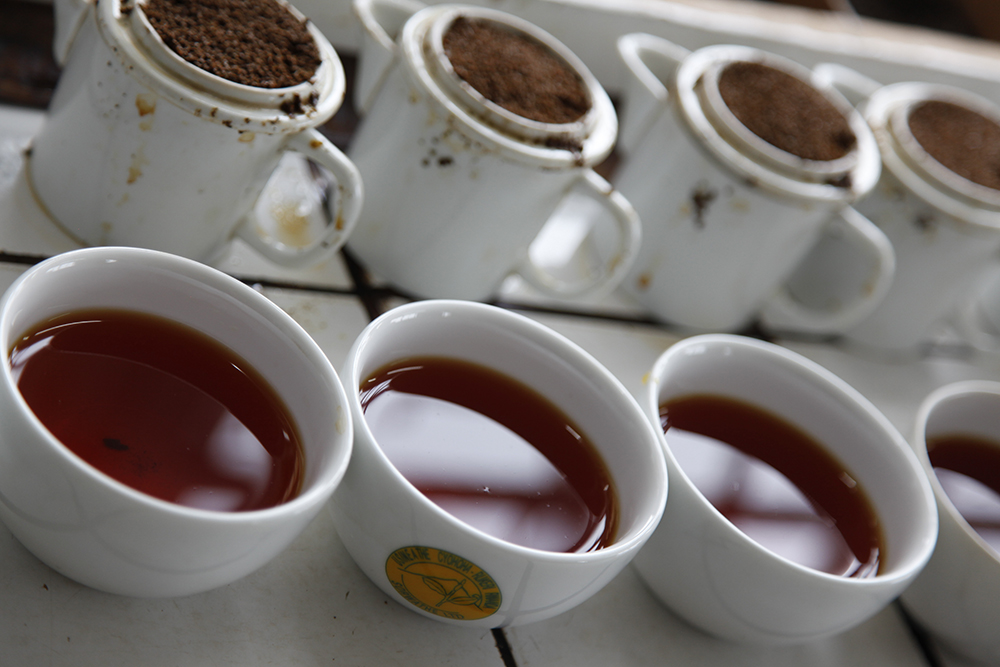
Speaking of Turzum, here’s a photo I took in March of Anil Jha, one of the three most respected planters in Darjeeling. Here, he is concentrating on the smell of the damp leaves that are in the lid of the tasting set.

Share on Facebook. Tweet this!

For My

1 April 2016
For My

For many people who work with tea, it is not an industry like any other. There can be a lot of love in tea. A lot of generosity and humanity. There can also be a lot of passion, among aficionados and producers, as well as the people who work in our stores, and give you advice. I would like to dedicate this photo to My, who worked for many years at Palais des Thés in Brussels, and who also loved to draw. She left this world far too soon.

Share on Facebook. Tweet this!

A premium tea from Kenya

25 March 2016
A premium tea from Kenya


In my teapot this morning, a portion of Mount-Kenya Golden-Leaves is opening up in the water. This is the first premium tea I’ve found in Kenya, and it has just arrived. I love its notes of honey, wood, wax and liquorice. They are warming, and celebrate the end of winter in their own way. They make you want to stay indoors a little longer, warm and cosy. They make you want to breathe in their aromas, cupping the bowl in both hands.

A premium tea from Kenya is a big deal. The country is the world’s third biggest tea producer, and the biggest exporter. Almost all the tea it produces is “dust”, for tea bags. So we should encourage those who are working hard to make quality teas, picking the leaves by hand with care, doing things the traditional, artisanal way, rather than on an industrial scale.
This photo shows the Kangaita research centre, which provides valuable support to small producers.
Share on Facebook. Tweet this!