India

“Delmas Bari” : a tea plantation named after me

15 July 2011
“Delmas Bari” : a tea plantation named after me

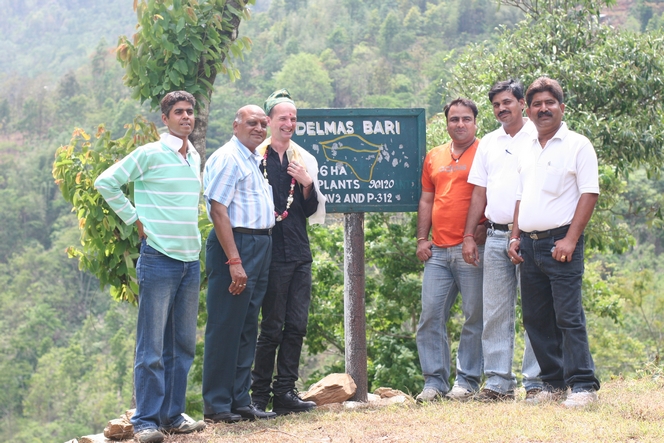
One day, when I was in Darjeeling, I was surprised to find that a plot on the North Tukvar plantation had been named after me. It was a new plot, mainly planted with the AV2 cultivar which I am particularly fond of.

This gesture from G. Somani, superintendant of North Tukvar and Puttabong, touched me greatly, and from time to time I return to “Delmas Bari”. The tea plants have grown, they look magnificent at the moment. The place has a unique charm about it. A small stand provides shade where you can enjoy a cup of tea and take in the incredible beauty  and utter tranquillity of the surroundings. I feel quite at home there!
Share on Facebook. Tweet this!

Machines used in the tea bag industry

8 July 2011
Machines used in the tea bag industry

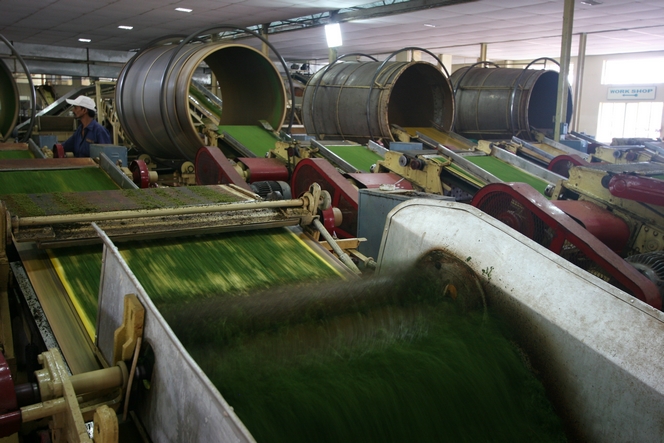
Assam tea plantations are unusual in that they produce “orthodox” tea, processed according to the traditional method, but they also produce “CTC” tea, which stands for “cut, turn, curl”. CTC tea has none of the qualities of a fine tea. It is produced by machines, which I have photographed for you. This tea doesn’t interest me much, and for good reason: one of its uses in the tea bag industry is to bring colour quickly to the cup and express strength.

Nonetheless, the process of making CTC tea is interesting: as it passes through the various machines, the leaf gradually gets smaller and smaller until it is just a tiny round ball.

Share on Facebook. Tweet this!

Charming tea plucker on Dufflating Tea Estate

5 July 2011
Charming tea plucker on Dufflating Tea Estate

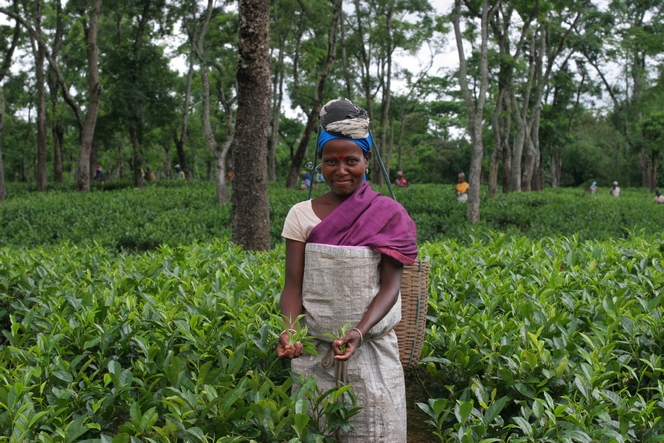
The yield per hectare here in Assam is four times higher than in Darjeeling, and totals two tonnes a year. Each tea plant produces such a quantity of leaves that between March and November, the shoots on each bush are plucked at least once a week. A record! Yet this charming tea plucker on the Dufflating Tea Estate does not seem overwhelmed by the scale of the task; in fact she looks quite happy.

Share on Facebook. Tweet this!

The art of tasting tea with or without milk

28 June 2011
The art of tasting tea with or without milk

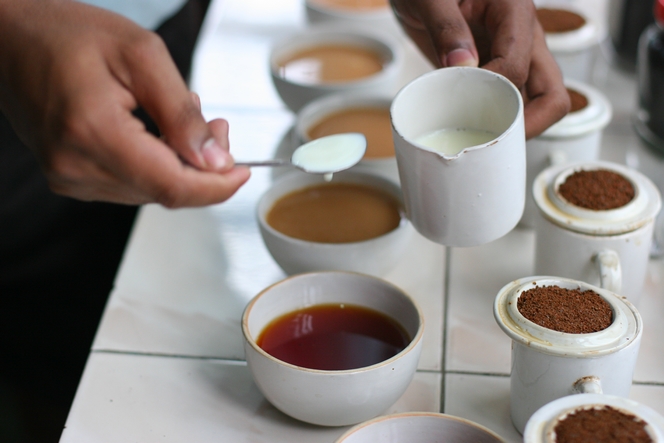
At the Amgoorie Tea Estate, tea is tasted both with and without milk. This is because some of the tea produced by this plantation is particularly full-bodied, and is appreciated by British consumers. So by lightening each cup with a cloud of milk, we are tasting the tea in the same way as the customer.

While adding milk is sacrilege for the finest teas, it is natural for more powerful brews. The milk reduces the astringency and sensation of bitterness.

Share on Facebook. Tweet this!

In Amgoorie, the factory is remarkably clean

21 June 2011
In Amgoorie, the factory is remarkably clean

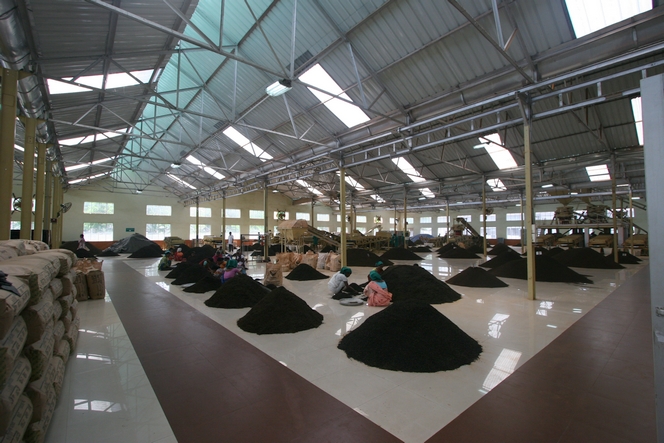
The factory at the Amgoorie Tea Estate (Assam) has a remarkable size. It is the pride and joy of the planter there, Amar Nain, who designed it. The light, clean space make a change from the rather dilapidated, dimly lit buildings I often visit.

On the floor are pyramids of teas of different grades, waiting to be packed after a final quality check which is carried out by hand, leaf by leaf.

Share on Facebook. Tweet this!

Assam, one of the the rainiest regions in the world

17 June 2011
Assam, one of the the rainiest regions in the world

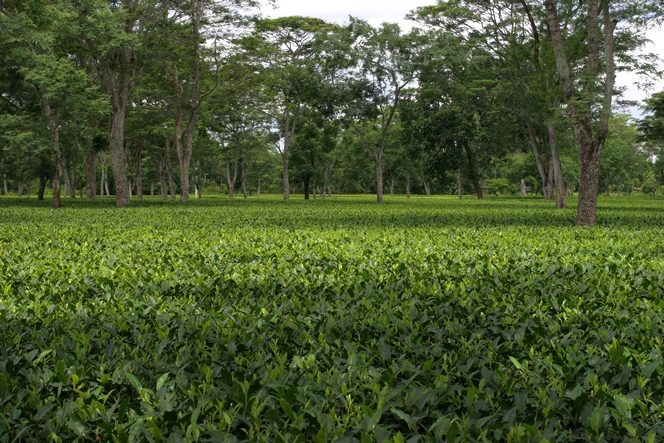
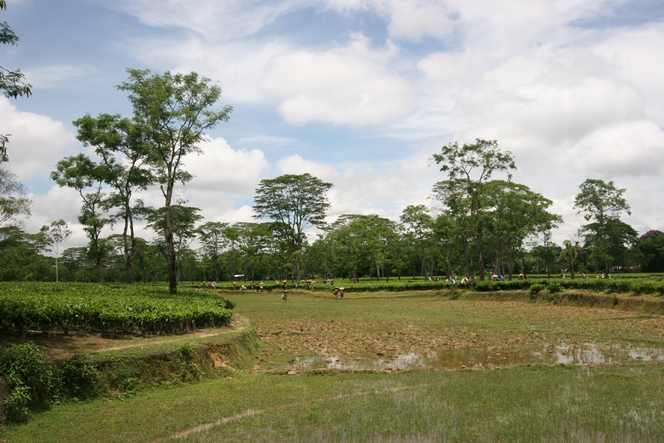
Assam is one of the regions in the world with the highest rainfall. So it’s no surprise that it’s so green here, from these tea plants growing so densely they look like a carpet, to the trees that shade them from the sun.

Despite the abundant rains, this region enjoys plenty of sunshine, which means the tea plants need protecting from the direct sunlight more than elsewhere. Hence the density of the trees.

Share on Facebook. Tweet this!

In Assam, tea fields adjoin the paddy fields

14 June 2011
In Assam, tea fields adjoin the paddy fields

For years, I dreamt of just one thing: to go to Assam and see the famous tea plantations. And here I am! The political situation has greatly improved, and it is now possible to travel around this state in the north-east of India, which is generously watered by torrential rains and by the Brahmaputra floods. Here, the tea fields adjoin the paddy fields. However, a slight difference in level separates them so that the water does not stagnate around the roots of the tea plants, but drains away into the paddy fields.

Share on Facebook. Tweet this!

Tea harvesting by the Adivasis in India

7 June 2011
Tea harvesting by the Adivasis in India

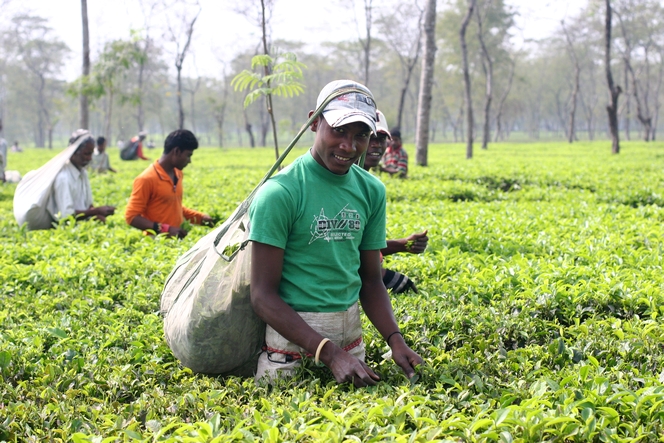
In the Dooars region of India, tea is often harvested by the people known as the Adivasis. Often despised by other Indians because they are right at the bottom of the social ladder, they benefit from positive discrimination, along with the lower castes. They don’t get much attention, which is another reason to talk about them here.

The Adivasis are one of India’s biggest tribal populations. They descend from the aborigines and live in the north-east of the country.

I took this photo at Meenglas, near Mal Bazaar, a few kilometres from the border with Bhutan. The Dooars region doesn’t produce very good quality tea, but that’s not important here. It was the smiling faces of these workers that I wanted to tell you about, not the rather coarse leaves filling their bags.

Share on Facebook. Tweet this!

Shivaite priest near the Darjeeling temple

31 May 2011
Shivaite priest near the Darjeeling temple

I left for Kolkata three days ago, and today I am in Jorhat, in Assam, a region still considered dangerous until very recently. The situation here has greatly improved and, at the moment, it finally seems possible to visit this state in the north east of India, near Myanmar.

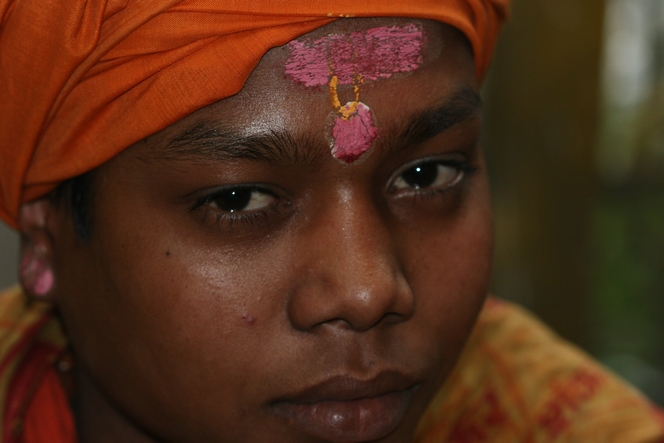
In India, whether you are a follower of Vishnou or Shiva, it is common to ask for the blessing of a priest before you undertake such a journey. This is the face of a young Shivaite priest who practices every day near the Darjeeling temple. Just don’t ask him to smile: he makes up for his tender age with an unwavering impassivity.

Share on Facebook. Tweet this!

The red panda or firefox, a creature of the Himalayas

17 May 2011
The red panda or firefox, a creature of the Himalayas

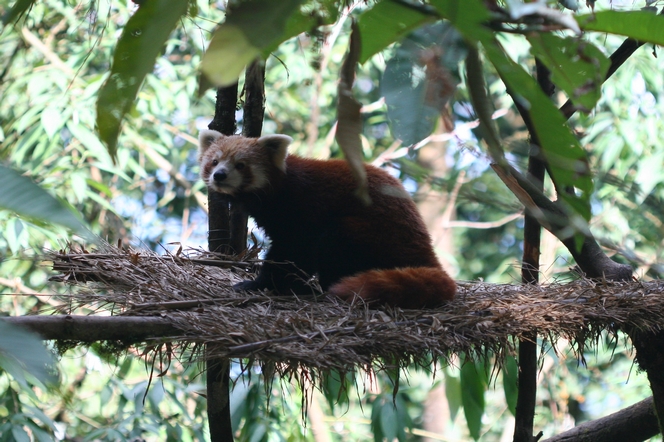
Yes, the firefox! For those who use the well-known web browser of the same name, you’ll have seen this long-tailed mammal every day, curled around the icon on your computer screen.

For the rest of you, this is what the panda looks like. It is much smaller than its Chinese cousin and, fortunately, a bit less endangered. It can be found in Darjeeling and throughout the Himalayas.

I didn’t just stumble across it while walking in the forest though. I’m not particularly keen on zoos, but I knew that one lived at the Darjeeling zoo, along with some mates, and I wanted to see it. It has beautiful fur you want to stroke, like its neighbour in the next cage, the snow leopard. I certainly wouldn’t stick my hand between the bars surrounding its other neighbour, a fearsome looking Siberian tiger whose mouth is so big I could fit my whole head inside, right up to my shoulders.

If you are in the area, do pay a visit to the Himalayan Mountaineering Institute , which honours those who have climbed Everest, starting with Tenzing Norgay, of course, who was from Darjeeling.

Share on Facebook. Tweet this!