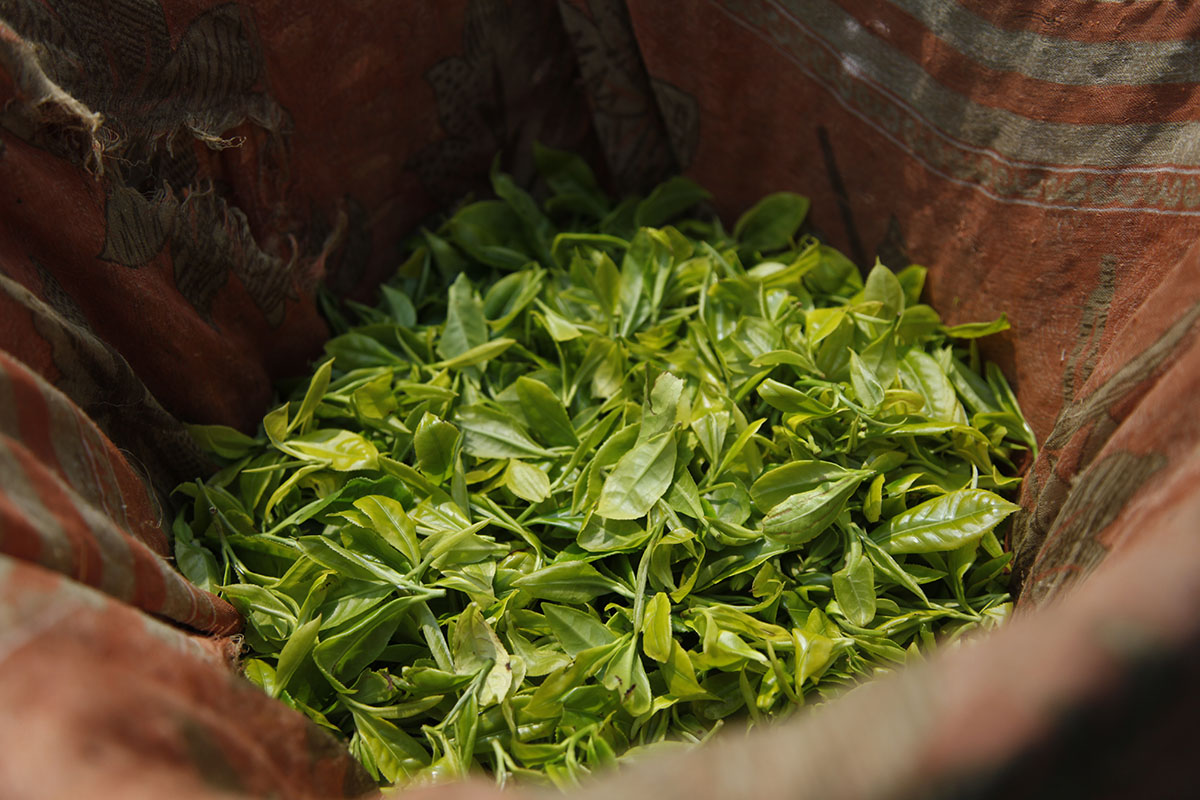
Today, I’m only going to focus on the good news! I bought three very rare batches of Darjeeling produced this spring. Nepal has continued to produce tea during lockdown, and as soon as the French postal system is functioning again I will receive some delicious samples. In China, a pre-Qing Ming Huang Shan Mao Feng, a Lu Shan Yun Wu, a Yue Xi Cui Lan and a rare Huo Shan Huang Ya are already on their way. In Japan, after a winter that was long but relatively mild, the harvests are a little late. By mid-May I will have received all the samples and will be able to make a good selection. And to top it all, each of the teas I buy will be sent to the lab before we sell it, to ensure it complies with European standards – unless it already has French “AB” organic certification. This means we can enjoy them with peace of mind, and appreciate all their benefits.
News
A difficult situation in Darjeeling
One region is making me feel particularly anxious during this pandemic – Darjeeling. I was there at the beginning of March for the start of the harvests. I could see that the situation for workers was not good. Some plantations had not paid the pickers, and naturally the latter were demanding their wages for what they had already done before resuming their work. As the plantations in question refused to comply, justifying their decision with the fact that they were losing money and were therefore unable to pay out, the leaves were not harvested in a significant number of gardens.
It is difficult to know exactly which plantations in Darjeeling are profitable, and which are not. The issue has arisen repeatedly over the years. Many planters agree that it is not easy to make money, despite the low wages and the high prices of tea. Knowing that spring is the season when the teas attract the highest prices, the fact that the workers are all having to stay at home in India, like we are here, means there is a high risk that a number of gardens will shut down.
Holding on to the benefits
We must look for the positive in everything. If we examine the extraordinary times we’re living through while the virus is raging, we can see that, among all the negatives, all the pain of those who have lost loved ones, there are some rare but incredible positives. People are looking out for one another in a true community spirit. There are plenty of kind and spontaneous gestures. We are all suddenly aware of the essential work that many people do. Some people have more free time for other things instead of consuming, time to realise what is important to them, what it means to be alive. We are breathing air that has never been so pure, appreciating the rare silence and the sweet melody of birdsong, even in city centres.
Can we learn something from this experience, and hold on to these benefits after lockdown?
Hoping for better times
What’s the point of a tea sourcer who can no longer source tea? What’s the point of a tea sourcer who can no longer spend time with farmers and has no samples to taste, who watches springtime unfurling through the window of his tasting room that usually receives around 100 samples a day at this time of year, compared with just a handful for the whole of the past week? What’s the point of a tea sourcer who can’t offer his customers rare batches to taste, because they can’t be served in stores, or sent out by post?
Although I feel alone, I’m trying to look on the bright side. In my tasting room I’m lucky enough to have an endless selection of premium teas, all bought over the past year. I taste them and hope for better times, and think of you all.
Update on the spring teas
Many of you have been calling and emailing us to ask about the next harvests of spring teas. As you can imagine, the situation is very unusual this year.
In India and Nepal, people have been told to stay at home, which means they cannot harvest the tea. Of course, farmers will continue to pick fresh leaves from their own gardens and produce a few kilos as best they can. They will use these for their own consumption and sell any remaining leaves on the local markets once they open again.
In China and Japan, the situation is better. China is starting to allow people out again and the farmers are going back to work, just in time to harvest the new shoots. In Japan, it seems there is nothing to worry about at the moment. The news we’ve received indicates that the harvest will still go ahead at the end of April and early May.
I’d just like to remind you that this virus is spread between people and not goods (make sure you get your news from reliable sources), which means tea is perfectly safe, and in just a few weeks you will be able to savour delicious teas with complete peace of mind.
Working outside
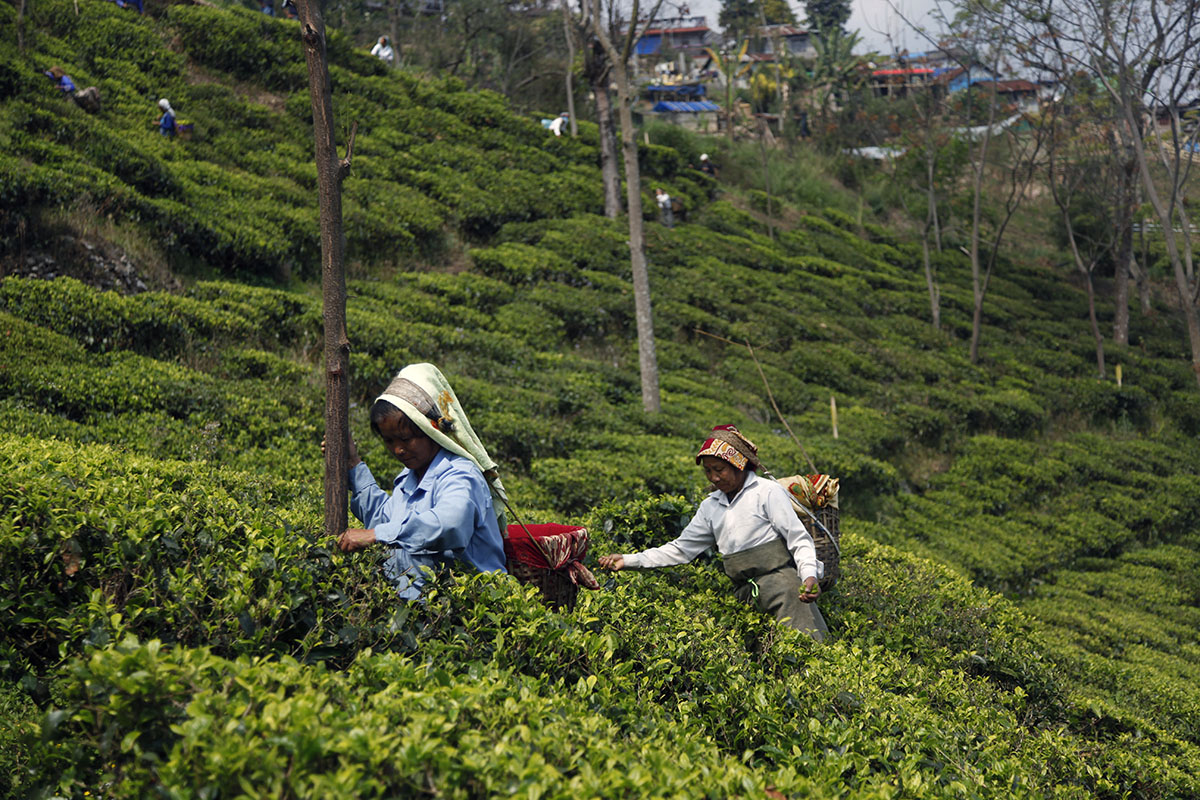
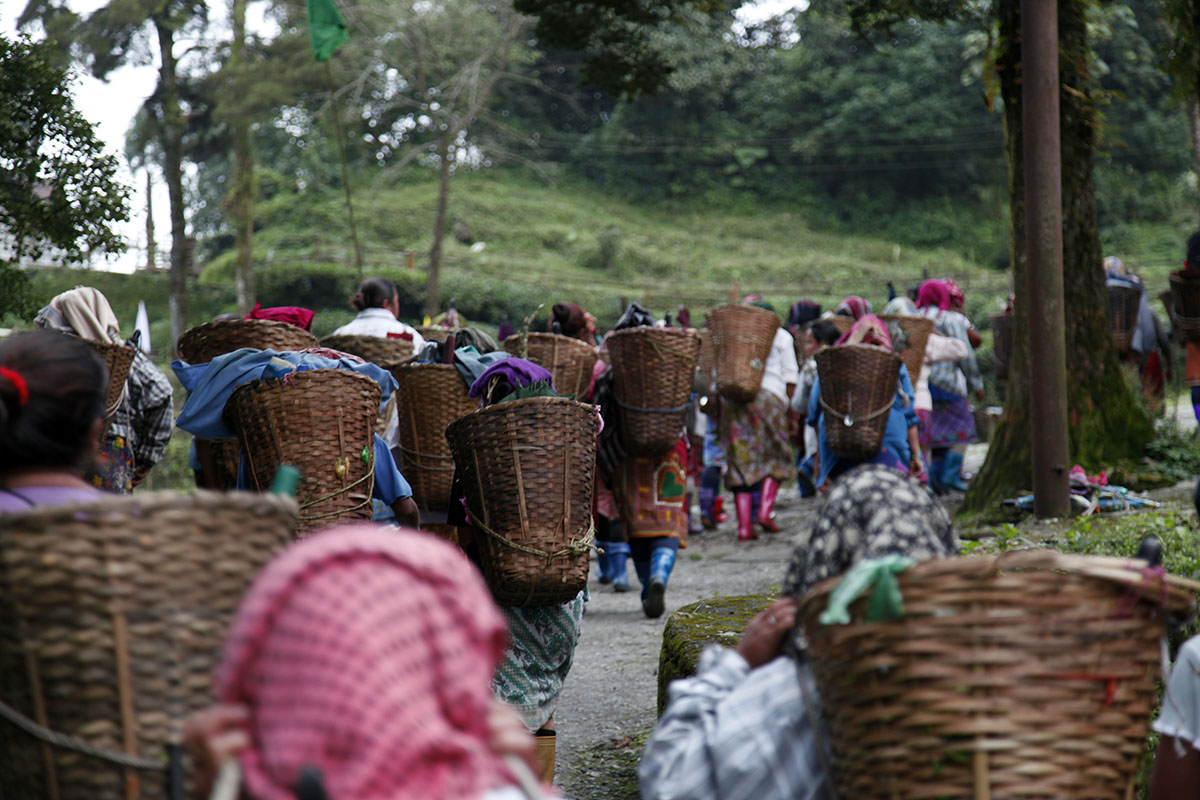
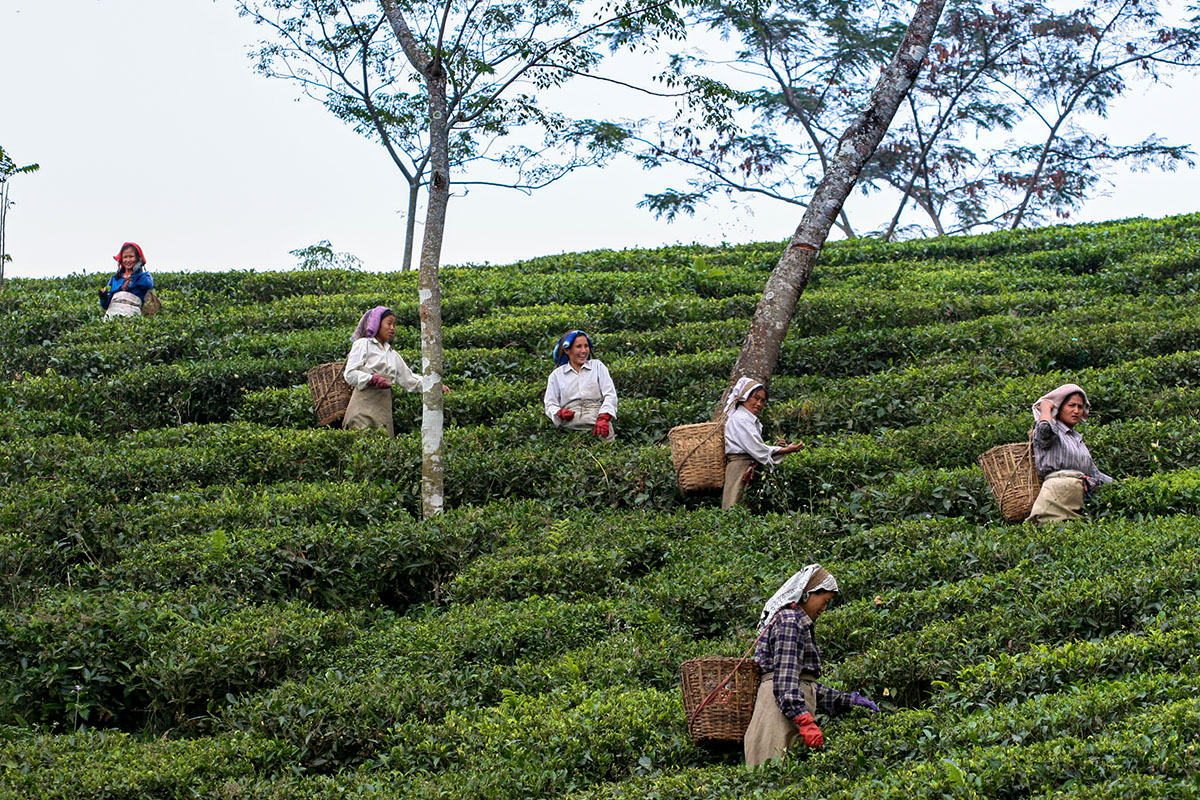
These tea pickers have less to fear from Coronavirus than others. They walk to work, they move about in single file, they keep a good distance between themselves, and what’s more, they work outside. Sadly, this isn’t enough in a country of more than a billion inhabitants, and now the entire Indian population must stay at home. Let’s hope that we can banish this virus quickly, and get back to savouring their country’s delicious teas.
Thank you
At 8 o’clock in the evening, everyone throws open their windows and starts clapping, or they bang on a saucepan or some random kitchen utensil to make as much racket as possible; they sing, they shout, they chant… And I cry because it’s beautiful, it’s so beautiful that in this sometimes selfish world, people still have the urge to do this, that there are still these moments of humanity, that people still find room in their heart to shout out their love, to say thank you, to encourage and support those who are saving lives while risking their own. Thank you.
Discovering Tea is ten
For years, I didn’t take any photos, misguidedly believing it wasn’t possible to look around me and photograph at the same time. Later, I changed my mind. Those landscapes and portraits taken around the world inspired me to share them, and so the blog was born.
Like the Tea School and the books I’ve written with Mathias Minet (The Tea Drinker’s Handbook, Tea Sommelier), the role of this blog is to impart both knowledge and passion.
This month, my blog celebrates its 691st article, or rather, its ten-year anniversary, so I’m inviting you to help me blow out the candles. I’d like to thank Mathias, Laurent, Philippe, Emilie, Marta, Bénédicte, Kevin and Hélène, who were there at the start or who’ve been part of the journey. And I’d like to thank you, my readers, for following me. Your support is precious, and it touches me.
Quimper gets its Palais
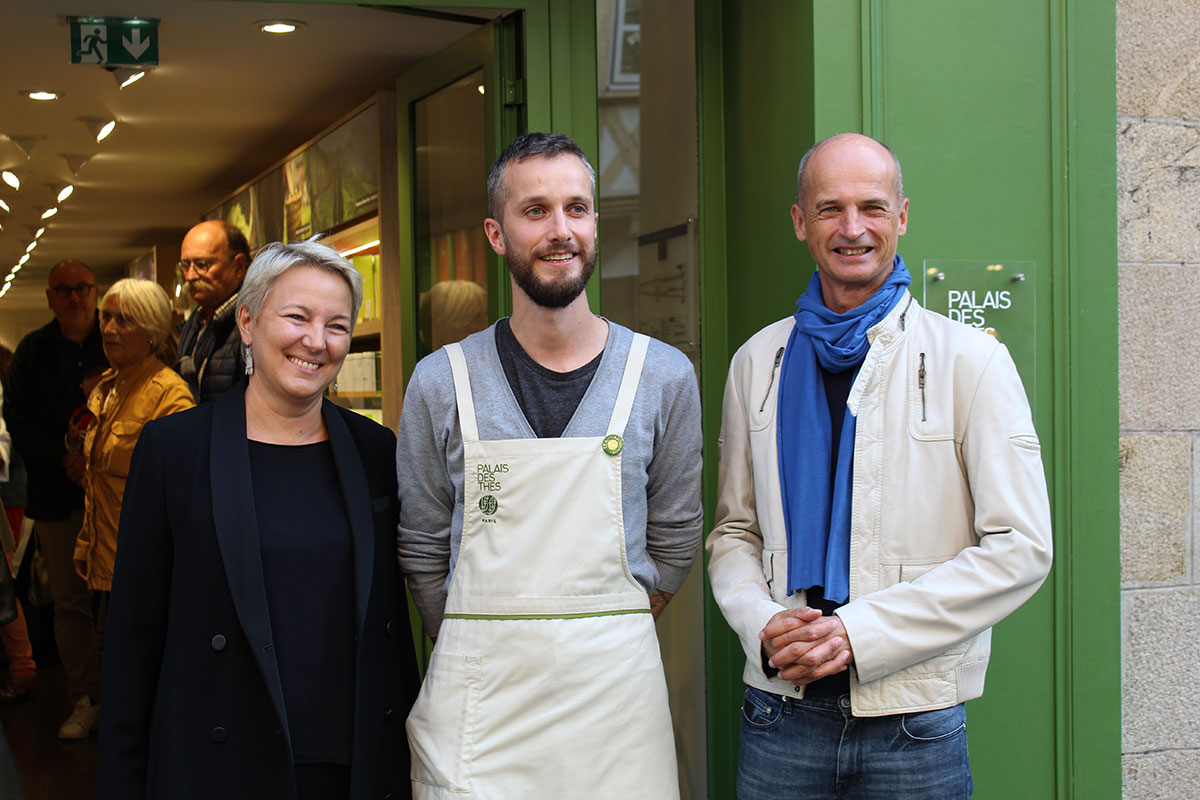
The people of Quimper now have their very own Palais des Thés, at 15 Rue Kéréon, near the cathedral.
I was delighted to open the shop, partly because I love Brittany, but above all because François, the manager of this beautiful shop, worked in our Rennes shop for six years as a sales adviser, then as the assistant manager. He has passed his Tea Sommelier exam, meaning he has a rare level of expertise, which is coupled with his natural warmth. A few months ago, I travelled with him and some other tea sommeliers around the tea plantations of Darjeeling. Here he is with me and Christine Delétrée, our network manager. I wish him all the very best in the wonderful city of Quimper!
Tea and joy
Kolkata, formerly Calcutta, is known as the “city of joy”, but it’s also the city of tea. All the producers of Darjeeling and Assam teas have their office there. Auctions take place in the historical district of BBD Bagh, supplying the lifeblood of a whole economy. And the precious cargoes of tea are dispatched from the city’s port.
Kolkata, a sprawling city of ten, fifteen, even twenty million inhabitants – who knows? – extends outwards from the banks of the Hooghly River, a tributary of the Ganges. Its public transport system includes many boats which offer a peaceful crossing, away from the busy traffic.