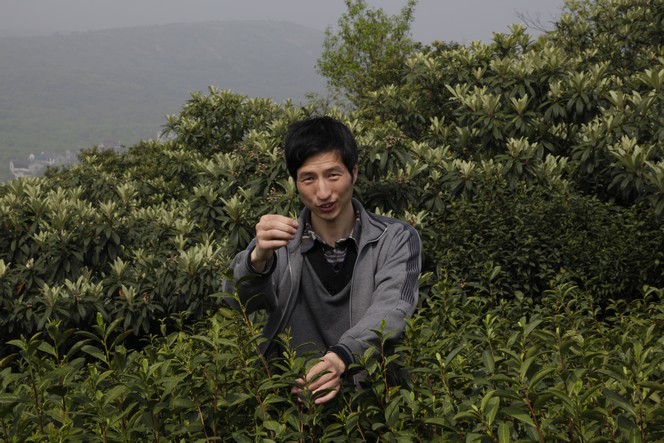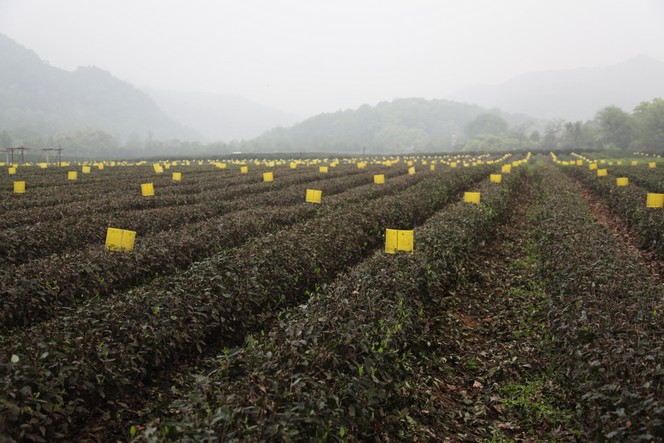
Bi Luo Chun is one of the rarest and most prestigious China teas. Here, my friend Waterqian – one of the few farmers to produce the highest quality Bi Luo Chun – is showing me how much must be taken off the stem during the harvest: a small bud with just one leaf. This type of plucking is extremely rare. It explains the very high price of this tea, whose name means “Spiral of Spring Jade”. In one day, each worker only harvests around two kilos of fresh leaves which, after processing, will produce just two hundred grams of tea.
Plantation
The hairy caterpillar, another tea enemy
Tea has a number of enemies, and among them is the hairy caterpillar. This one may look rather shy, but don’t be fooled. This delicate creature is less timid when it comes to munching through the bottom of a young tea plant, a task it performs so thoroughly that it cuts right through the base of the main stem. And the poor plant ends up flat on the ground, dead.
The first estates to harvest are at low altitudes
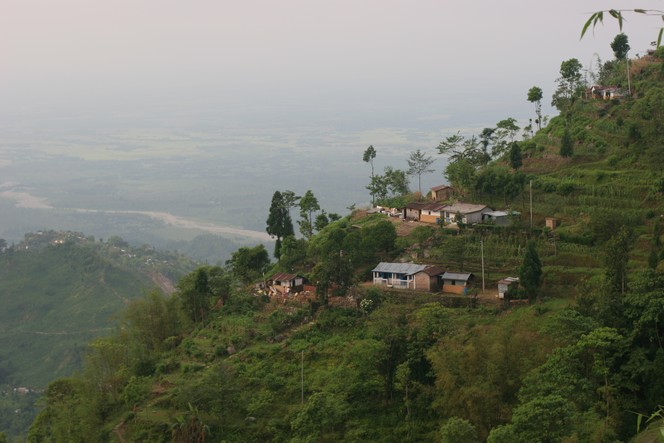
In Darjeeling, at the beginning of every spring, the first estates to harvest are those situated at the lowest altitudes. They enjoy more clement temperatures. This is what the region looks like at the exact place where the immense plains of India take over from the foothills of the Himalayas. Here, you can see the Longview Tea Estate, and you can make out the ochre-coloured stone bed of the Balasun river.
I’ve just bought the first tea of the year
I’ve just received the first samples of the Darjeeling spring teas, or “first flush”. The buds on the plants are very small, and the shoots are still a little slow due to the generally cool winter. The temperature is still too low to allow an abundant crop. Nonetheless, certain planters have produced some wonderful teas.
I’ve just bought the first tea of the year – a very small lot of just 15kg – from the Teesta Valley Tea Estate. This is a lovely plucking, with leaves just lightly rolled, giving a fresh infusion that is both vegetal and fruity, and a supple liquor with pronounced vegetal and almond notes. A pure delight.
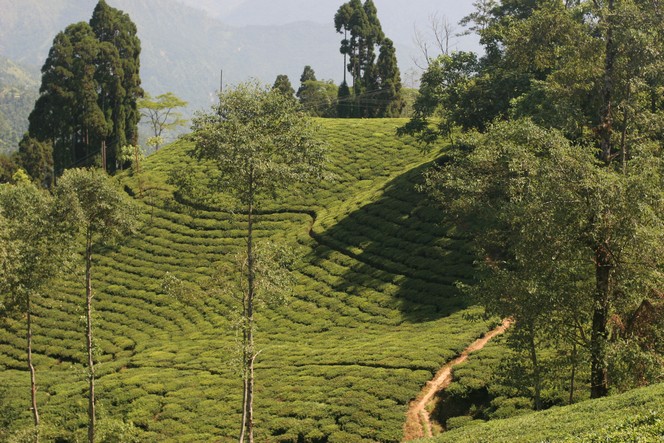
To accompany your tea tasting, here is a view of the Teesta Valley Estate itself. It offers the same roundness and sweetness as well as the famous vegetal note… It’s as if the landscape itself was reflected in our cups.
Les théiers sont taillés tous les cinq ou dix ans
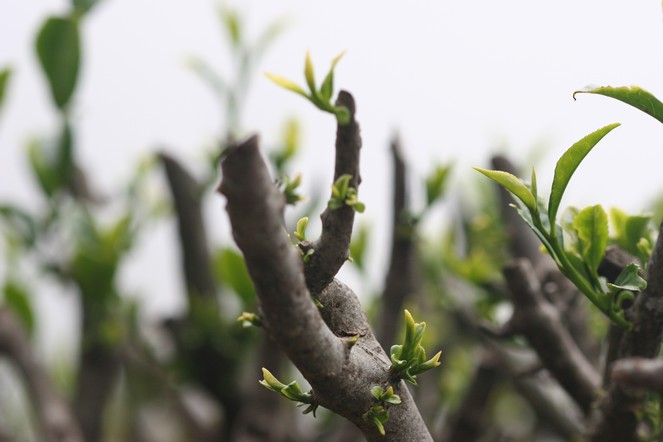
Si vous voulez que votre théier produise beaucoup de feuilles encore faut-il l’entourer de soins. Tous les cinq ou dix ans, par exemple, il va falloir procéder à une taille plus ou moins sévère afin que le théier reprenne de plus belle. Dans le cas de la taille dite sévère on va couper à l’automne les troncs des arbustes à environ dix centimètres du sol. C’est très impressionnant à voir sur une grande étendue car la montagne semble alors avoir été la proie des flammes tant tout est gris, comme brûlé. C’est un peu triste. Mais quelques mois plus tard la vie reprend et de jolies pousses d’un vert tendre viennent saluer l’arrivée du printemps.
The tea fields need looking after in winter too
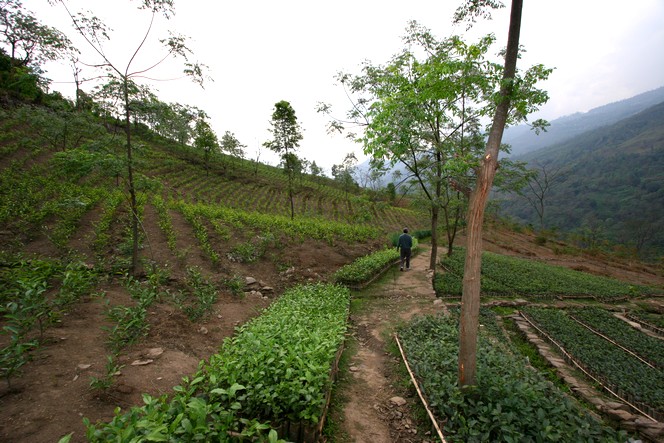
During the winter months, tea plants grow very little, if at all. So this is the time to work on maintaining the land, such as the cuttings garden, for example. This is an area planted with bushes from which cuttings are taken. The plants are therefore chosen with great care. Each parent tea plant, like here in the cuttings garden at the Namring Tea Estate (India), can provide between 50 and 300 cuttings a year.
The lifespan of a tea plant: between 30 and 50 years
Everything comes to an end. When a tea plant no longer produces many leaves, it is replaced. The lifespan of a tea plant is quite variable, generally between 30 and 50 years, although China claims to have some that are a thousand years old.
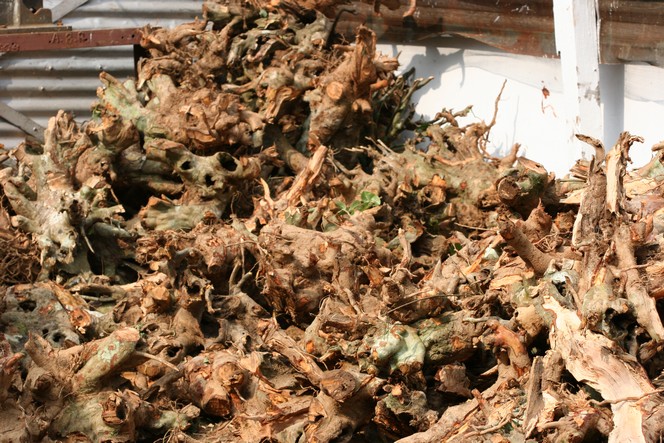
The trunk and roots of the tea plant burn well, and heat the oven in which the tea leaves are dried after oxidisation, for example.
A planter’s estate typical of the British era
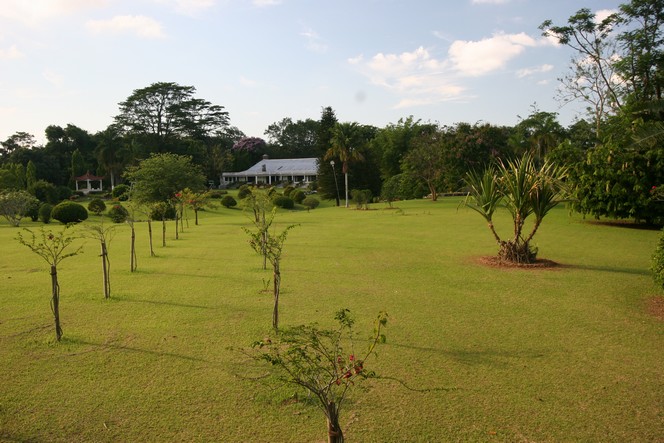
When the British were in charge of tea production they created vast estates and put in place systems to manufacture large quantities of tea. On each estate they built a bungalow, which might be small or large, for the planter. Today, in India and Sri Lanka, for example, you still see these buildings that are typical of the British era. I am often invited by planters to stay in their bungalows, like this one in Amgoorie (India), which is generally considered to be one of the finest.
An air of Christmas in the fields of tea
To illustrate this Christmas period, I searched among my photos to find something seasonal: a combination of green and red, for example, to remind us of the holly branches with their red berries.
I show you green throughout the year, with all those fields of tea, but red is much harder to come by.
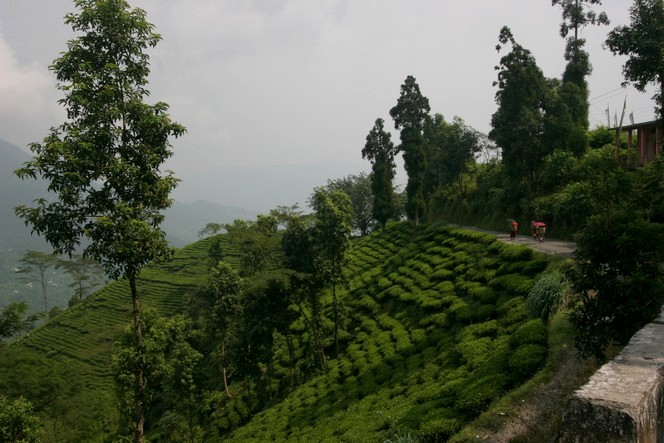
Take a good look at this little winding path near Teesta Bazar (India) and you will spot three tea pluckers beneath their red parasol. They are like you, they have just done their shopping and are returning home, having a good chat on the way.
Third flush Darjeeling teas are coming
A few days ago I bought a wonderful third flush Singbulli, and this morning I have just confirmed the purchase of a Rohini, also harvested in November. The first lot only weighs 70 kilos, the second lot just a little more, and they will arrive in France in December.
Those of you who love fine Indian teas must remember that Darjeelings produced in March, June and the autumn have very little in common. The reason is that this mountain you see here, Kanchenjunga (8,586 m), creates a great contrast with the weather conditions of the plains on the subcontinent. Darjeeling is one of the tea-producing regions with the most varied climate.
In warmer seasons, the southerly wind brings some of the stifling heat of the plains to these mountains. On the other hand, as winter approaches, the peaks make their presence felt, the sky becomes clear and the temperature drops. And the growth of the tea plants gets slower and slower, which is another reason for the variations in their flavours.