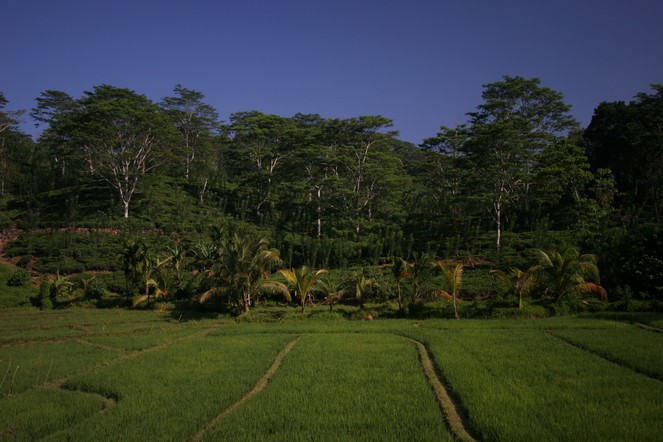
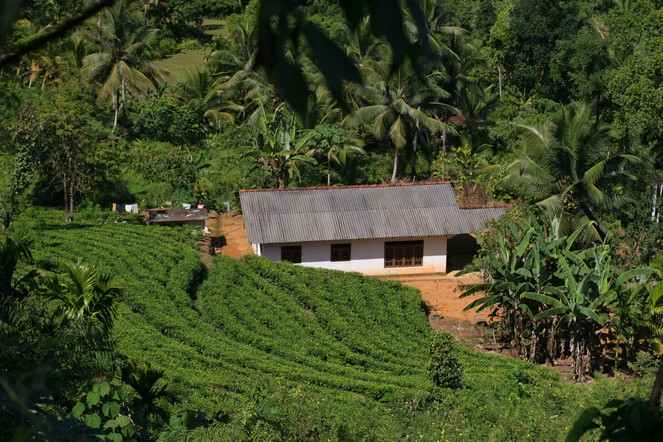
Nothing looks less like a tea plantation than another tea plantation. Here, in the south of Sri Lanka, tea bushes occupy the hills beside a paddy field and other different crops. Hence these subtle and evocative tones of green and yellow.
Plantation
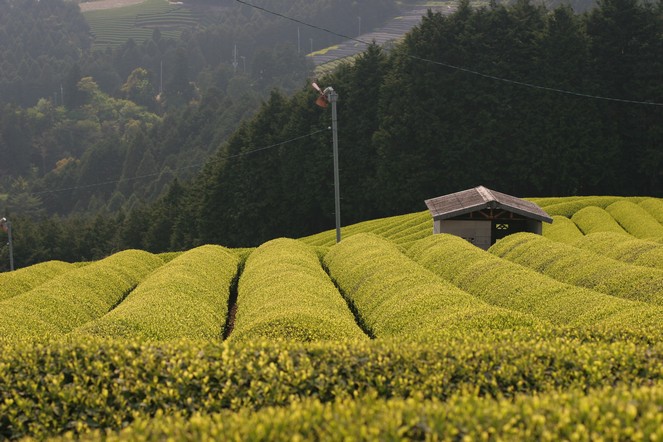
Strange shapes in the Japanese tea fields
Because tea plants don’t like frost, Japanese tea fields are populated by strange shapes. When their blades are turning at the top, these fans prevent freezing air from stagnating above the bushes.
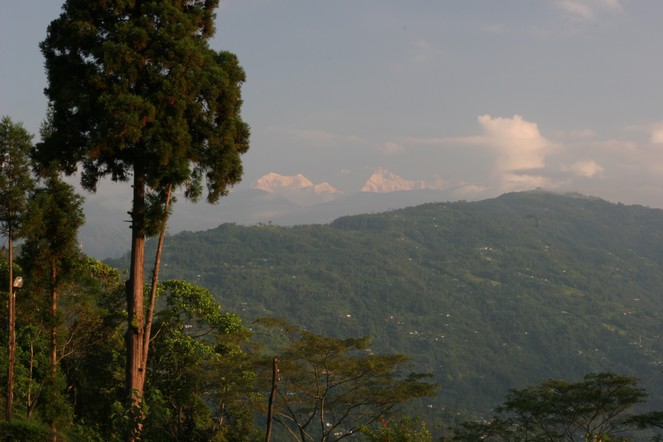
Autumn landscape in Darjeeling
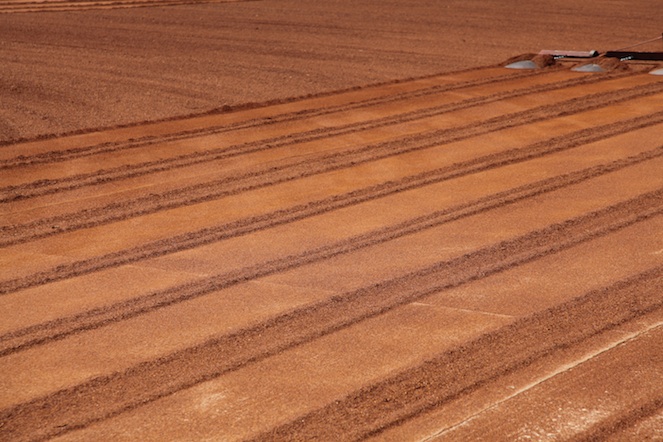
The autumn colours of rooibos
The tea plant is an evergreen and its leaves do not change colour when cold weather follows the summer. So, to bring you some seasonal autumn colour, I have chosen an image of rooibos leaves spread out in very thin layers to dry on the ground, as they oxidise after being watered.
Teas from the Margaret’s Hope garden
The Margaret’s Hope garden is one of the best known in Darjeeling. Its reputation is justified by the quality of its teas and also because, from time to time, this plantation products batches of a truly remarkable quality. Of course, you have to taste many samples before finding a rare gem, but that is exactly what my work entails: drinking large quantities of different teas every day.
Last spring I bought a batch from Margaret’s Hope that I am sure you remember if you were lucky enough to taste it. The planter called it White Delight. And I have just chosen a Margaret’s Hope DJ512 which has such an incredible floral bouquet it is worth the detour too. For connoisseurs, it comes from the varieties P312 and AV2.
The autumn Darjeelings are arriving!
At the moment I’m tasting some delicious teas from Darjeeling. The autumn harvest (third flush) is early, and I have just chosen a Phuguri DJ168 as well as a Margaret’s Hope Pure Clonal DJ512; both are quite exceptional. They should arrive in France in about 10 days. As connoisseurs know, and to simplify a little, autumn Darjeelings are generally more woody than summer Darjeelings (second flush), which in turn are fruitier than spring Darjeelings (first flush). Whatever the season, though, these teas grow on mountains that offer breathtaking views.
Small plantation in the south of Sri Lanka
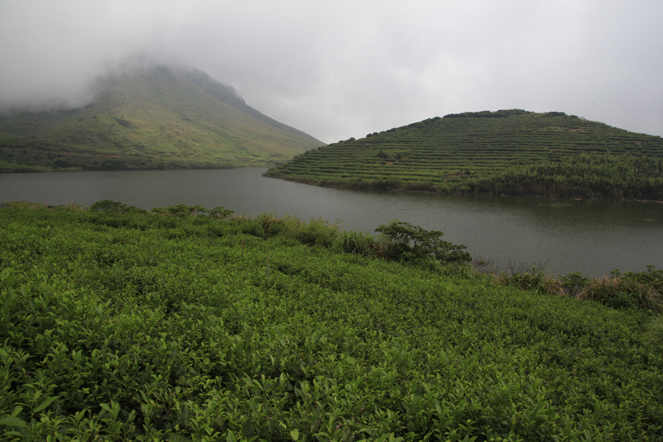
A very special tea plantation
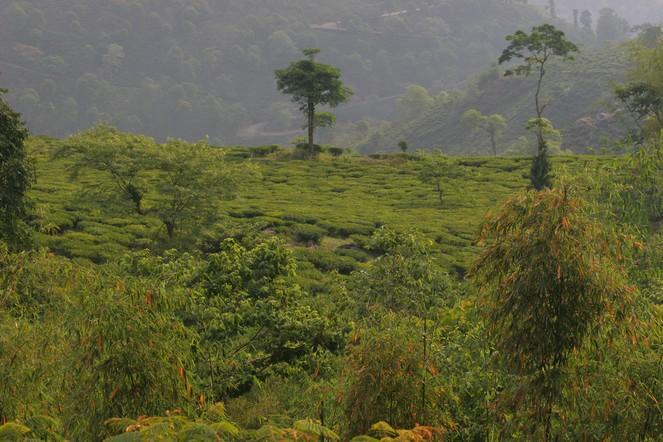
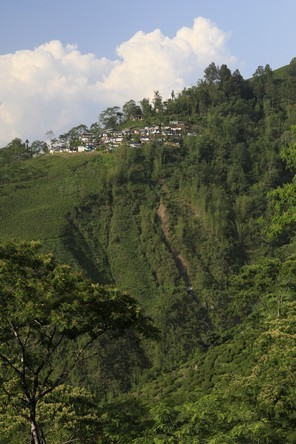
The steep slopes of Darjeeling
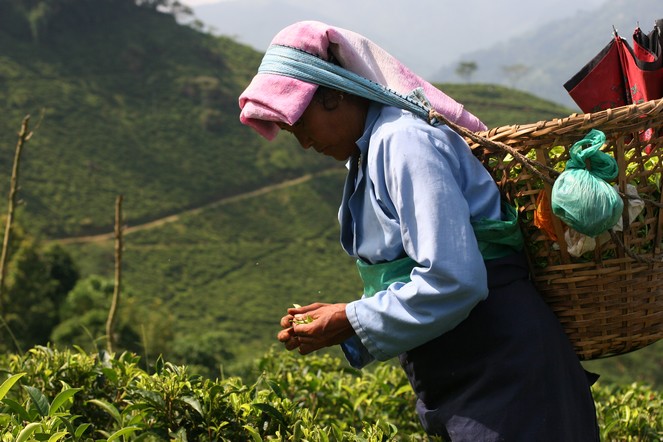
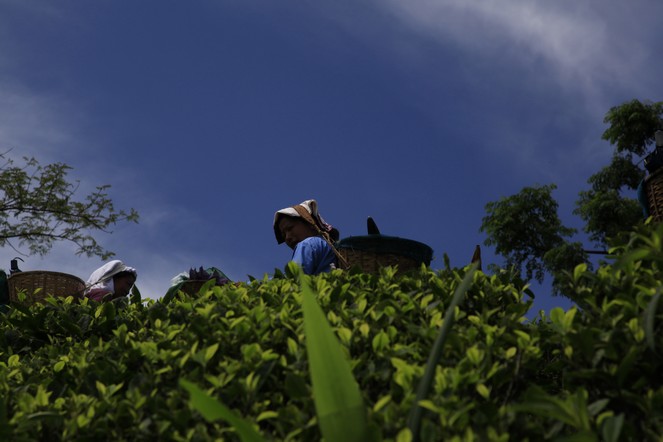
Camellia sinensis grows very happily on steep terrain, as it doesn’t like water stagnating around its roots. In some regions of the world, like Nepal, or here in Darjeeling, the slopes are very impressive. As I travel around the countryside I often discover a little village clinging onto the hillside above a field of tea. Sometimes you wonder how the pluckers manage to harvest the leaves in such conditions.