
Have you ever tasted a Dan Cong tea? These famous wu longs are produced in Guangdong province (China), in the Feng Huang Shan mountains where I took this photo, facing in the direction of the sea.
Feng Huang Shan mountains, China
31 August 2012
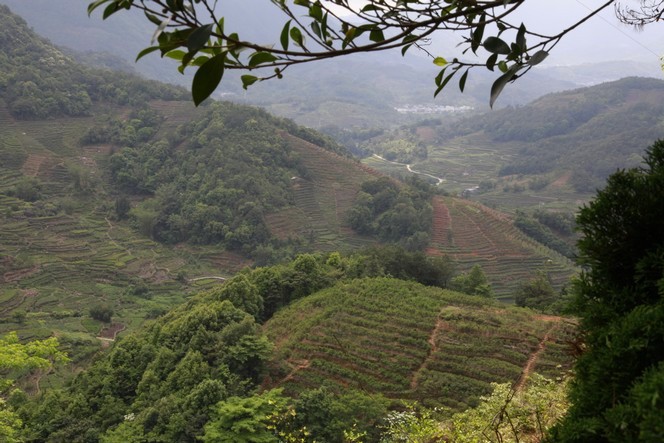
Have you ever tasted a Dan Cong tea? These famous wu longs are produced in Guangdong province (China), in the Feng Huang Shan mountains where I took this photo, facing in the direction of the sea.
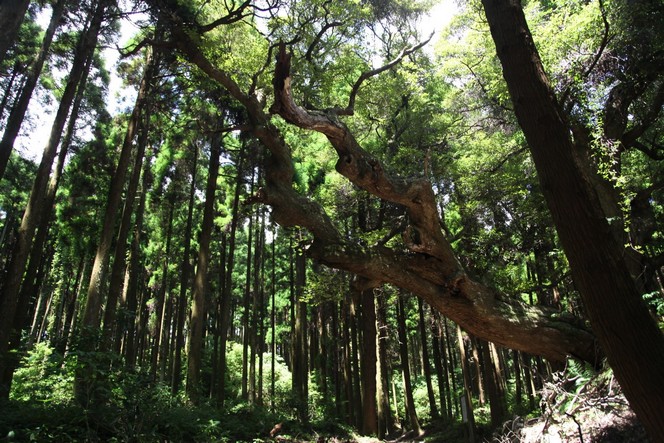
It is worth visiting Japan’s first tea gardens. These ones were planted on the island of Kyushu, apparently around the 17th century. They are very small gardens, situated on the mountainsides. To visit them you must travel through dense forests, mainly made up of magnificent cryptomeria trees. You walk along a narrow, well-worn path and then, coming across a clearing, you discover a tea garden.
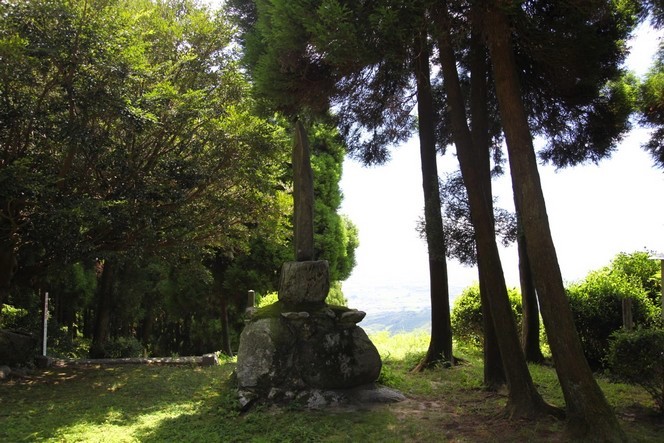
This stele may look unprepossessing, but for fans of Japanese teas it is worth a detour. The stone bears an inscription stating that it was in this place that the monk Eisai, who came from Long Jing in China, planted tea seeds he had brought with him. As for the rest, you can see the outlines of some Camellia Sinensis trees on the right. At the moment I’m on the island of Kyushu, near the city of Saga, where the story of Japanese tea began.
I should also mention that there are a few other similar stelae on the same mountain, bearing roughly the same inscription.
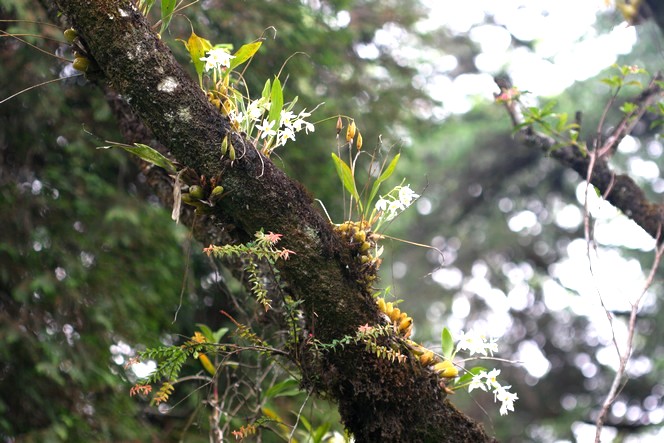
Spending your life in the tea fields does not prevent you from wandering around the tea plantations and raising your eyes to admire the nature around you. Here in Nepal, wild orchids grow right on the tree bark. Alongside them live many other delicately coloured flowers and mosses.
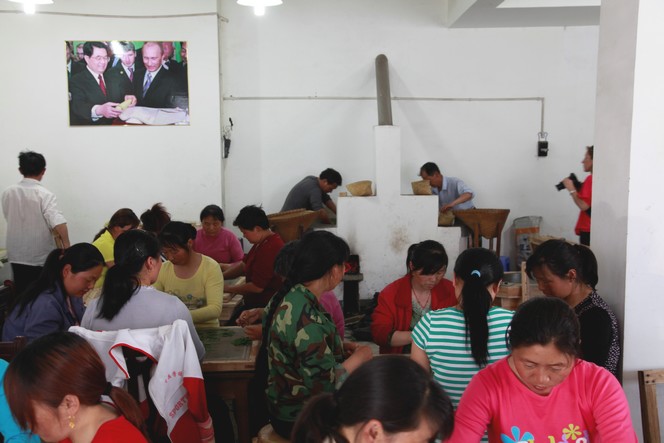
Taiping Hou Kui is known as a precious tea among the Chinese, but very few have had the opportunity of tasting it even once in their life.
Here, we are in Hou Kui, in the famous “Village of the Monkeys”, the birthplace of this tea and its most well-known production site. In the main factory of the village, employees work beneath the gaze of the Russian president, who is very fond of this fine Chinese tea and received some as a gift from Hu Jintao. The tea given by the Chinese president to his Russian counterpart was made in this very factory, so you can imagine the pride of all the workers.
If, like Vladimir Putin, you like Taiping Hou Kui, then this is the time to make the most of it. The 2012 plucking is now available.
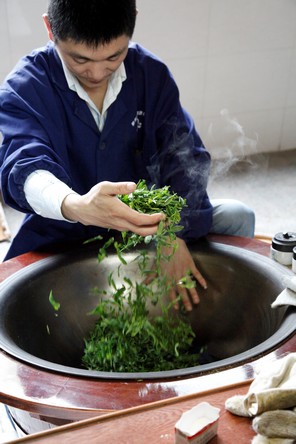
Long Jing is processed in a large wok. The work requires plenty of dexterity as the tea must be kept moving at all times. The leaves are withered, rolled and dried in a continuous process and in the same recipient, simply by varying the hand movement.
In the cup you will find a note of roast chestnut, which comes from this toasting of the leaves.
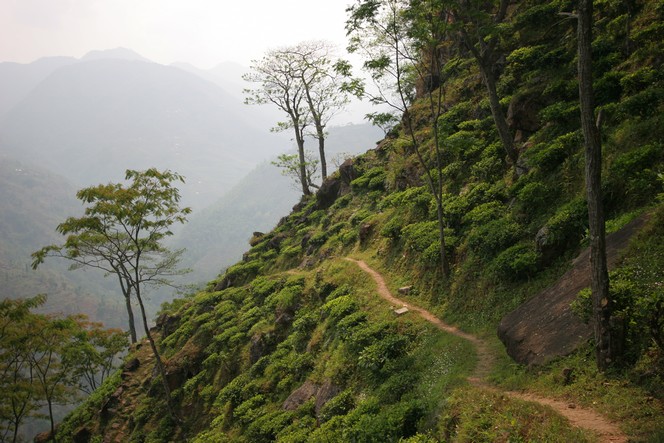
For the first time, a few weeks ago, I bought a lot of a spring tea from the Kanchenjunga Tea Estate. This Nepalese plantation, situated in the middle of nowhere – two day’s travel across the Terai Plain – is one of the most promising in the country.
While there, you can admire the incredible steepness of the slopes as you realise how difficult it must be to harvest the leaves on such a gradient. As for this narrow path which snakes around the side of the mountain, and along which I have seen villagers walking, laden down like mules, it is the only route for the inhabitants of other hamlets located a few days’ walk from here.
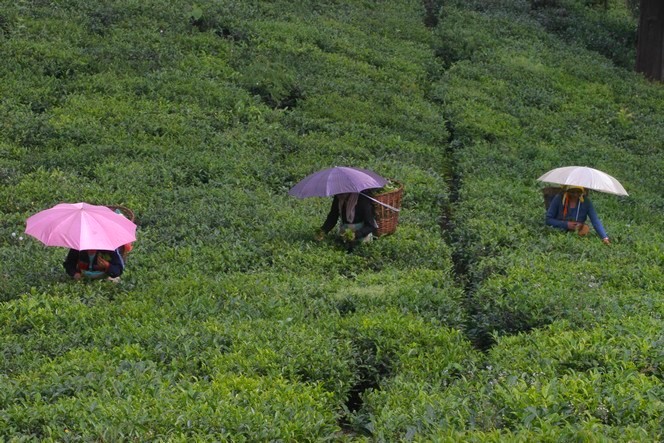
With the weather we’ve had this June, there has been no need to worry about sunstroke. This is not the case everywhere. For example, in Darjeeling this season, when the pluckers have brought out their umbrellas it has been to protect themselves from the sun, not the rain. The women have good taste in their choice of bright, varied colours, making this landscape very similar to a cup of Darjeeling itself. Its floral, flowery, vegetal notes are a real treat for the palate.
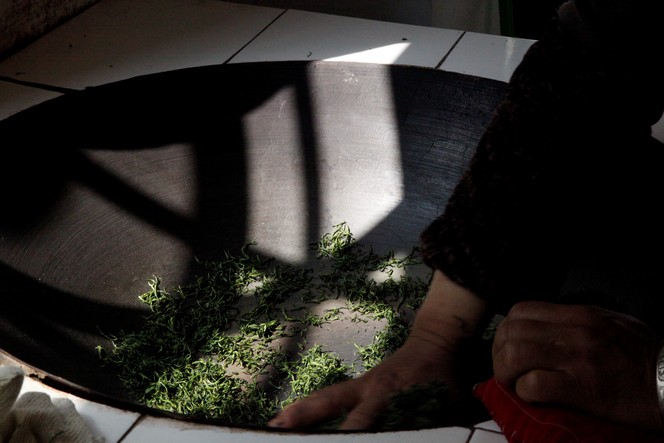
Here, near Hangzhou (China), the tea leaves are being processed on the scorching sides of the wok. The leaves are heated before being shaped as required, then dried. They must be processed quickly and precisely, which is why many farmers prefer to work with their bare hands.
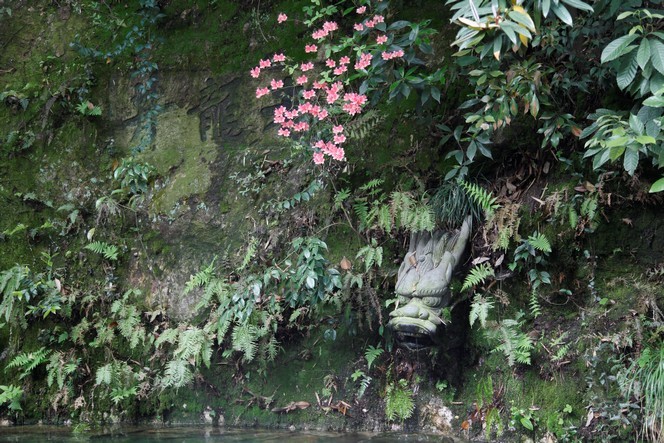
This is for fans of Long Jing. This is the source of the Dragon Well that gave its name to this prestigious tea and to the eponymous city. It is a few kilometres from Hangzhou (China).