Two weeks ago I promised you that a wonderful Rohini Early Spring would be arriving, and that it would be available after the obligatory food safety analyses. Sadly, we must wait a little longer. At Palais des Thés we follow our own special procedure, called SafeTea™, which guarantees that our teas meet the optimal food safety standards. We carry out random tests on our organically certified teas (AB label). For all other teas we sell, we ensure they comply with our standards by having them analysed by an independent laboratory. Our checks go beyond the legal requirements. But this does mean we have to wait a few days longer while the tests are being carried out, to ensure the safety of our teas.
From plant to cup
Rohini Early Spring, a premium tea from cultivar B157
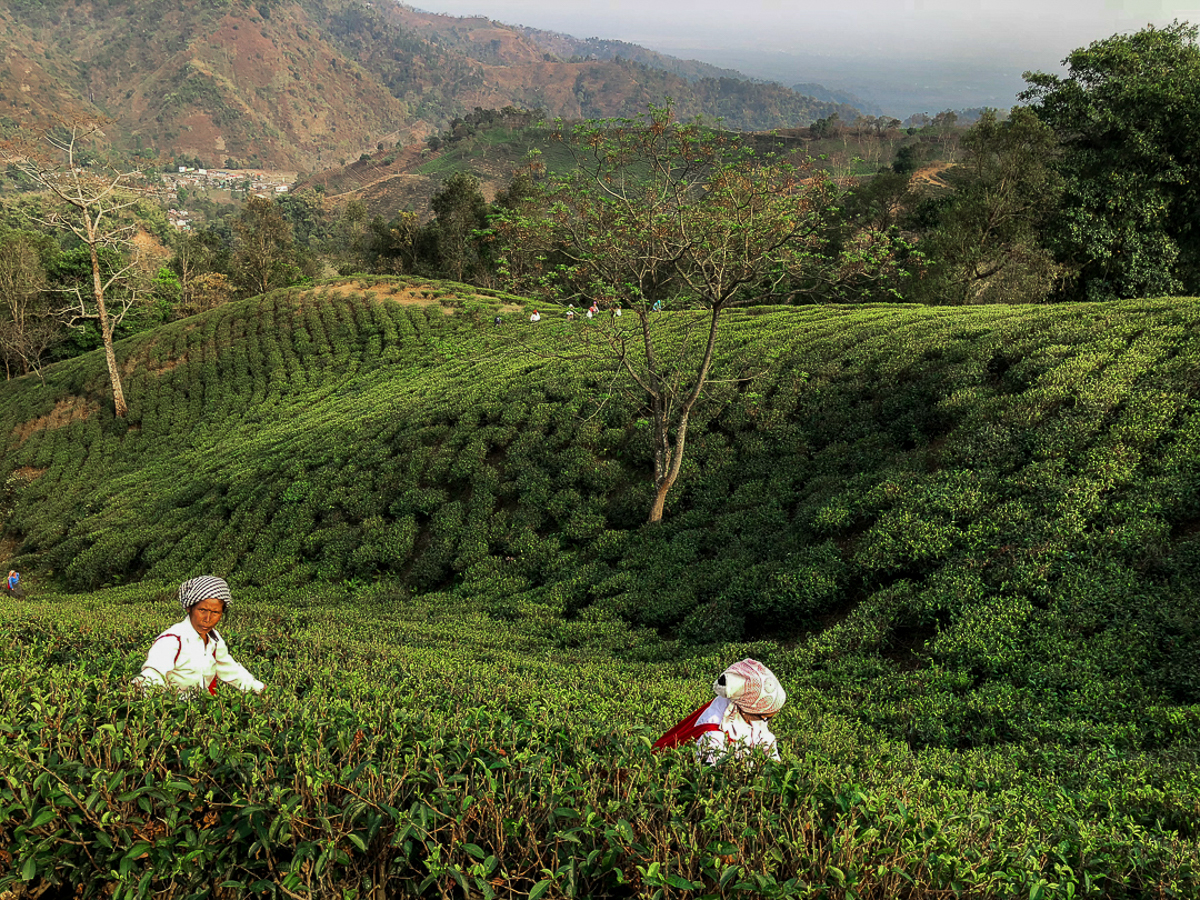
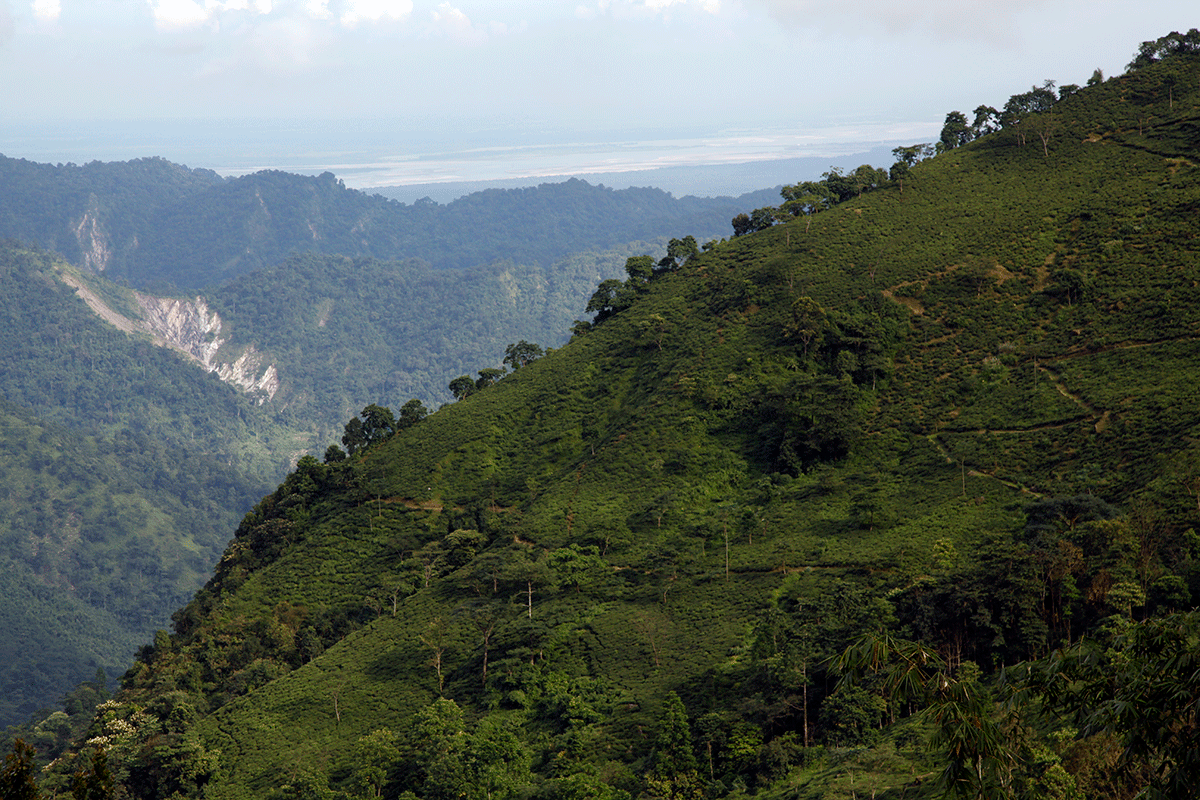
In Darjeeling, tea grows at altitudes ranging from 100 to 2,100 metres. The lower-grown teas are harvested first, of course, because of the milder temperatures they enjoy. Remember, tea plants enter dormancy when daytime temperatures remain below 12°C.
I’ve just bought a batch of Rohini Early Spring. It’s a delicious tea, and it’s special too, not so much because of the location of the plantation, but because of the quality of the cultivar, B157 (Bannockburn 157). It’s also unusual in that the plot is entirely planted with this cultivar, whereas many sections on Darjeeling plantations are made up of a patchwork of different tea varieties. The planter – who is well aware that his garden isn’t among the best-known names – is hugely creative when it comes to developing rare teas. He really takes care with the processing part, adjusting every parameter (intensity of withering, rolling, oxidation, drying) until he obtains the exact liquor he wants. This is a wonderfully delicate premium tea with a powerful grassiness and intense freshness. It will be available around 22 March, following the necessary food safety tests.
While we wait for Darjeeling, here’s Kotagiri Frost
The teas of Southern India offer an interesting alternative to those in the north when the latter haven’t been able to grow due to lingering low temperatures. In the Nilgiri mountains, tea is produced in the Darjeeling style, and Kotagiri Frost is the best-known of these at the moment. In the cup, it reveals an intense green freshness that announces the arrival of spring. This premium tea will be available around 15 March, following the necessary food safety tests.
Darjeeling kicks off the season
Every year, Darjeeling kicks off the harvest season. 2021 should be the same, as long as Covid doesn’t force the Himalayan foothills into lockdown. The harvest should start, as usual, around the time of the Holi festival. After a dry winter (the last major rainfall was back in September), the tea plants are struggling. They need rain so that the buds, which are just waiting to grow, can turn into leaves.
Something for every taste
Attitudes are changing and this makes me happy. In the early days of Palais des Thés, Chinese teas really divided our customers. Some loved them, others hated them based on the premise that all Chinese teas were smoked to a greater or lesser extent. There was a lot of misunderstanding surrounding them. Thirty years later, it’s such a pleasure to see how things have changed. Not only do many people now realise that not all Chinese teas are smoked, but we have also seen the rise in popularity of green, white, blue-green, yellow, dark and black teas from this country, the birthplace of tea.
Singbulli is changing hands
Tea plantations sometimes change hands, and this is important knowledge for tea researchers. The Singbulli garden (photo) in Darjeeling has just been sold. Who will be the next planter? What knowledge of tea will they have, and what production methods will they use? These questions show that you cannot rely on a garden’s name alone. The life of a tea estate evolves, and with it the quality of the teas it produces. Let’s hope that Singbulli continues to make the delicious teas to which we have become accustomed, such as those fine teas produced using cultivar AV2 and on the best plot: Tingling.
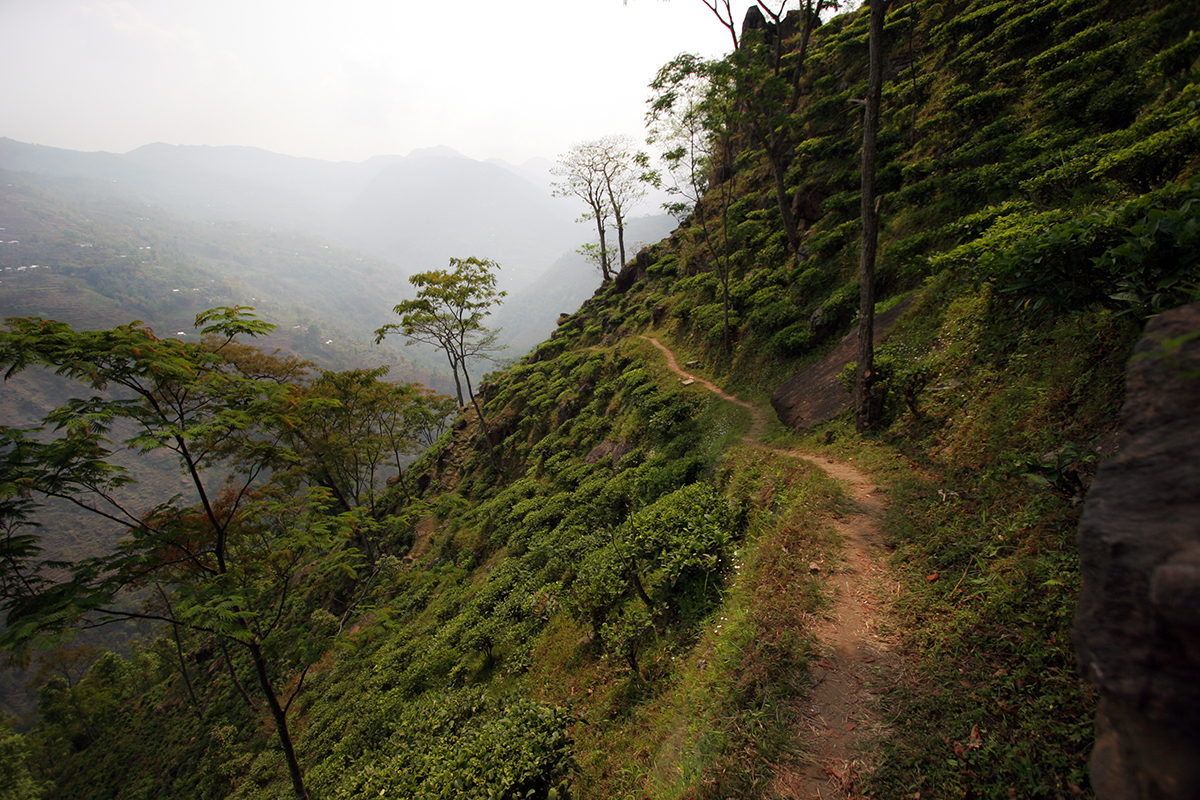
Around the mountainside
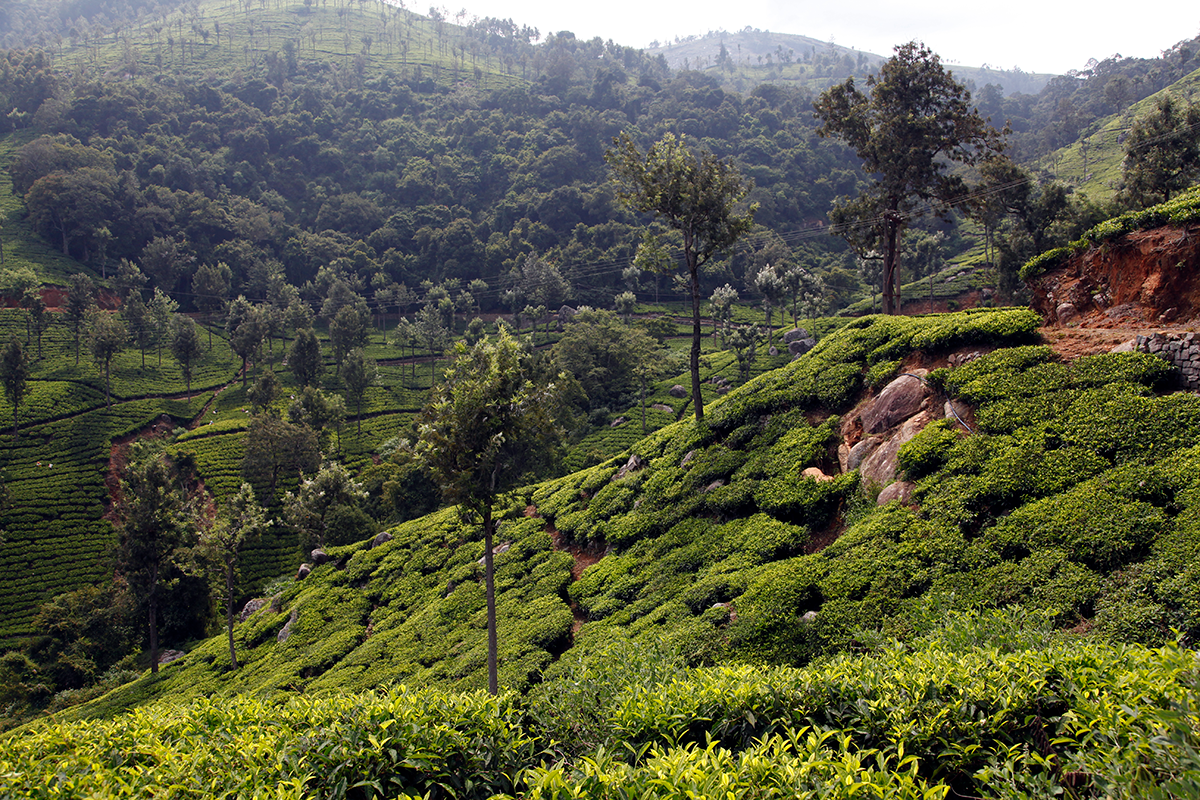
It will be another few months before we start returning to normal life, meeting up with friends and family, getting together for a cup of tea, a meal, a glass of wine. Meanwhile, this is the image that comes to mind when I think about the difficult times we’re going
Do the right thing
Our compatriots sometimes use the services of an American company to obtain a book they could easily buy from their local bookshop; they pay someone in San Francisco for goods instead of independent retailers and artisans. The same goes for food: our local shops, cafes and restaurants are so desperate for our support.
When it comes to tea, don’t expect me to bypass the people who count. Palais des Thés sources its teas from producers it knows. It pays them directly, whether the farmer is in a remote Nepalese village, on a high plateau in Malawi, or on a Japanese island. It gives us great pleasure to support the wellbeing of the people involved in producing such delicious treasures. Let’s support good tea and do the right thing.
Beneficial pain
With so much focus on the benefits of the vaccination needle, despite its brief sting, I wanted to look at a comparable phenomenon that affects the tea plant, in which momentary “pain” is beneficial. In some parts of the world, such as Taiwan and Darjeeling, a particular insect – a type of leafhopper called Jacobiasca formosana – likes to munch on the leaves of Camellia sinensis. The plant’s chemical response to this attack results in a rare, highly sought-after aroma in the cup. You will find this bouquet in an Oriental Beauty, for example, or a Darjeeling Muscatel. In these regions, farmers actively protect the insect to make sure they visit the plants and eat their leaves.
Papayas and tea
People are always experimenting, and when you’re lucky enough to be a tea researcher, you’re well placed to see all sorts of things. Here, on a coffee plantation in Tanzania that has branched out into growing tea, there is no lack of innovation. The latest initiative is to remove the flesh of papayas and fill the skins with a semi-oxidised tea that has been withered and rolled. After a short oxidation, the wet leaves are stuffed into the hollowed-out ripe fruit and become impregnated with its delicious scent.