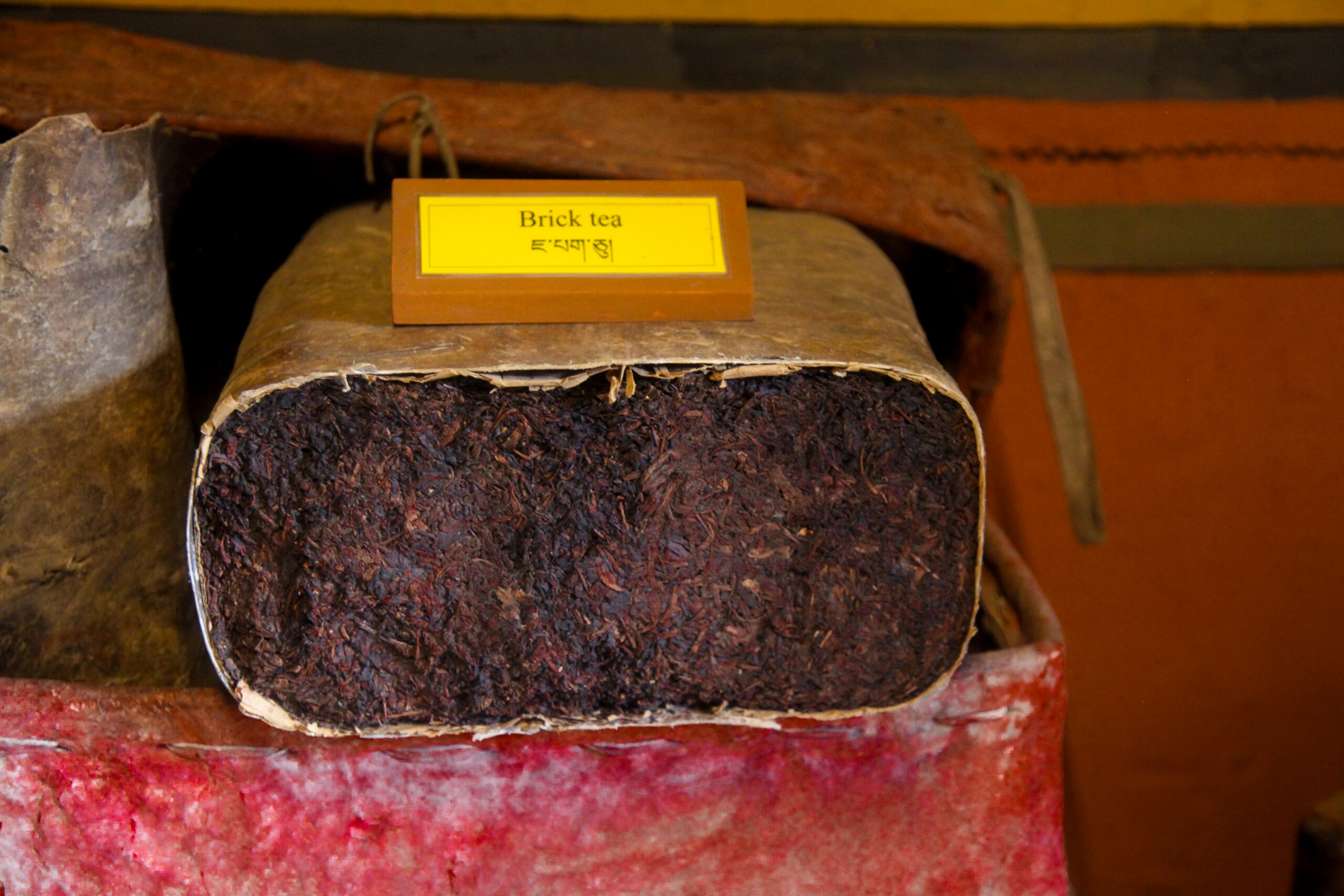
What did tea look like one or two thousand years ago along the Silk Roads? Back in those days, tea was compressed into bricks, like this one. To make it easier to transport, the tea was pressed and dried before being loaded onto the backs of horses, yaks, donkeys or camels. It then travelled over thousands of miles, through some of the hottest and coldest places in the world – depending on the season – like the Gobi Desert and the Taklamakan Desert. The heat and sweat of the pack animals could affect the leaves, causing them to ferment. This transformation significantly altered the properties of the brew, imparting aromas of mushroom and undergrowth, leather and wet straw.
The tea brick in this photo is one of the objects that can be admired in the museum at the stunning Ogyen Choling Heritage House in Tang Valley, in the Bumthang district of Bhutan. Owned by author Kunzang Choden, a direct descendant of the family who built the house, the museum displays many everyday objects that offer a glimpse into the lives once led by the nobles and peasants of these Himalayan valleys.
Compressed tea is still consumed in many regions of the world and is particularly popular with the Chinese diaspora, from Kuala Lumpur and Singapore to San Francisco. In Hong Kong and Taiwan, too, many enthusiasts swear by it. Most tea bricks or tea cakes come from the Yunnan region of China; the tea is crumbled before being steeped several times in tiny vessels.