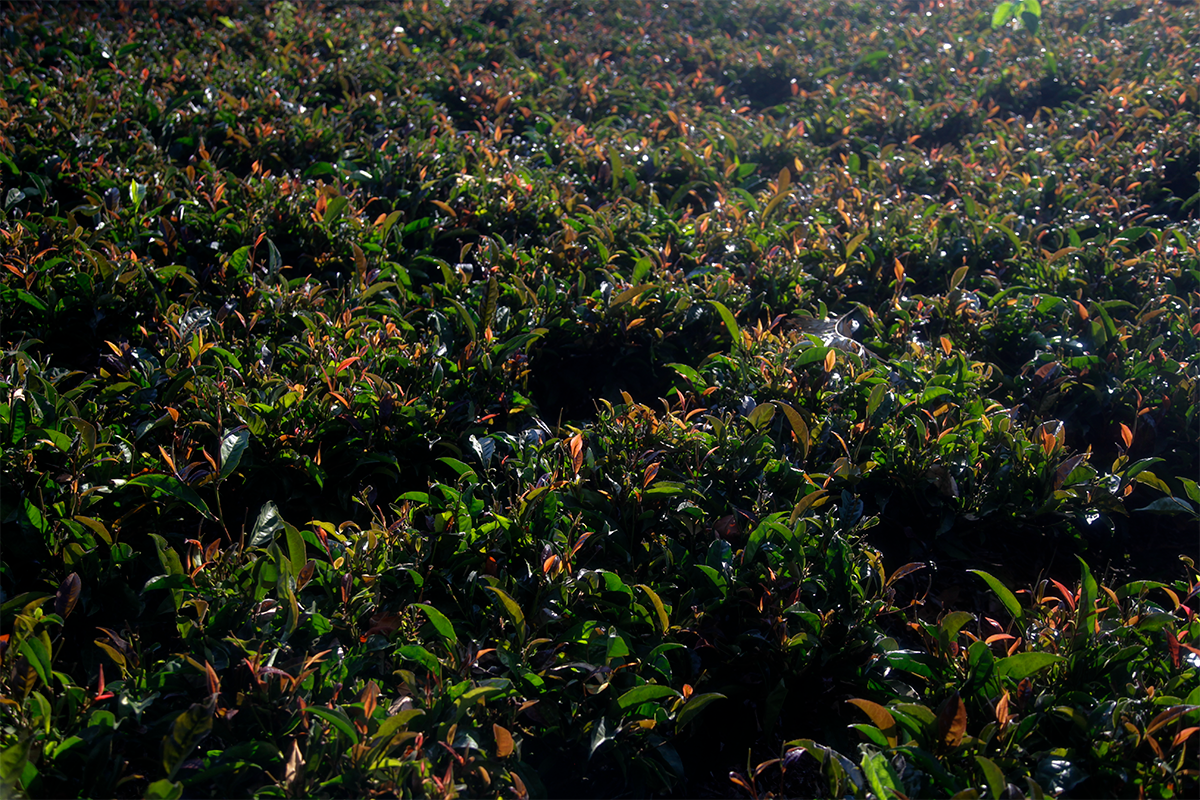
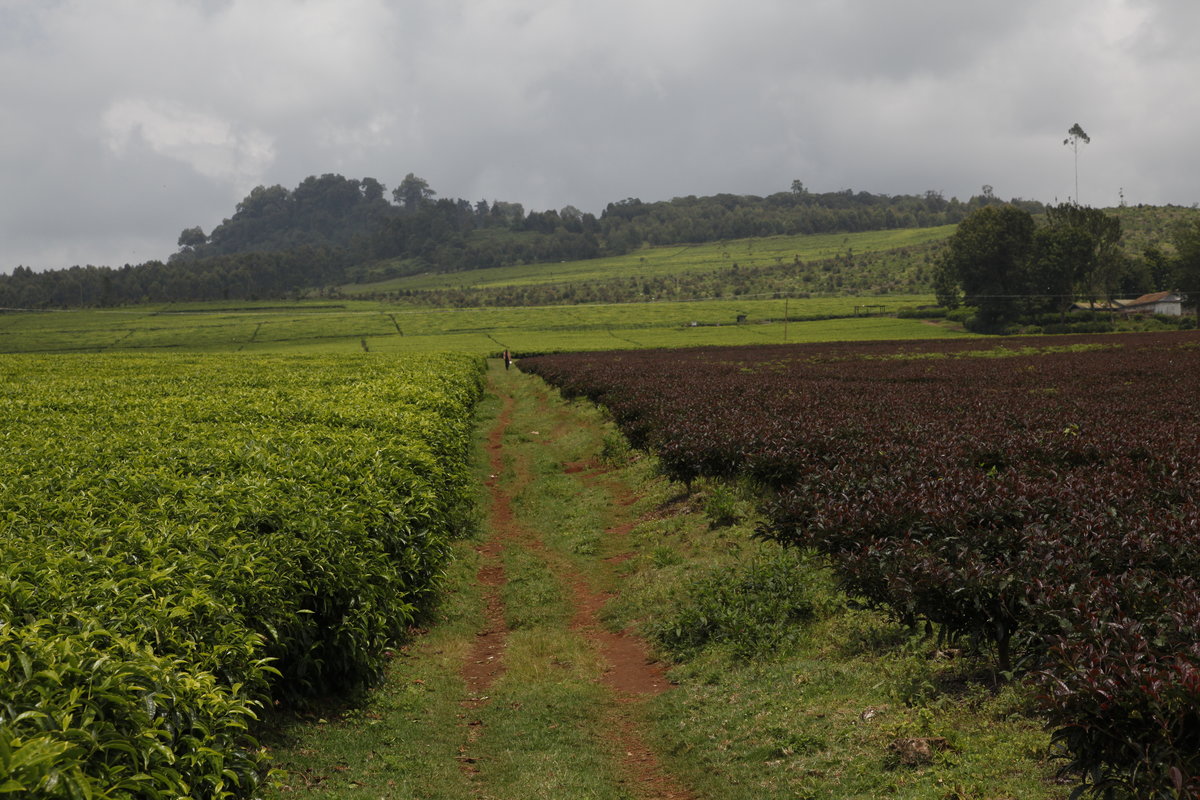
Kenya’s famous purple tea, developed by the country’s largest tea research centre, is characterised by its contrasting foliage. While the older leaves retain the familiar green colour of camellias, the new shoots have a distinctive purple hue. This makes picking easier, as only the reddish tips, which are the most tender, should be harvested.
Kenya
Des pousses identifiables
Au Kenya, le fameux cépage violet qui a été mis au point par le plus important centre de recherche du pays se caractérise par un feuillage contrasté. Si les feuilles plus anciennes conservent la couleur verte familière aux camélias, les pousses, en revanche, épousent une teinte pourpre facilement reconnaissable. Le travail de cueillette s’en trouve facilité et seules ces extrémités d’aspect rougeâtre, les plus tendres, doivent être récoltées.
Kenya, an unsung champion
Kenya is the world’s leading tea exporter. Although China and India produce more, both countries consume a significant proportion of their own tea, unlike Kenya. The East African country’s soil, climate and altitude are ideal for Camellia sinensis, which is why the British introduced the crop there in the early 20th century. Today, tea represents a significant portion of Kenya’s resources. But who knows about Kenya’s tea? Most of it is industrially produced CTC (crush, tear, curl) and is found in paper tea bags, usually in blends of different origins, which is why the production country is not mentioned on the packaging. However, Kenya has a bright future ahead of it, provided it focuses on the superb high-altitude teas, which are harvested by hand and processed using the orthodox method. These teas could generate much more income and pride for the people who make their living from this crop. We must rigorously select the finest batches, support the farmers, introduce them to new techniques, encourage their creativity, and do everything we can to make consumers aware of this unjustly overlooked tea-producing region.
Purple tea is a source of pride for Kenya
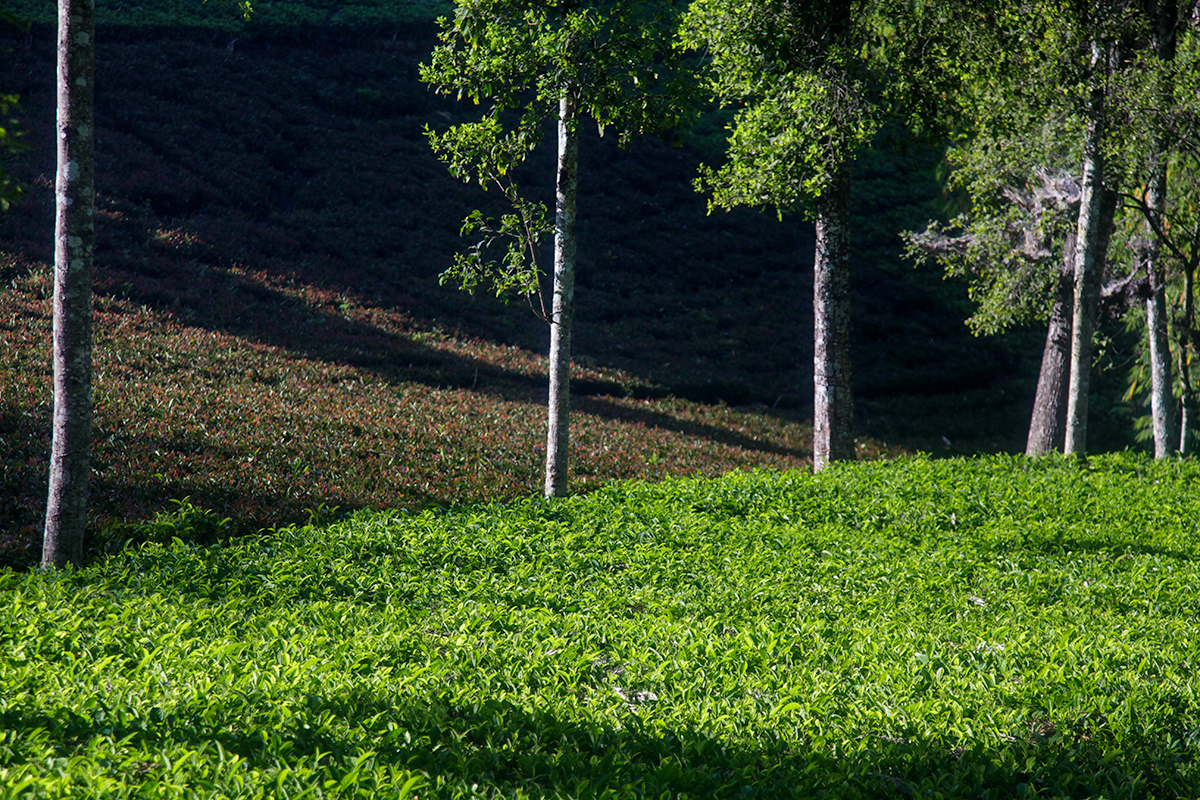
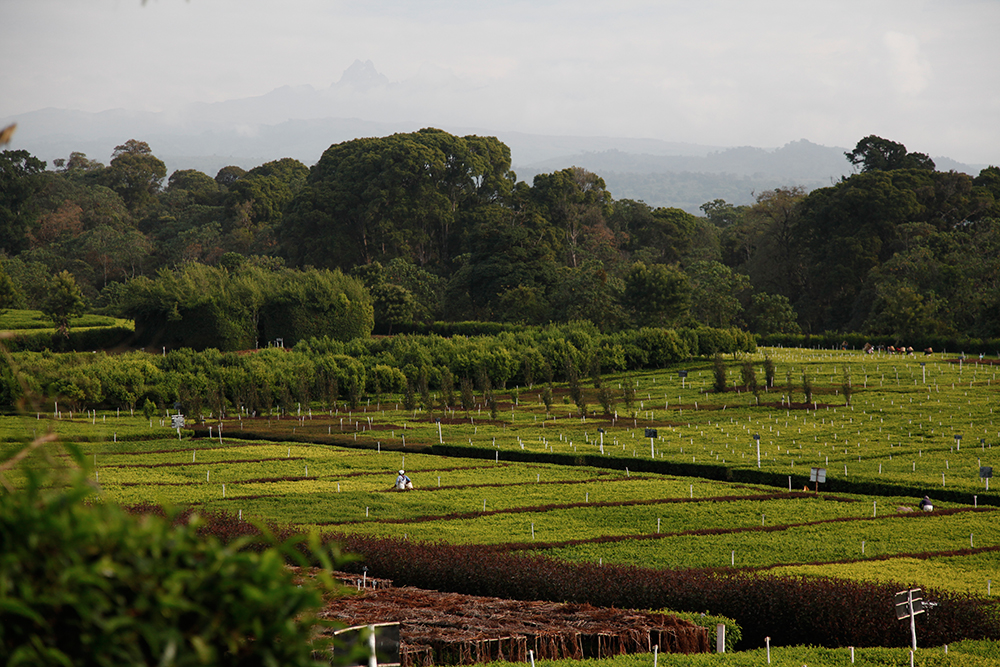
Purple tea is part of Kenya’s identity. The colour refers to the tea variety rather than the way the leaves are processed. The cultivar is easy to spot while walking through the tea fields (seen here in the background). It is rich in anthocyanin, a natural pigment and an excellent source of antioxidants. Developed by Kenyan researchers, the cultivar is known as TRFK 306/1. After harvesting, the leaves can undergo the same processing as green, black, white or semi-oxidised tea, depending on the farmer’s preferences and expertise.
Roll out the green carpet
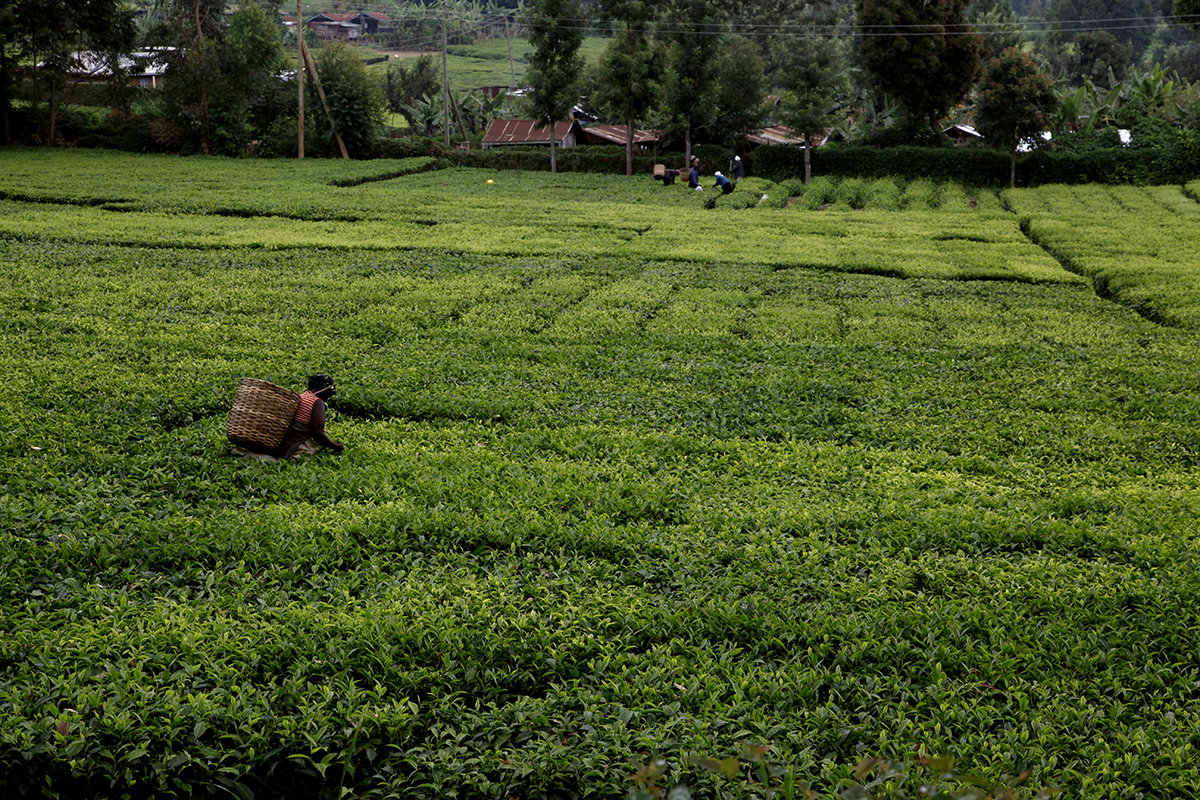
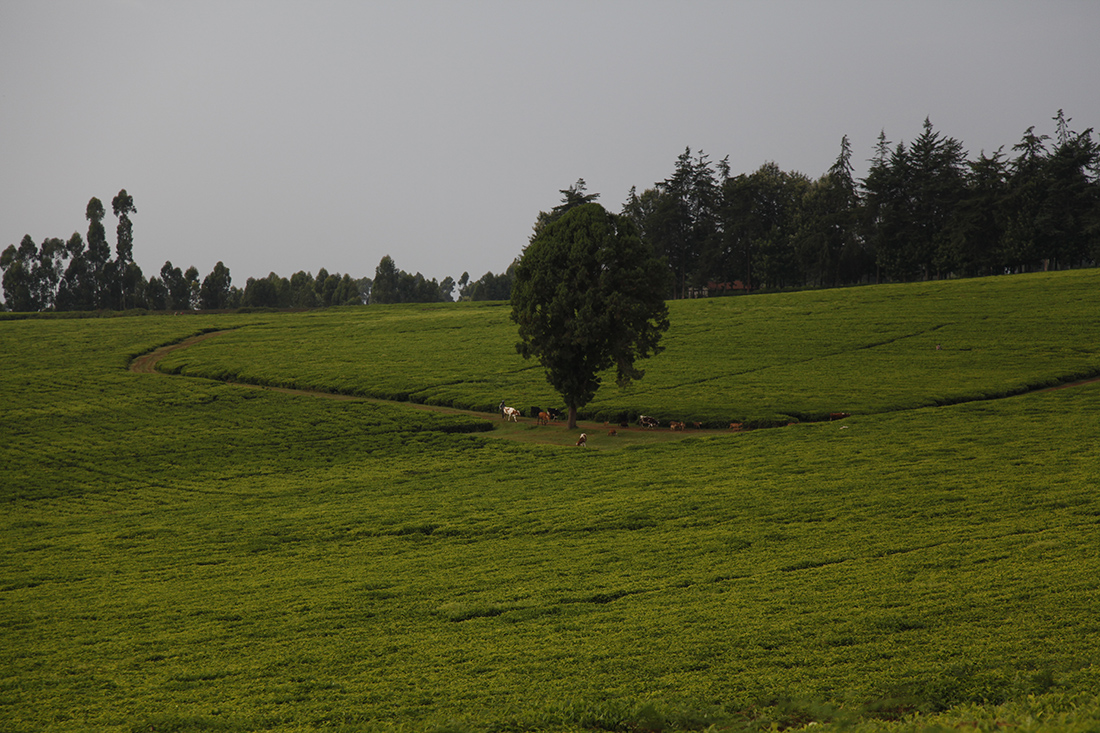
It takes a lot of attention to detail to produce fine tea, harvested from this beautiful emerald expanse. Only the bud and the first two youngest leaves at the tip of the shoot must be picked. The subsequent stages in production also play an important role in quality. Let’s roll out the green carpet for everyone who helps to create such delicious teas.
Celebrating the end of lockdown in Kenya
Today, I’m taking you to the slopes of Mount Kenya. There, at nearly 2,000 metres, a well-structured, aromatic black tea is grown. Quality varies from one plantation to the next. One of the most famous tea research centres is located here, meaning that the region’s farmers benefit from valuable advice that complies with organic practices, which are very common here.
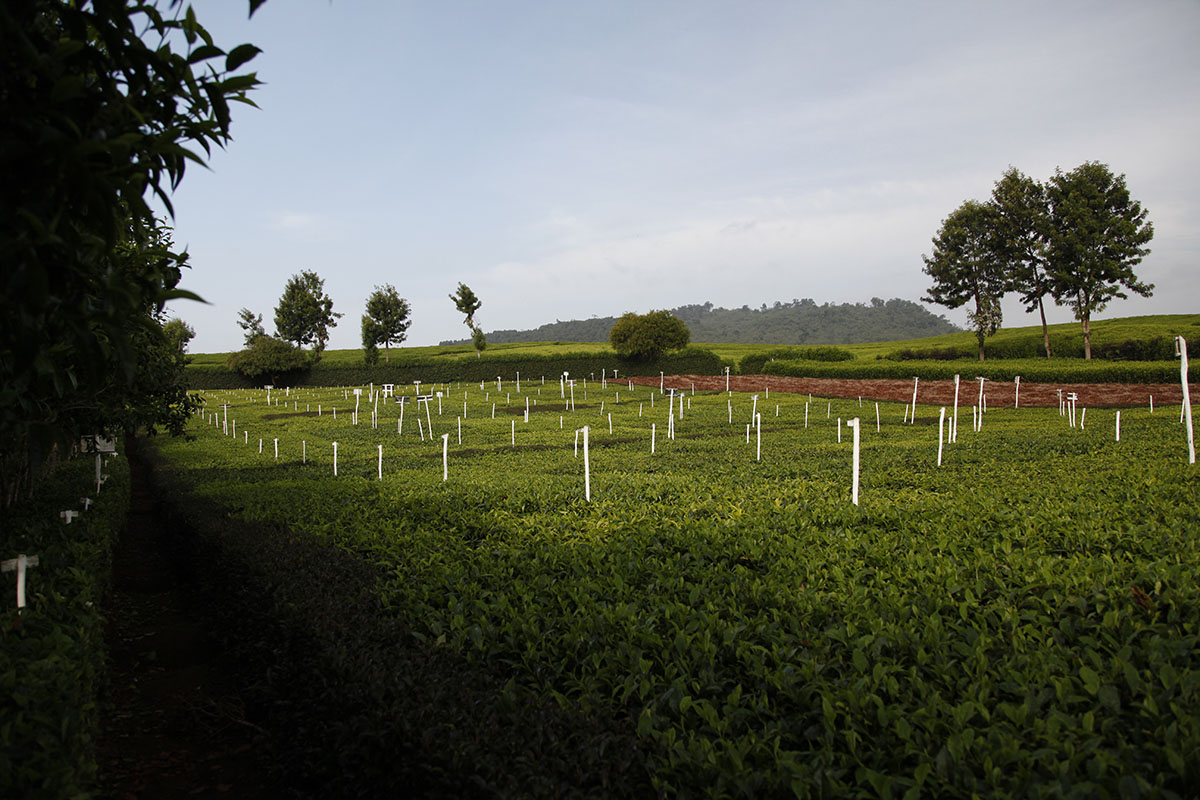
The row of white posts bearing the names of the cultivar makes this plot resemble a memorial site. We remember the victims of this pandemic and look to the future with hope.
A tea rich in antioxidants
We might want to drink a tea for its flavour qualities, but at the same time we can be aware of its benefits and in particular its polyphenol content. One of the varieties with the most antioxidants is TRFK 306/1. It was developed by the well-known Tea Research Foundation of Kenya (TRFK), which I have visited. What is special about this variety, in addition to its polyphenol content, which is 1.5 times higher than other teas, is the colour of its leaves. You can see here, on the right, their lovely purple hue.
Altitude, a useful ally
In Kenya, some plantations lie at almost 2,000 metres. At this altitude, insects and fungi that can attack tea plants are particularly rare, due to the low temperatures. So in these conditions, it’s easier to grow teas organically. However, to be certified “organic”, as well as not using prohibited pesticides and fungicides, the soil must be enriched naturally – with compost, for example.
Tea leaves under a shelter
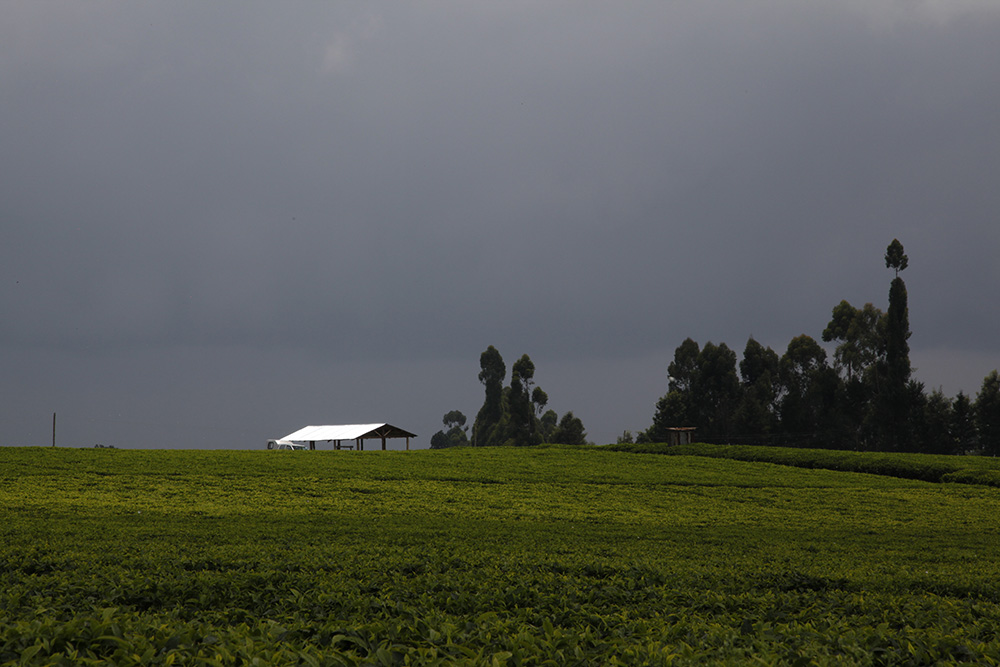
From the time the tea leaves are harvested to the moment they reach the factory for processing, they must not be allowed to start fermenting, as this could spoil the quality of the tea. So in various locations around plantations there are small shelters built to protect the leaves from rain until they are taken to the factory.
A premium tea from Kenya
In my teapot this morning, a portion of Mount-Kenya Golden-Leaves is opening up in the water. This is the first premium tea I’ve found in Kenya, and it has just arrived. I love its notes of honey, wood, wax and liquorice. They are warming, and celebrate the end of winter in their own way. They make you want to stay indoors a little longer, warm and cosy. They make you want to breathe in their aromas, cupping the bowl in both hands.