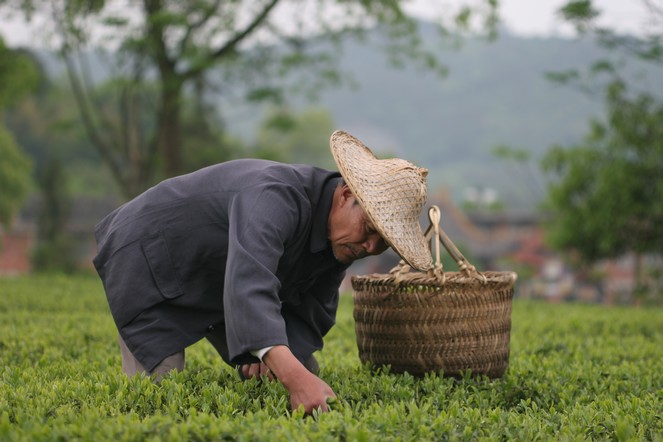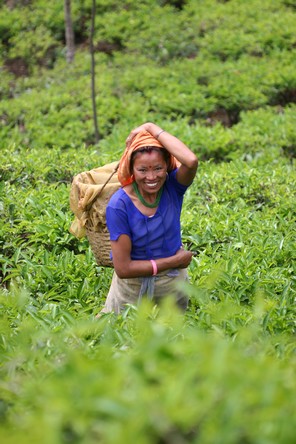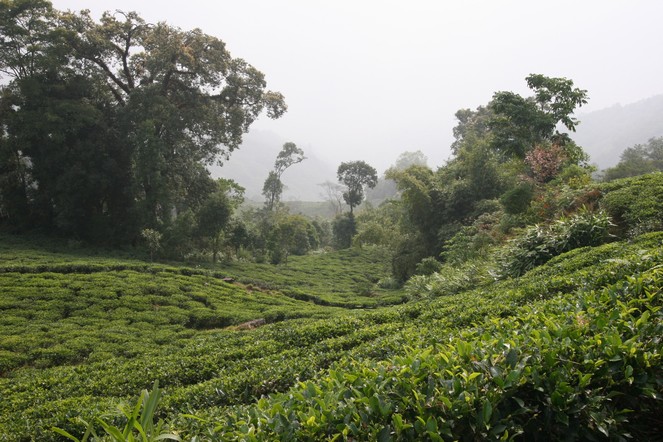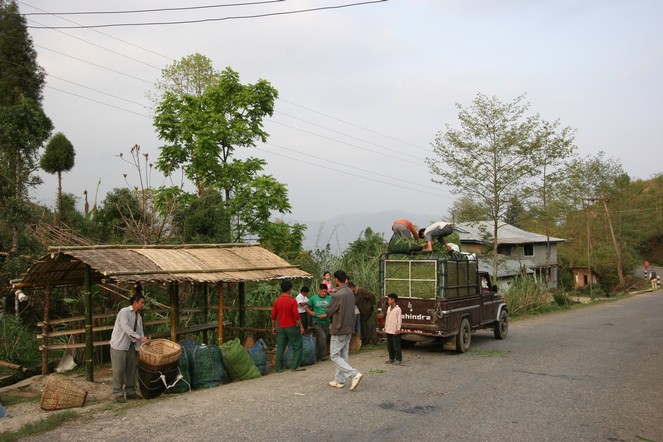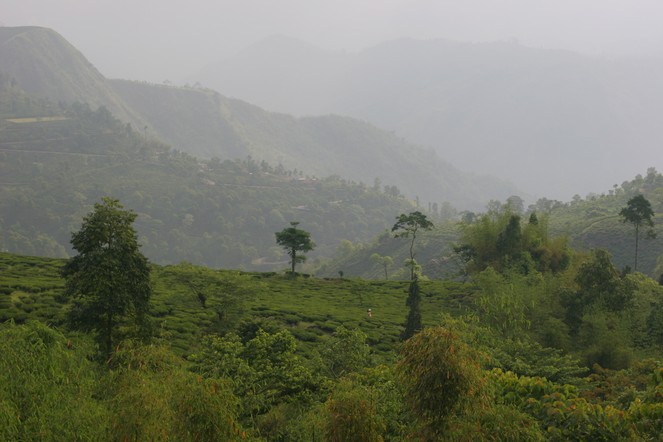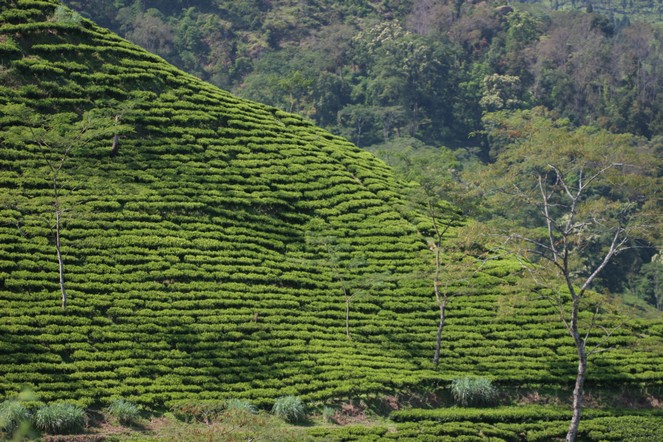
Sometimes the people who harvest tea don’t have the necessary equipment to process the leaves. In this case, they sell their crop to another farmer who is able to process it.
This is what happens in the south of Sri Lanka, where each tea factory dispatches vehicles to collect bags from small producers.
From plant to cup
News from Darjeeling
This morning, I had the pleasure of meeting Abhishek Bagaria, the owner of Phuguri Tea Estate, Orange Valley Tea Estate and Millikthong Tea Estate. He hopes to be able to go ahead with the harvesting on his various plantations in the next couple of weeks.
After a cold, dry winter, the weather conditions are now favourable. We must now just hope that the political tensions which have reignited over the thorny issue of autonomy for the Darjeeling region will not lead to strikes and road blocks.
There are still hurdles to overcome before we can enjoy these Darjeeling teas – but they will be worth the effort!
In Darjeeling, the spring harvest is approaching
In a few weeks’ time, the spring tea harvest (first flush) will begin in Darjeeling. The weather is a decisive factor in determining the timing of the harvest, and Darjeeling fans will be as happy as I am to learn that it has finally just rained there, after a long period of dryness.
Anil Jha, the planter at Sungma, has just informed me that on the night of 16 February, between 18 and 32 millimetres of rain fell in the region.
The oxidation of rooibos
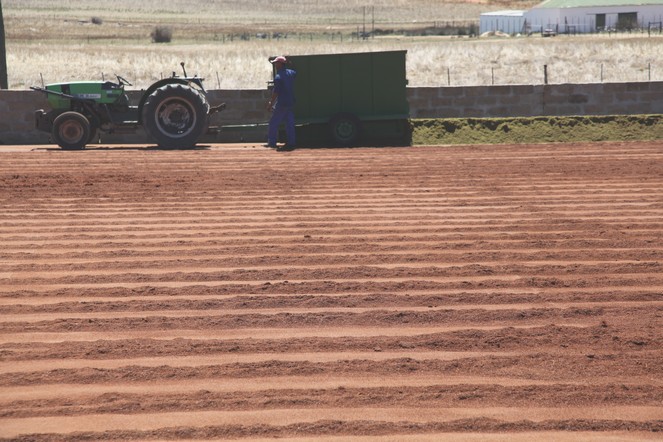
As soon as they are plucked, the rooibos shoots are cut and sprinkled with water. Then the oxidation process can begin. This takes place outside and causes the leaves to change colour, from green to brown. When it has oxidised to the right degree, the rooibos is spread out on the ground in a fairly thin layer, so it can dry in the sun.
The rooibos harvest in South Africa
The rooibos harvest has begun, and I am happy to be here. The harvest lasts less than two months. South Africa is the only country that produces rooibos, a plant sometimes known as “red tea”, but which is not a tea at all.
Rooibos is rich in antioxidants and is completely free of caffeine. It is my favourite drink before going to bed.
In a desert of stone and sand
It is only 38 degrees centigrade at the moment in this desert of stone and sand, situated three hours’ drive north-west of Cape Town (South Africa). This temperature is relatively clement, as rooibos is often harvested at around 45 degrees. The heat does not bother Aspalathus lineari, also known as rooibos. With roots that bury themselves to depths of up to four metres, the bushes seek coolness deep in the ground. I wish I could do the same!
Artisanal production
In Myanmar (Burma), the production of tea remains highly artisanal. People make both green and black tea. I haven’t found anything special in my tastings so far, but I’m continuing my research.
Here, in the Hsipaw region, the main tea producing area, villagers take the plucked tea leaves home and process them in front of their houses. This is what the local rolling machines look like. They are worked by hand.
Discovering Burmese teas
South of the beautiful Lake Innlay, so often shrouded in mist, is one of the two mountains on which the Burmese grow tea. Around Pingluang, more specifically, about 30 kilometres south of the famous lake. This is in Shan State, and it is this beautiful region
I have chosen as the destination for my first journey of the year. Myanmar is changing and is opening up to the rest of the world, and it is time to find out what kind of teas they make in this country.
Magnificent Sri Lankan landscape
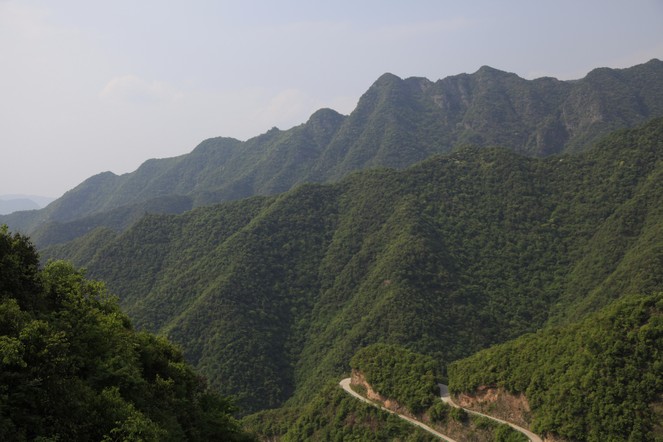
For those lucky enough to visit the beautiful country of Sri Lanka, this is the type of landscape found around the Sinharaja reserve in the south of the island.
This is the region where the low-grown teas are found, including the most famous, New Vithanakande.
A winter harvest in Sri Lanka
The low sun illuminates these bags filled with freshly plucked tea leaves, creating a contrasting effect of light and shadow. The men work quickly, emptying the bags and spreading the leaves out on withering trays, so that there is no risk of them fermenting.
In some regions of Sri Lanka, tea is harvested at this time of year.