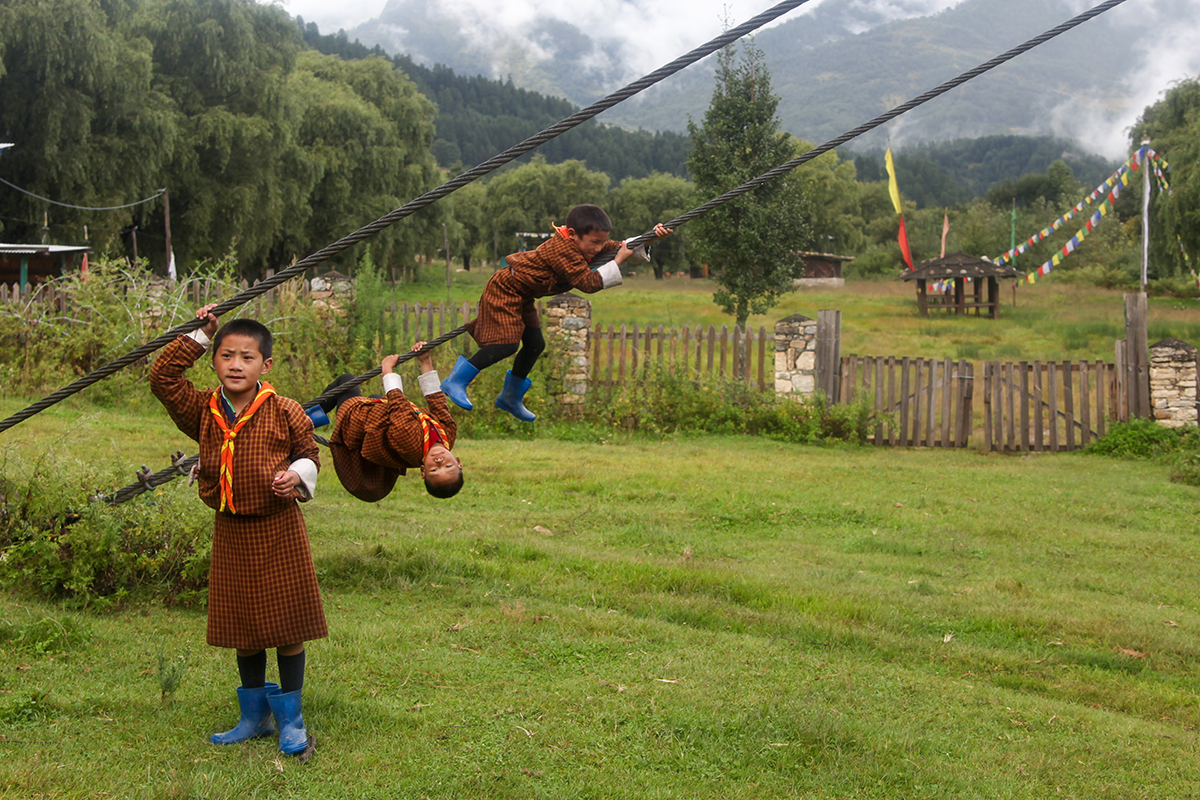
All around the world, the same scene plays out. You come across some children walking home from school. They ask you to take their photo, so you show it to them. They laugh and ask you to take another, then another. They laugh even harder. You carry on your way and they trail behind you, keeping their distance. As they grow bolder, they start performing all sorts of antics to impress you, like hanging from the cable of a suspension bridge and trying to climb up it.
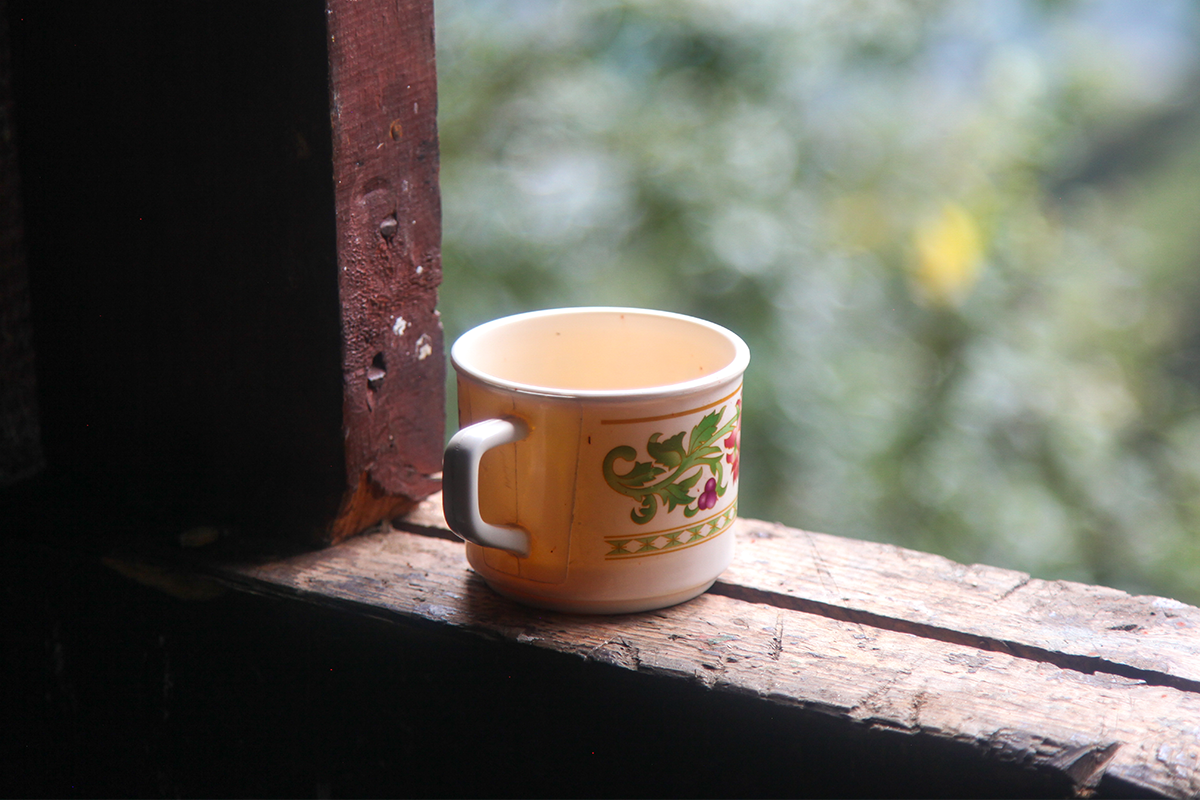
Abandoned cup
I’m not sure exactly what this cup is made of, but that’s not important. In its own way, it is unique. The woman who was holding it a few seconds earlier put it down on this windowsill after drinking a strong tea with milk and sugar. We are in the Himalayas. Tibet is not far. Here, they drink tea to warm body and soul. The cup is worn through daily use, and discoloured from the tea. It has become a familiar object: quietly reliable, available, reassuring.
This cup makes me think of all the victims of the Nepal tragedy, of all the lost lives. I think: how many cups of tea await those who will never return? How many lives have been destroyed by these climate disasters?
African massage
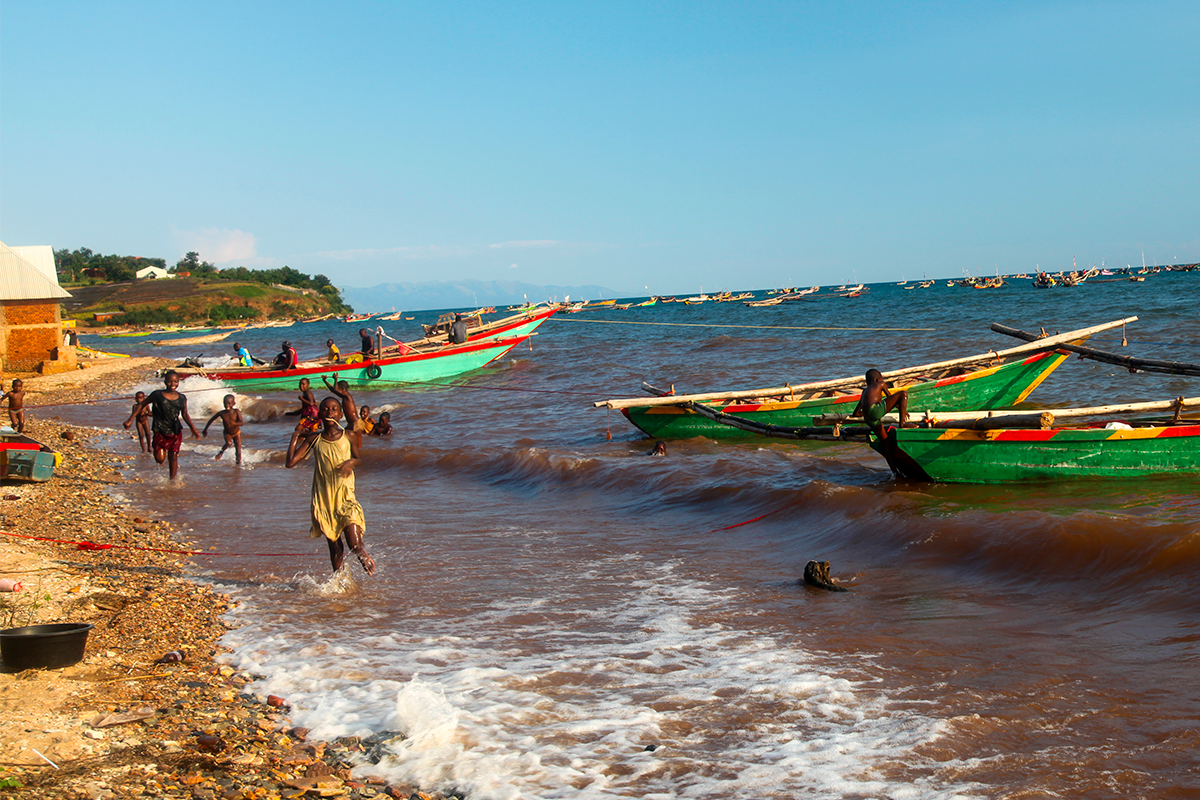
Several East African countries are among the world’s biggest tea producers. In Burundi, I travelled along the shores of Lake Tanganyika to the Tanzanian border, gazing across the water towards the mountains of the DRC (Democratic Republic of the Congo), while at night, the fishing boats scattered across the lake glittered like a constellation of stars. In a week, I did not come across a single Westerner, and some local children had never seen one, rushing over as soon as they caught sight of me. They emerged from the water in a constant stream, full of excitement, laughter and curiosity. I barely had time to snap a few photos and try to answer their eager questions before returning to my vehicle, leaving them to their waves. After hours on chaotic tracks that tossed me violently in every direction, I headed for the mountains. In Burundi, those long hours spent being jolted along gruelling roads have a name: the African massage.
On my return to France, someone pointed out to me that my photo wasn’t straight, that the lake was tilted. At the time, I didn’t believe them. Nor did I later. I had never seen anything like it. I want to believe my photo is faithful to what I was lucky enough to witness. I want to believe it is faithful to that unexpected axis on which beautiful Lake Tanganyika seemed to rest. When you travel, you have to accept being challenged, to confront other ways of seeing the world. That is all part of the charm of adventure. Here is the lake as I saw it that day: tilting gently to the left, no doubt beneath the weight of the boats and the children’s laughter.
The land of dragons
Bhutan. The name inspires dreams in a tea researcher like me. How many years have I spent wondering whether any tea gardens are to be found in this mysterious kingdom… Twenty, thirty? To its west lie the Dooars plains, while the immense Assam Plain stretches southwards, bathed by the turbulent waters of the mighty Brahmaputra river. During my frequent travels through these two regions blanketed with tea fields, I have often gazed at those distant mountains where dragons live. A land of clouds and legends, where success is measured in terms of gross national happiness.
Sérénité
Nul besoin de plantations immenses, de domaines qui s’étendent sur des centaines d’hectares. Le thé c’est aussi cela, une maison entourée de camellia sinensis. Une production à échelle humaine. Dans de nombreux pays, la culture du thé a donné lieu à des pratiques intensives, en général en zone de plaine. Mais dès que l’on grimpe un peu, que l’on accepte de faire de la route, de finir à pied, on trouve des villageois qui cultivent le thé parmi d’autres matières agricoles et ces fermiers-là, de la façon la plus artisanale qui soit, manufacturent des thés remarquables. Il leur arrive aussi de vendre les feuilles fraîches à un voisin mieux équipé ou encore à la coopérative locale. Ce que je ressens ici c’est une atmosphère de sérénité. À huit heures du matin, le soleil était levé depuis longtemps et la maisonnée s’activait. Au chant du coq se mêlait celui d’un mantra, une salutation au soleil et à la vie.
Tea at the top
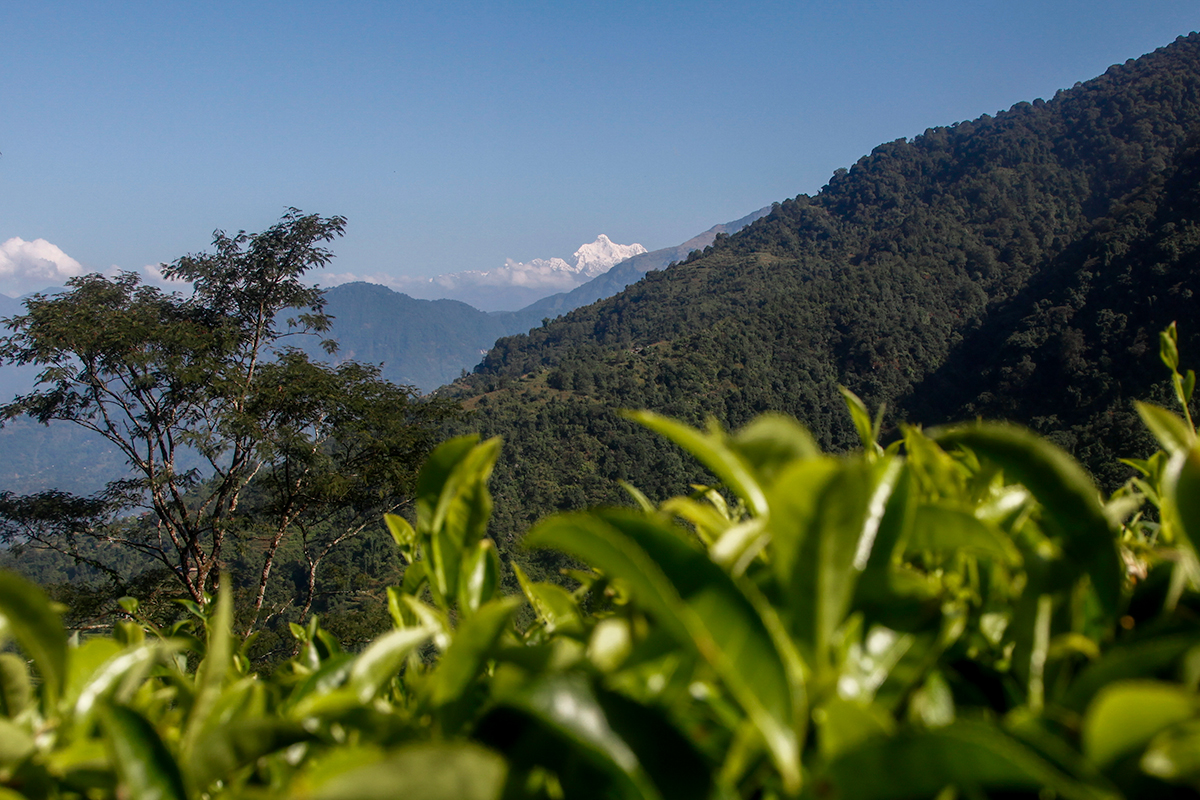
From November to March, the days in the Himalayas are cool and the skies clear. This is when you can see the distant peaks glistening white beyond the tea bushes, like Kumbhakarna (7,710 metres), whose ghostly silhouette can be seen here. The best time to see them is at sunrise, before they disappear in the mist. The view is well worth the relative discomfort of the journey and the rudimentary morning wash with a bowl of cold water and a cloth, out in the open if you follow local custom.
Feeling grateful
Being a Frenchman, I admit I probably complain more than I should. And yet, as someone who spends much of the year travelling around regions of the world as diverse as a Himalayan kingdom, the Andes and the Great Rift Valley, in countries that are much less fortunate in terms of standard of living, I am well aware that France is the stuff of dreams, a kind of paradise in the eyes of so many of the planet’s inhabitants. It’s true that it shouldn’t take much for France to become a paradise if we united and sought compromise instead of adding fuel to the fire, preferring to fight rather than agree, thinking that violence will solve every problem. Why are we still so comfortable protesting instead of trying to build bridges? It’s a mystery to me.
Tea has opened my mind to harmony, to finding the right balance, to paying attention to others. What if we looked at the world differently? Let’s have a cup of tea and look around us. As we sip the delicate nectar, we can contemplate this beauty and feel grateful.
Trees that speak to us
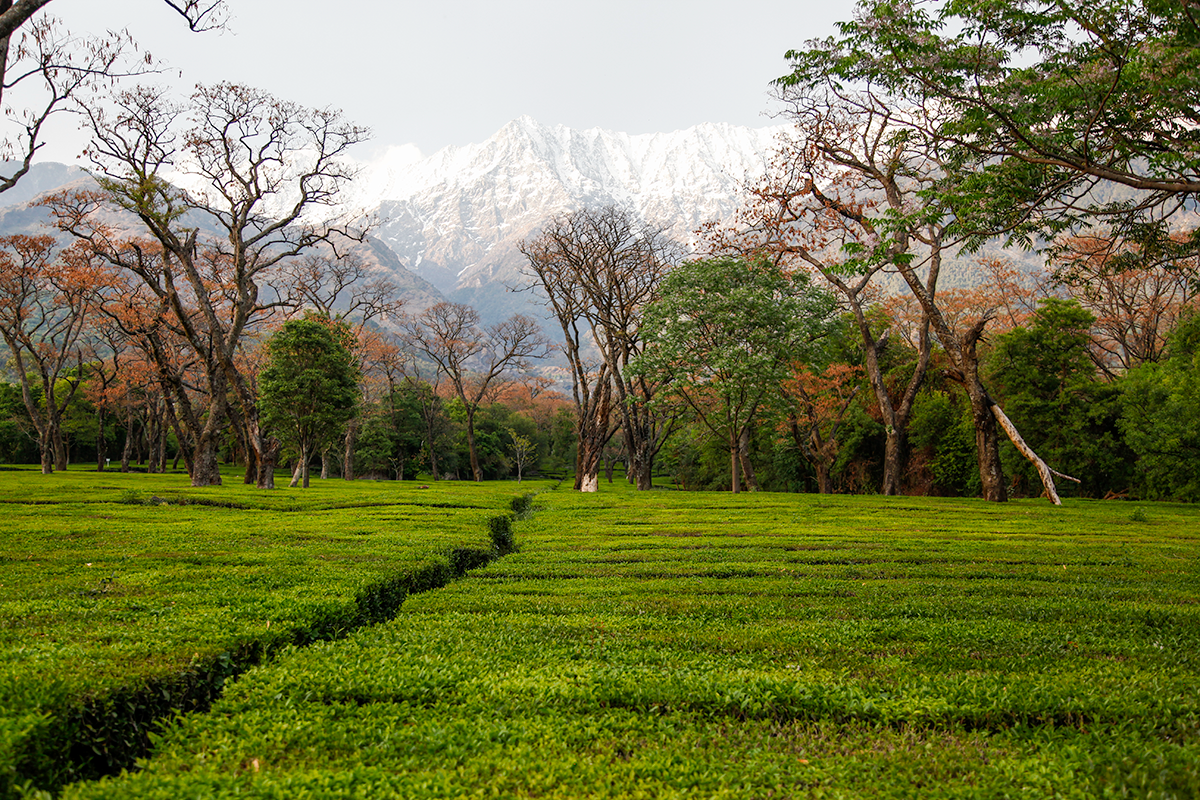
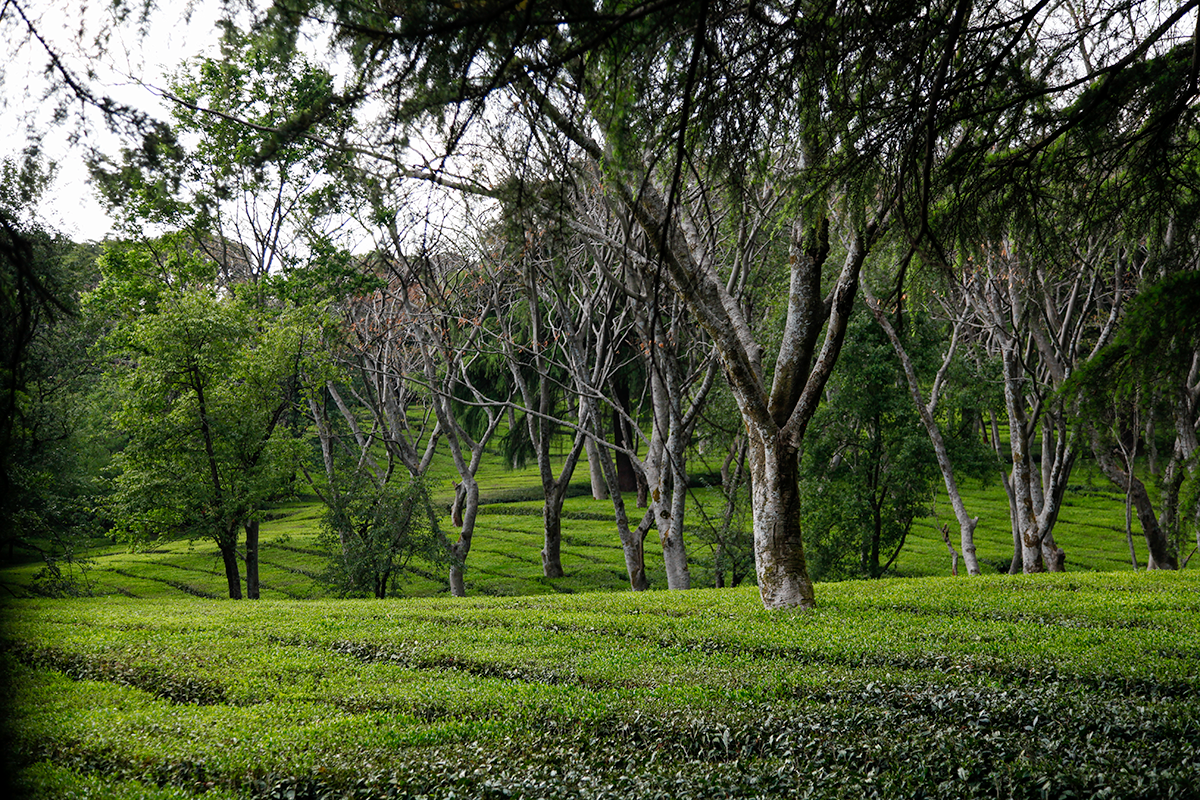
At a time when we don’t have a clear view of what’s going on in Darjeeling, where the plantations have been suffering for many years from a crisis that we would like to see end, I am travelling through other tea-growing areas of northern India. “Nature is a temple where living pillars let sometimes emerge confused words,” wrote Charles Baudelaire. And here, in the Kangra Valley, who wouldn’t feel its presence? Look how these trees watch us with a familiar gaze! I don’t know if you can hear them. They speak to me.
A photo reveals
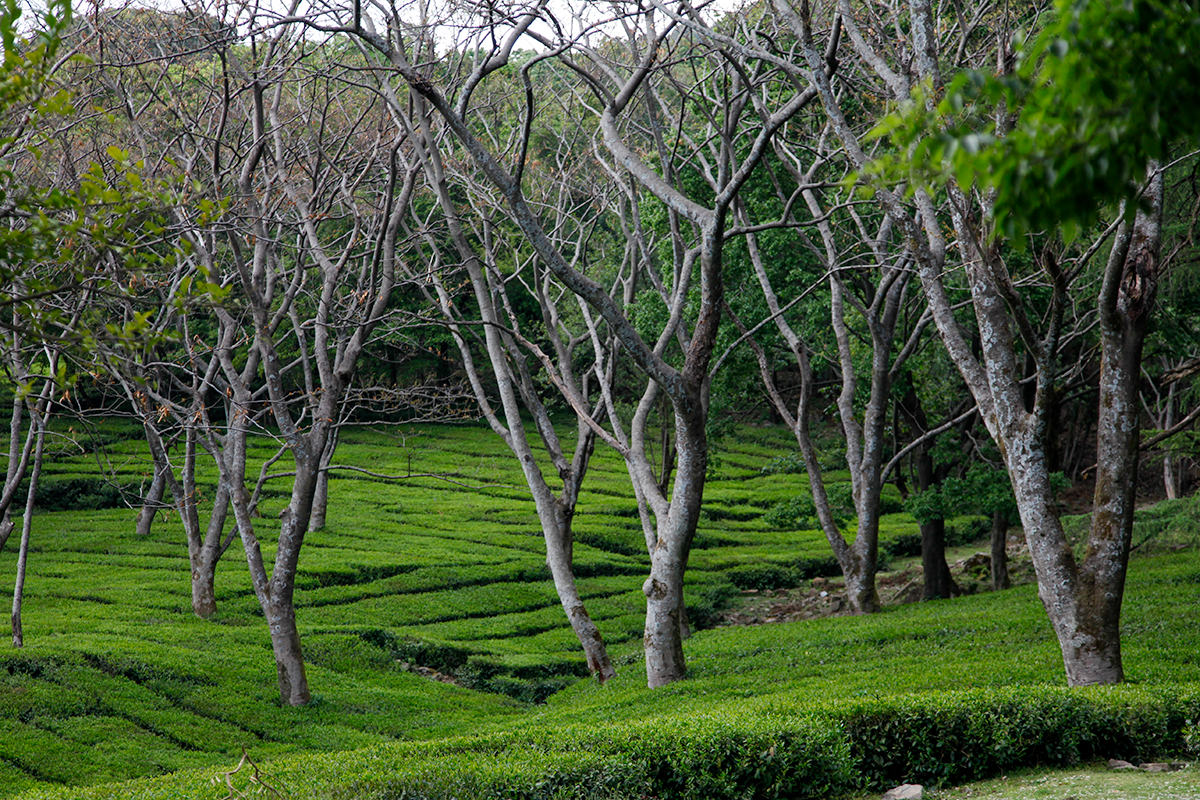
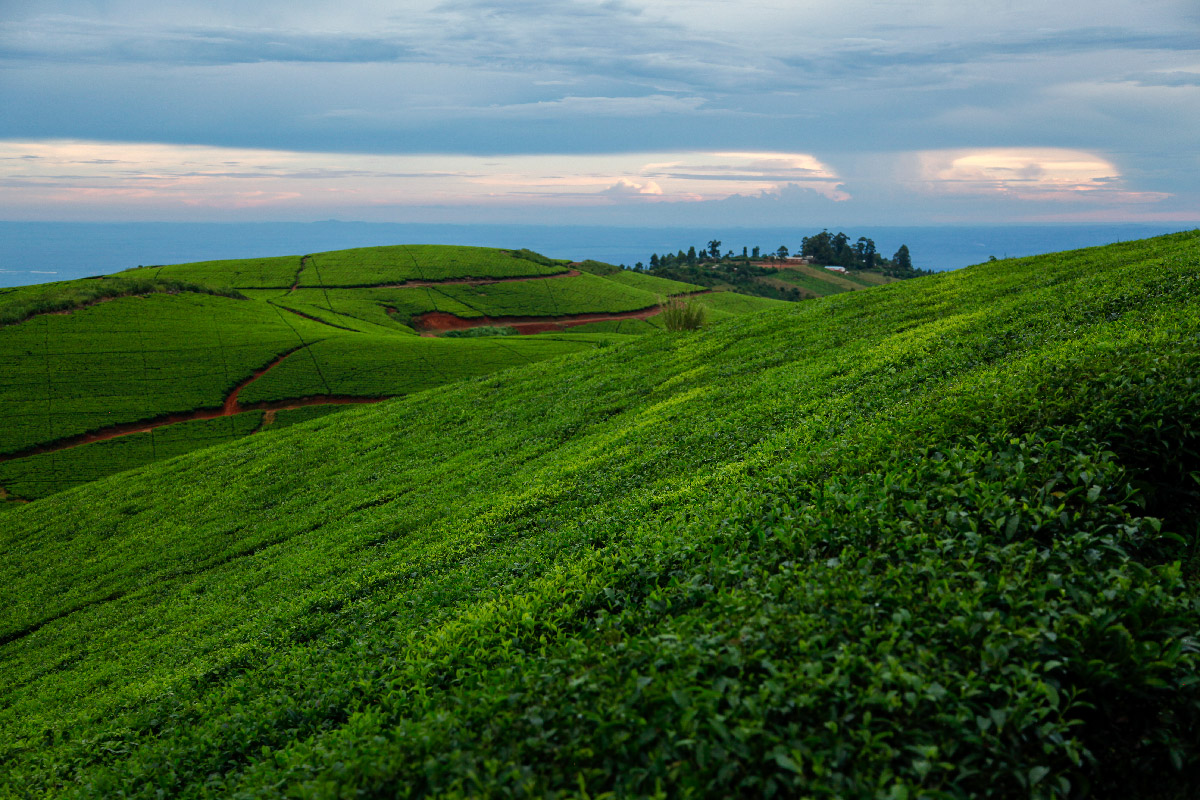
Sometimes a photo poses a question. When the shutter is released, the photographer – on the other side of the lens, camera in hand – may not be aware of anything. They are absorbed in their subject, waiting for the right light, adjusting the framing, shutter speed and depth of field. It’s only when they see the photo on a computer screen that things are revealed. Here, for example, I can see the absence of trees. I didn’t notice at the time. How is that possible? And how is it possible to deforest in this way, to farm so intensively on such low hills?
But what I’m really struck by here is the mystery of photography, which sometimes works in two stages. First, it’s a response to appealing shapes and colours. Then there’s something deeper, which reveals itself afterwards.
Wild and tamed nature
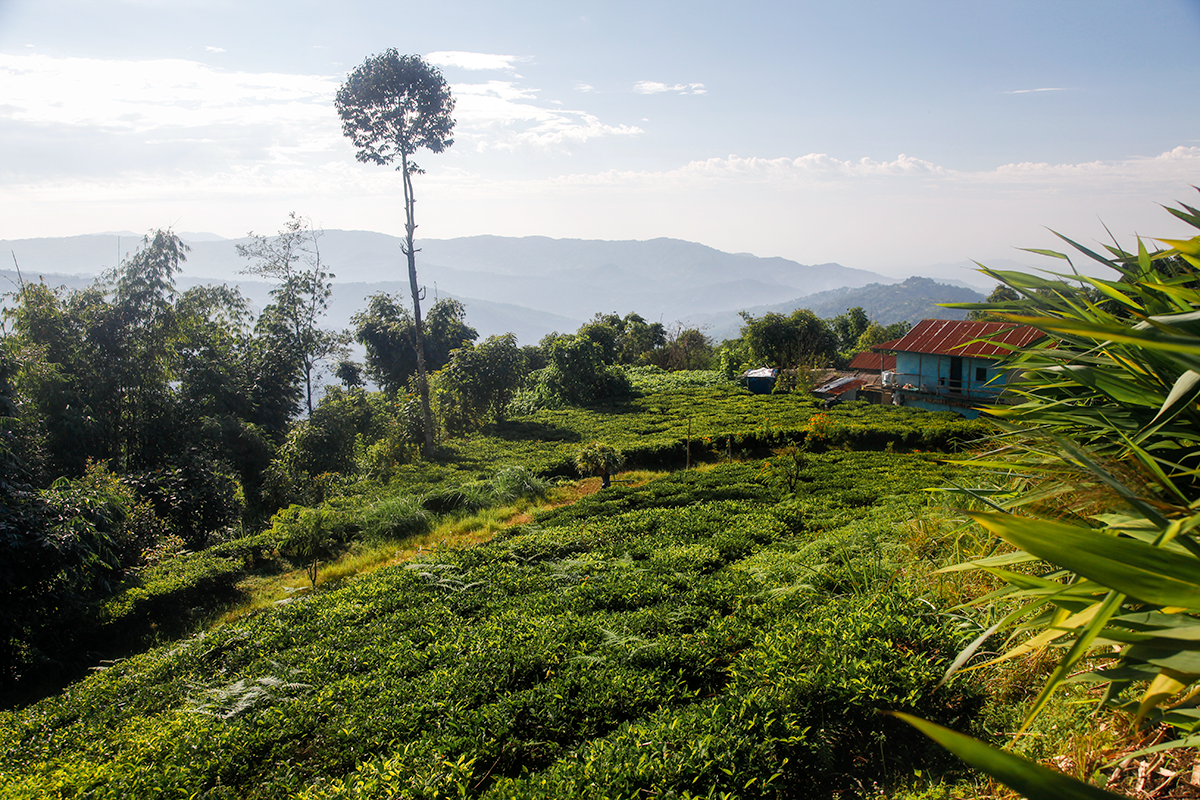
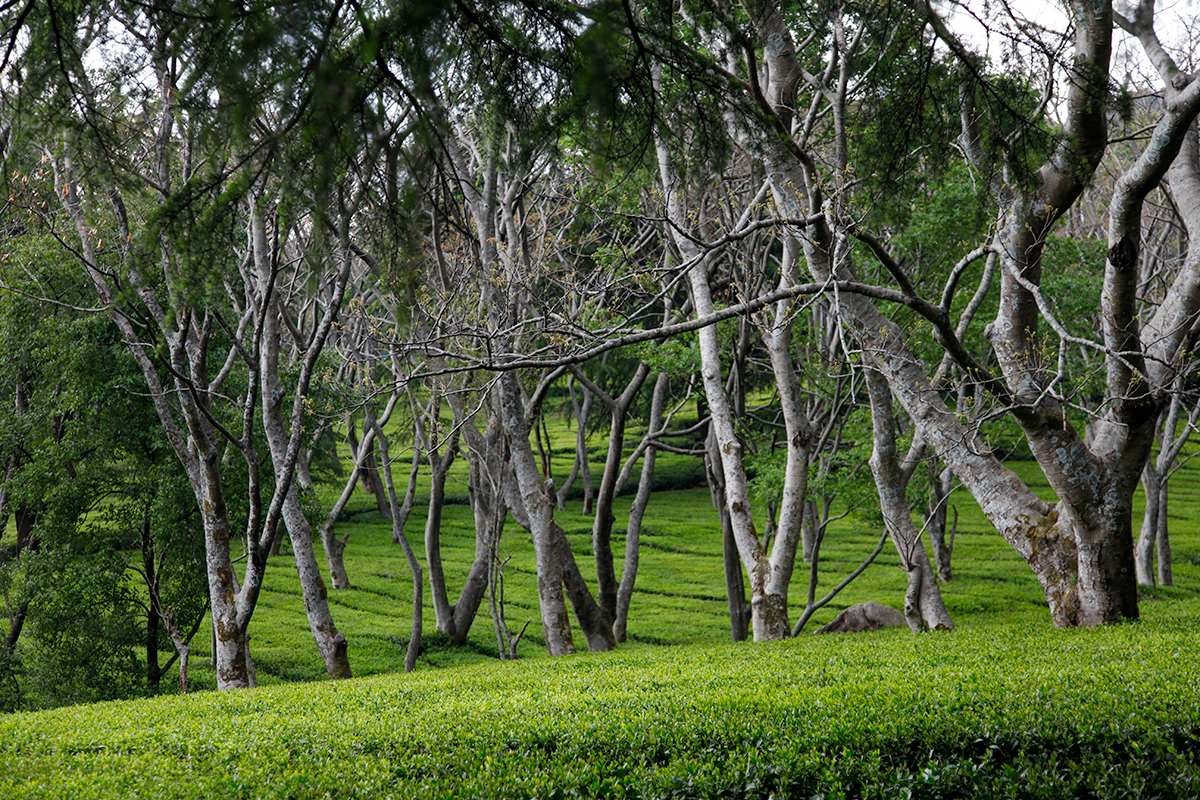
This photo is a beautiful sight, in my humble opinion. Tea bushes grow amid dense vegetation. A rugged, sloping landscape, numerous trees of different species… There’s a harmony between the cultivated plants and wild nature. It’s easy to imagine the wealth of flora and fauna to be found in such a diverse environment. For the amateur photographer in me, there’s pretty much only one colour – at first glance. On closer inspection, what a multitude, what variety! What better way to celebrate spring than with this abundance of greens?