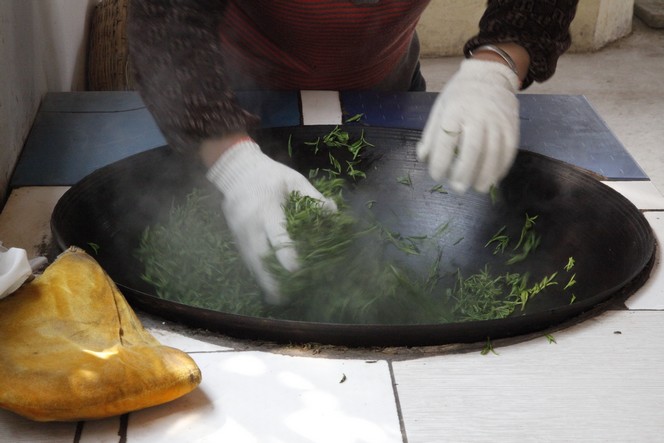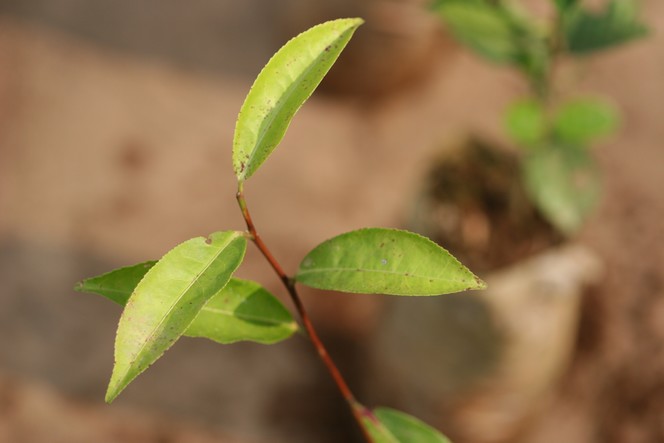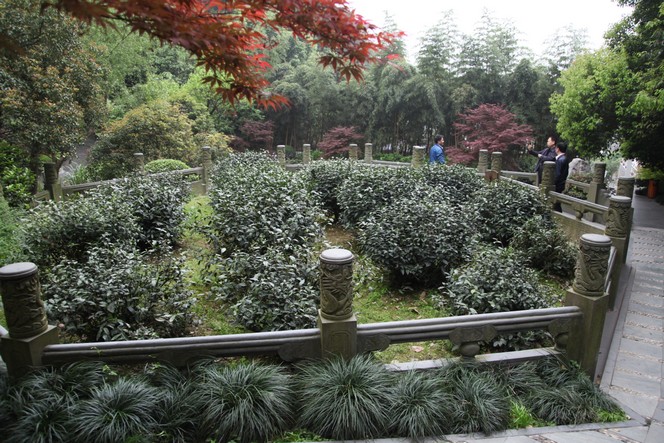
The leaves of the tea plant attract many predators, undoubtedly due to their delicious taste.
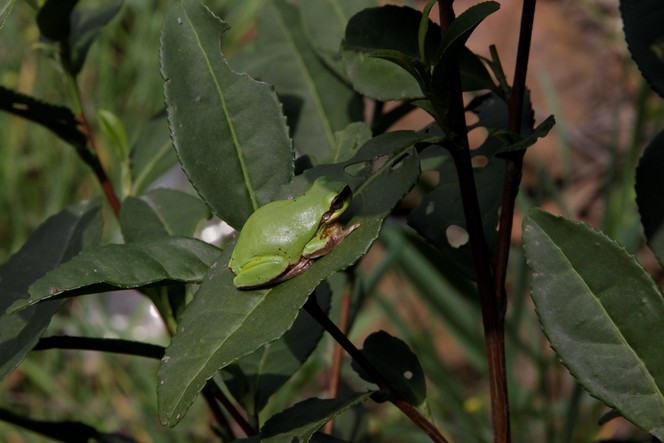
In addition to its gastronomic qualities, tea is supposed to promote wellbeing and serenity. This harmless frog, very much at ease, would surely agree.
From plant to cup
Panels for trapping harmful insects
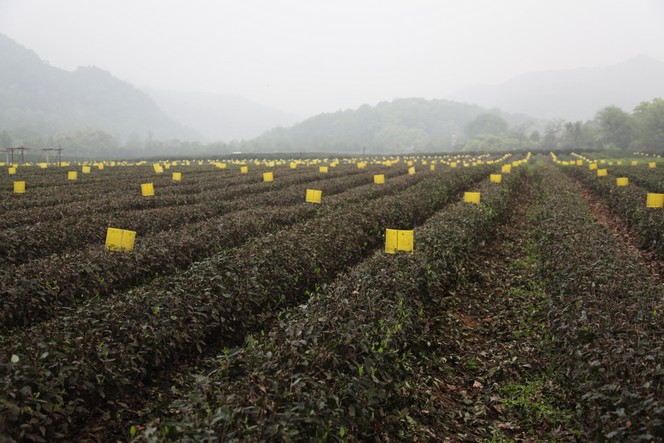
On the tea plantations there are plenty of ideas for trapping harmful insects. For example, here in Hangzhou, they place little panels covered in glue everywhere among the tea plants. The fluorescent yellow of the boards attracts the insects, but most of all it is the pheromones in which they are coated that appeals so much to bugs.
These are clearly unrelated to all the election boards that are flourishing, right up until this weekend, all around our voting stations.
My niece Aurélie launched Le Palais des Thés US
Twenty-five years ago I created Le Palais des Thés to turn my passion into a job, and to share with other enthusiasts the pleasures of tasting the world’s best teas. Since she was little, my niece Aurélie has always seen me with a cup of tea in my hand and has listened to my stories of distant travels to the plantations of China and Japan. A year ago, Aurélie, who has grown up to be a great connoisseur of tea herself, decided to start an exciting new venture and a fantastic challenge. Accompanied by Cy, her husband, she has decided to move to the United States and write a new chapter in this family story, by launching Le Palais des Thés in North America.
I am hugely proud of my niece and I know she will succeed – I have seen how passionate she and her husband are. They have a pioneering spirit.
Bi Luo Chun: one of the rarest China teas
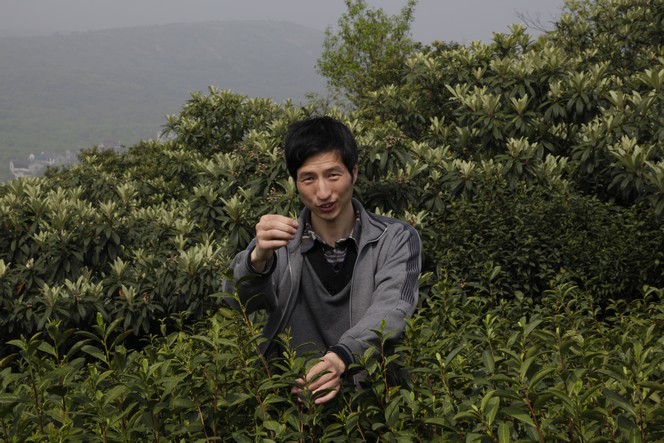
Bi Luo Chun is one of the rarest and most prestigious China teas. Here, my friend Waterqian – one of the few farmers to produce the highest quality Bi Luo Chun – is showing me how much must be taken off the stem during the harvest: a small bud with just one leaf. This type of plucking is extremely rare. It explains the very high price of this tea, whose name means “Spiral of Spring Jade”. In one day, each worker only harvests around two kilos of fresh leaves which, after processing, will produce just two hundred grams of tea.
Mid-April, my attention turns to China
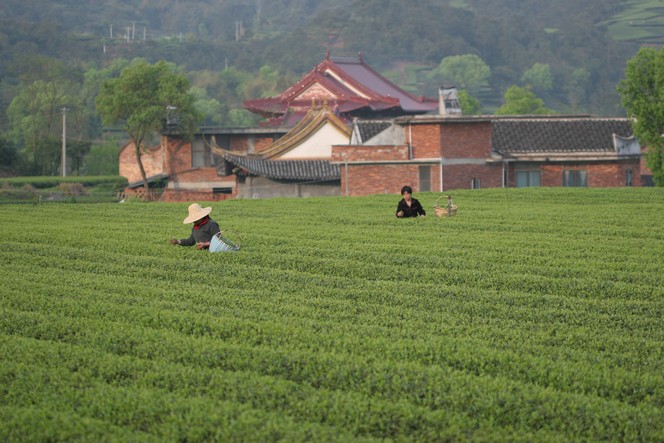
Every year, in mid-April, my attention turns to China. This is the time when production starts of the magnificent China green teas such as Long Jing, Bi Luo Chun and Bai Mao Hou. Right now I’m not far from Suzhou, on the shores of Lake Taihu.
Every day I do my best to sleep in the middle of the tea fields. And this is the kind of view I get when I wake up.
The hairy caterpillar, another tea enemy
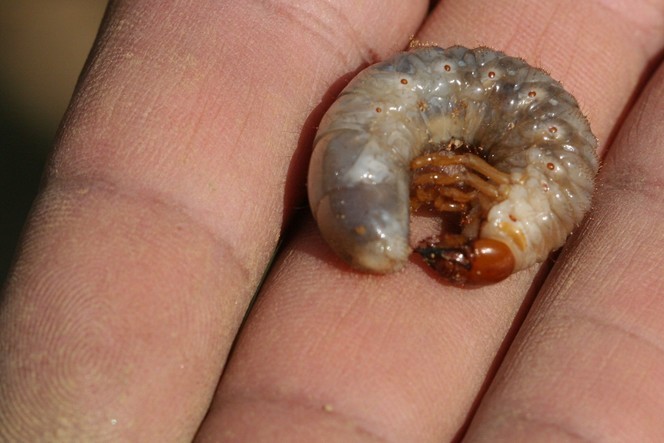
Tea has a number of enemies, and among them is the hairy caterpillar. This one may look rather shy, but don’t be fooled. This delicate creature is less timid when it comes to munching through the bottom of a young tea plant, a task it performs so thoroughly that it cuts right through the base of the main stem. And the poor plant ends up flat on the ground, dead.
My favourite tea plant: “Ambari Vegetative 2”
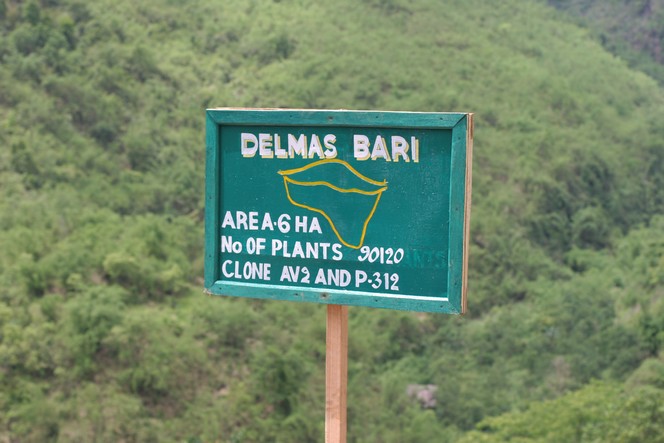
Now that the Darjeeling First Flush season is well underway, today I’d like to introduce you to my favourite tea plant in this region. Its name is AV2, short for “Ambari Vegetative 2”. Despite its slightly spindly appearance, this cultivar produces the best teas.
I’ve just bought a single lot, Puttabong DJ7 “Clonal Queen”. Its producer reserves this prestigious name for lots plucked exclusively from AV2 plants. So this is not a blend. It has remarkable delicate aromatic notes that are both vegetal and floral.
I taste about 50 teas a day
This March I’ve tasted about 50 samples of tea a day. The first flush Darjeelings launch the season, followed swiftly by the Nepalese teas. A little later it’s the turn of the new-season China green teas. Then the Japanese Ichibancha. The teas are tasted blind, of course. The ritual is always the same: having smelt the infusion, you suck in the liquor and swish it around your mouth. You analyse the texture, the flavours, the aroma groups. You take your time. You taste and you taste again. You have to concentrate… Except for when a photographer bursts into the tasting room and captures the moment.
The meaning of the word “clonal” on a label
In the same way that wine can be made using different grape varieties, tea comes from different plants, each with its own characteristics. In this photo you can see the main cultivars used in the Darjeeling region (India). When a particular lot of tea is made solely from these varieties, Indians call it “clonal”. The word “clonal” on a label does not mean the tea comes from a cloned plant, but simply that the leaves were harvested from very specific cultivars. Some of these cultivars have been developed by an agronomic research institute and are known for their excellent quality and flavour.
The first estates to harvest are at low altitudes
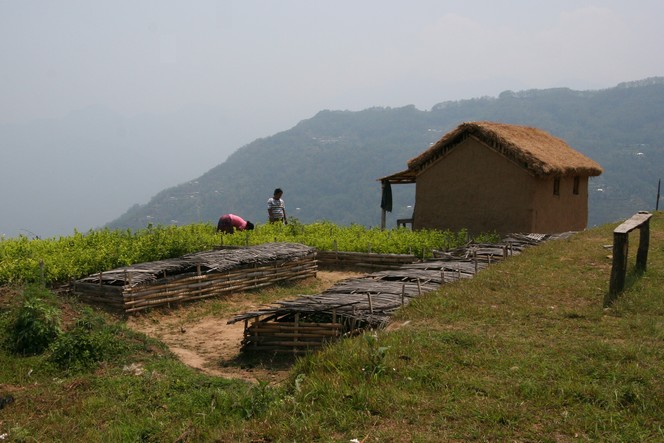
In Darjeeling, at the beginning of every spring, the first estates to harvest are those situated at the lowest altitudes. They enjoy more clement temperatures. This is what the region looks like at the exact place where the immense plains of India take over from the foothills of the Himalayas. Here, you can see the Longview Tea Estate, and you can make out the ochre-coloured stone bed of the Balasun river.