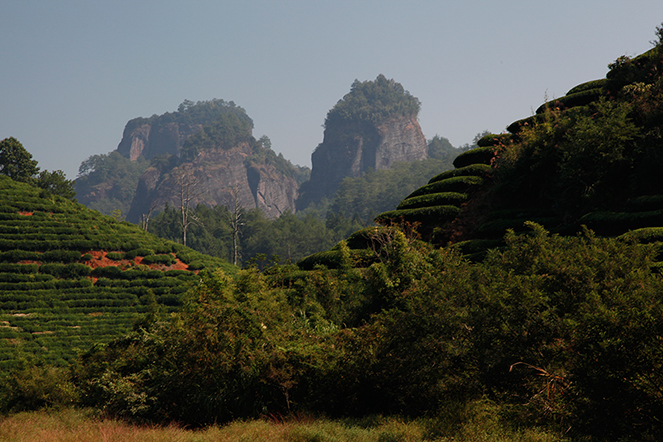
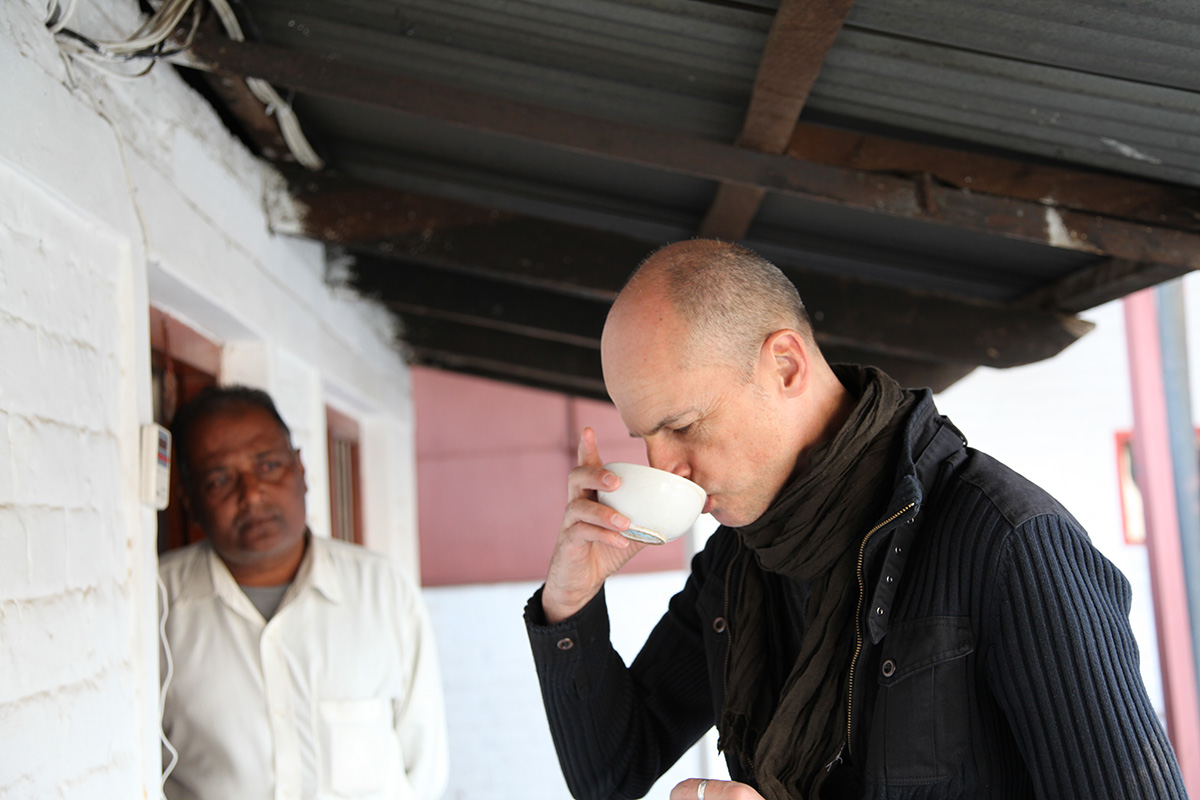
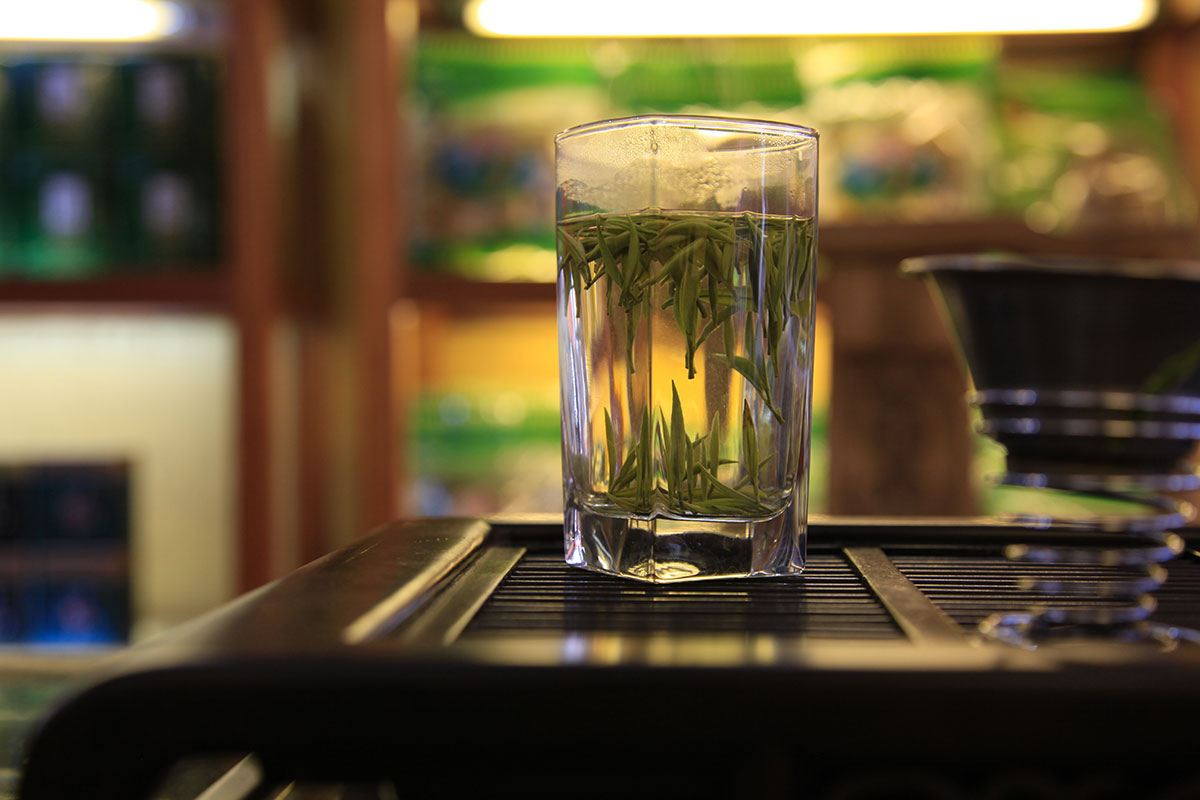
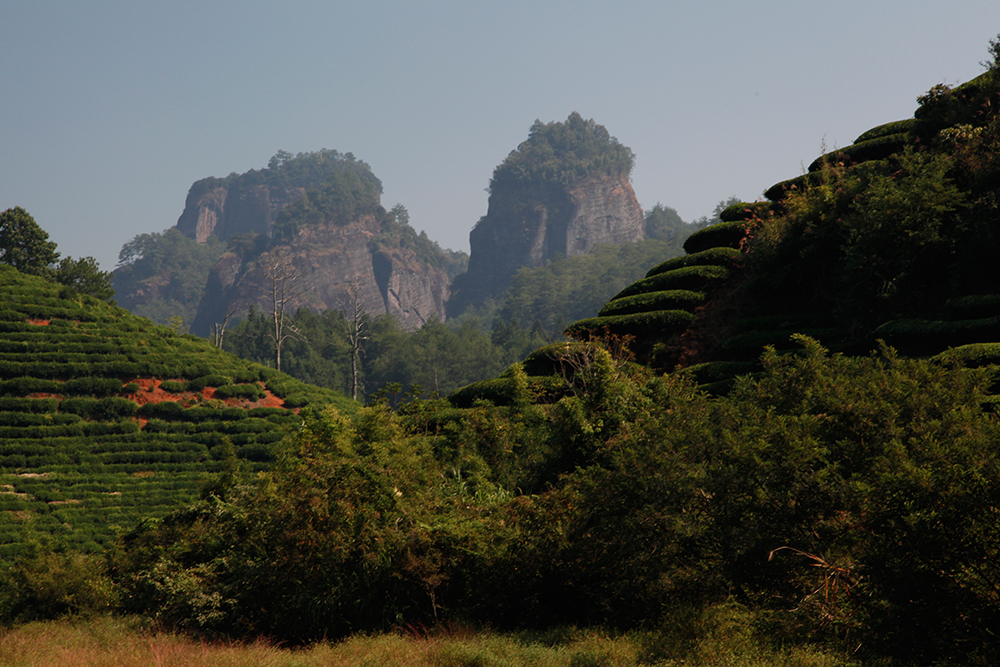
In China there is a very famous group of teas called “rock teas”. These semi-oxidised teas come from Wu Yi Shan, a mountain range in the north of Fujian province. The best known is Da Hong Pao. You have to taste it at least once in your life to realise what an exceptional tea this is. It has a rare strength and length in the mouth, yet remains subtle. It is fruity, toasted, woody and sweet at the same time.
Search Results for: oolong
A tea researcher named Léo!
“Ever since I was young, tea has been a part of my life, although I didn’t attach any particular importance to it. Everything changed on my 14th birthday, when a cup of Oolong, a Tie Guan Yin from Anxi, captivated my senses with its freshness and lily scent. It sparked a passion that only grew from there.
As the adult world began to take shape before me, I wondered about my future. I was irresistibly drawn to tea, and at the same time my desire to explore the world led me to dream of distant horizons. Why not combine the two? After looking into it, I came across a blog written by François-Xavier Delmas, who had the unusual job of tea researcher.
I decided to contact him for advice. I should say that throughout my high school years, I spent my pocket money on fine teas at the Palais des Thés shop in Rennes. I tasted everything I could; every moment was an opportunity to explore the world of tea. I wanted to make a living from my passion.
After my exams, I started business school, but six months into the course I did an internship in the Brittany shop, which confirmed my desire to work with tea. I was impatient to get started so, encouraged by those around me, I quit my studies and went abroad to deepen my knowledge and gain practical experience.
Before I left, I told François-Xavier about my plans. When he saw that I was still as determined as ever to do this job after all those years, he decided to help me, and suggested various factories where I could work and learn.
I spent a year immersed in plantation life in a dozen countries, learning hands-on alongside the growers.
On my return, François-Xavier offered me the opportunity to turn my passion into a career. So I became a tea researcher, driven by my enthusiasm and determination, and the invaluable support of those who believed in me.”
South America, another continent for tea
It took me a long time to decide to go to South America. For ages I equated tea with Asia. After all, it is where tea originated, and China and Japan have a history with the plant that goes back more than a thousand years. Then came Africa, an interesting discovery. There is a considerable volume of tea produced on the continent, but if you take the time to look, you can find some remarkable gardens that are well worth the effort. And so to South America. A new challenge. Colombia then Peru. What a surprise to discover such beautiful gardens run by passionate people having a go at making different types of tea: white, green, black, oolong. Then there’s the warm welcome, the joy, and producers’ delight when they realise they might soon be recognised for what they’re doing. On top of that, the farming practices here are remarkable, and tea gardens have not delayed in getting organic certification.
Rolled into balls
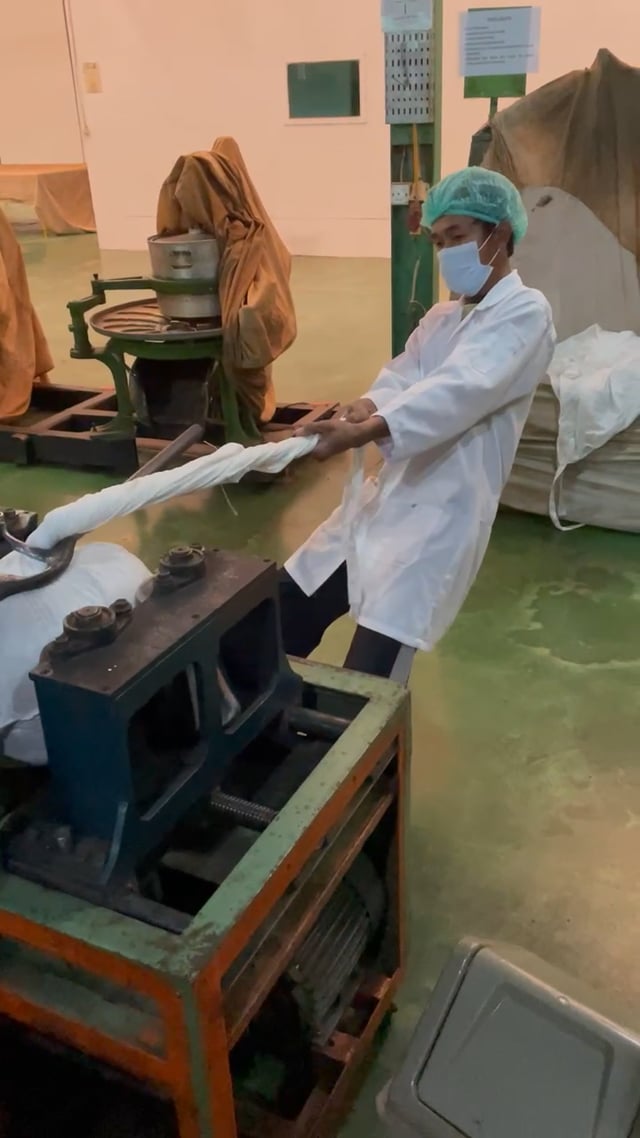
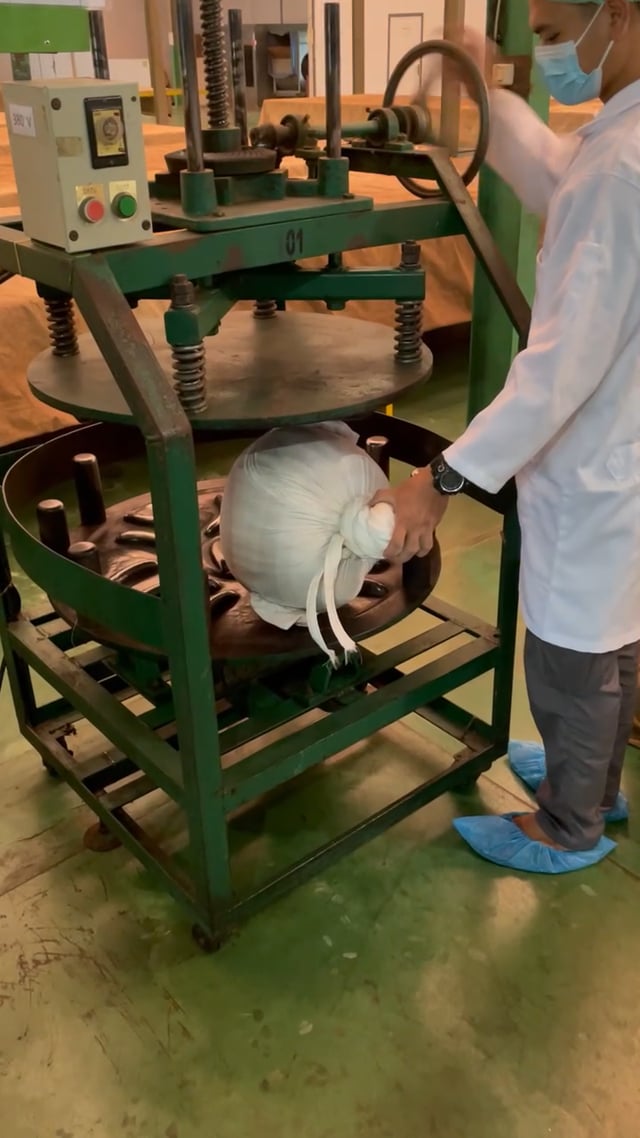
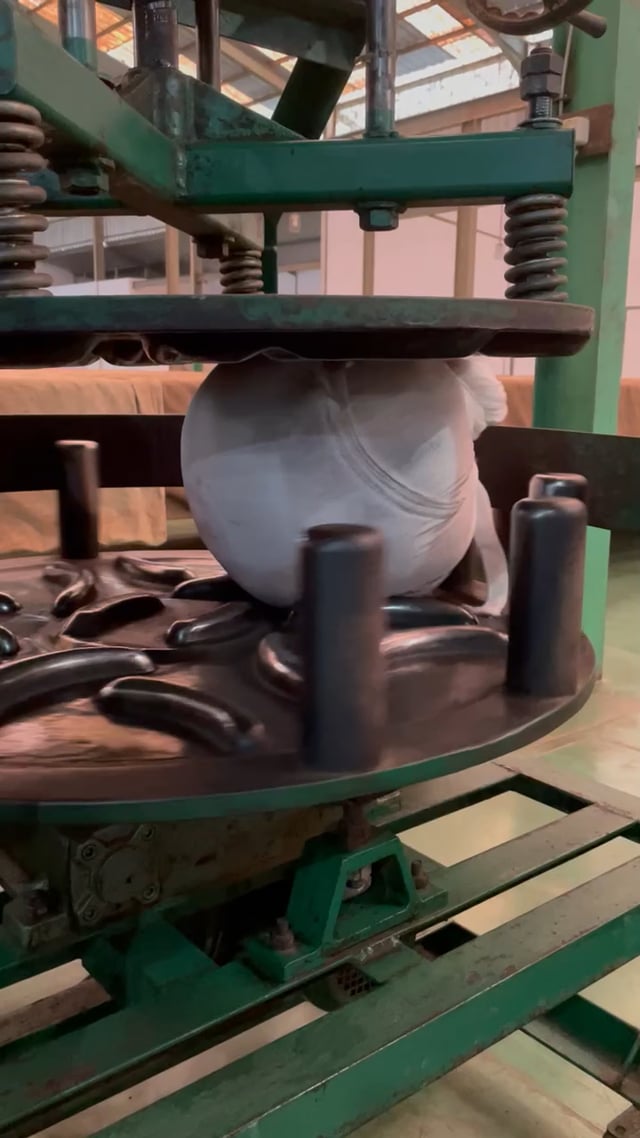
If you take a Camelia sinensis leaf and pour hot water over it, you’l get nothing from it. The leaf needs to be roughened up first in order to release its aromas and flavours when it comes into contact with water. Immediately after picking, the producer will process the leaves, which removes much of their moisture and eventually breaks down their structure without breaking the leaves themselves, so that the juices contained within their many cells can be extracted. This is one of the machines that’s used here in West Java (Indonesia). A cloth sack is packed with tea leaves then squeezed hard between two metal discs. This tool is widely used in Taiwan for making Oolongs, and is also used to make green teas that are rolled into balls.
All my favourite teas
I’m often asked what my favourite tea is, and the question always makes me nervous. Each time I have to think about what to say. Someone who doesn’t know much about tea might say they like a certain type of tea, and someone else might name a different type. But when you have the incredible and very special opportunity to taste the best teas in the world throughout the year, like a top sommelier drinking wine, how is it possible to name just one?
When you’ve tasted so many teas of each type, they become part of you. You get to know them from every angle, you discover their unique characteristics, their point of equilibrium, their harmony. You’re the best placed to appreciate them. This applies whether it’s a lightly oxidised Taiwanese Oolong, a First-Flush Darjeeling, an Oriental Beauty, a Japanese Ichibancha, a new-season Chinese green tea, a hand-rolled Nepalese tea, a black Chinese tea such as a Qimen or a Yunnan, a Rock tea or a Phoenix tea, a dark tea from China, Africa or elsewhere, a Mao Cha plucked from hundred-year-old trees or a Gao Shan Cha, to name just a few. You’re the best placed to appreciate them and the worst placed to pick just one.
So if you meet me, please be kind and don’t ask me to name my favourite tea. Instead, ask me what I love about this tea, or that tea, ask me about the feelings they evoke. Talk to me about the great variety of sensory and emotional responses instead of restricting me to a few.
The textures of tea
Touch is one of our senses, and it plays a part in tea-drinking. In the mouth, we notice the temperature of the liquid, and also its texture, thanks to our sense of touch. A tea can create the impression of being oily or dry. Some Japanese teas or Taiwanese oolongs, for example, give the impression that the liquid in the mouth is almost creamy in texture. On the other hand, many teas create a sensation of dryness, which we call astringency. Astringency gives a tea its long finish in the mouth. There is no one ideal texture. It’s all about the balance between a tea’s aromas, flavours and texture.
The faces behind your favourite teas
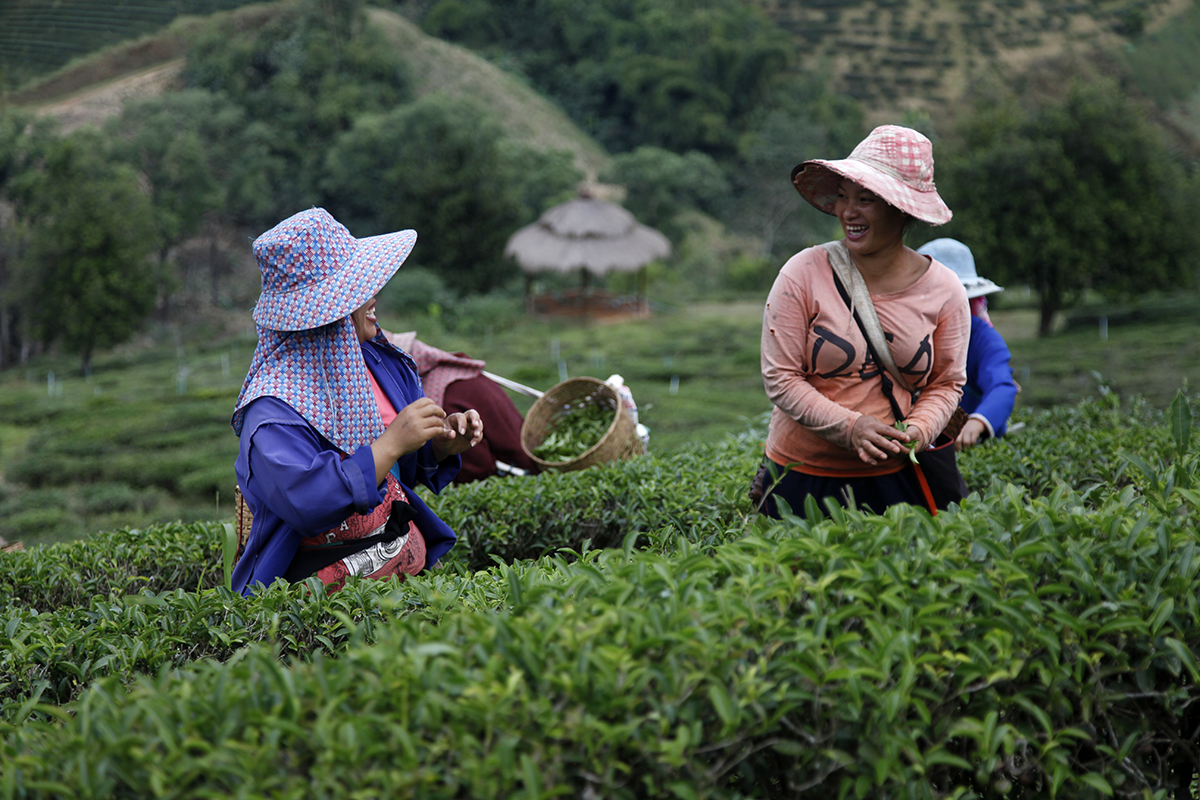
When you prepare a cup of tea, you may find yourself wanting to know more about it. What sort of landscape did it grow in? Who are the people that grew and processed it? I hope to answer some of those questions in my blog! For fans of teas from northern Thailand (Milky Oolong, for example), here are the faces of the Mae Salong tea pluckers, hard at work harvesting the leaves.
Mrs Ming, an exceptional woman
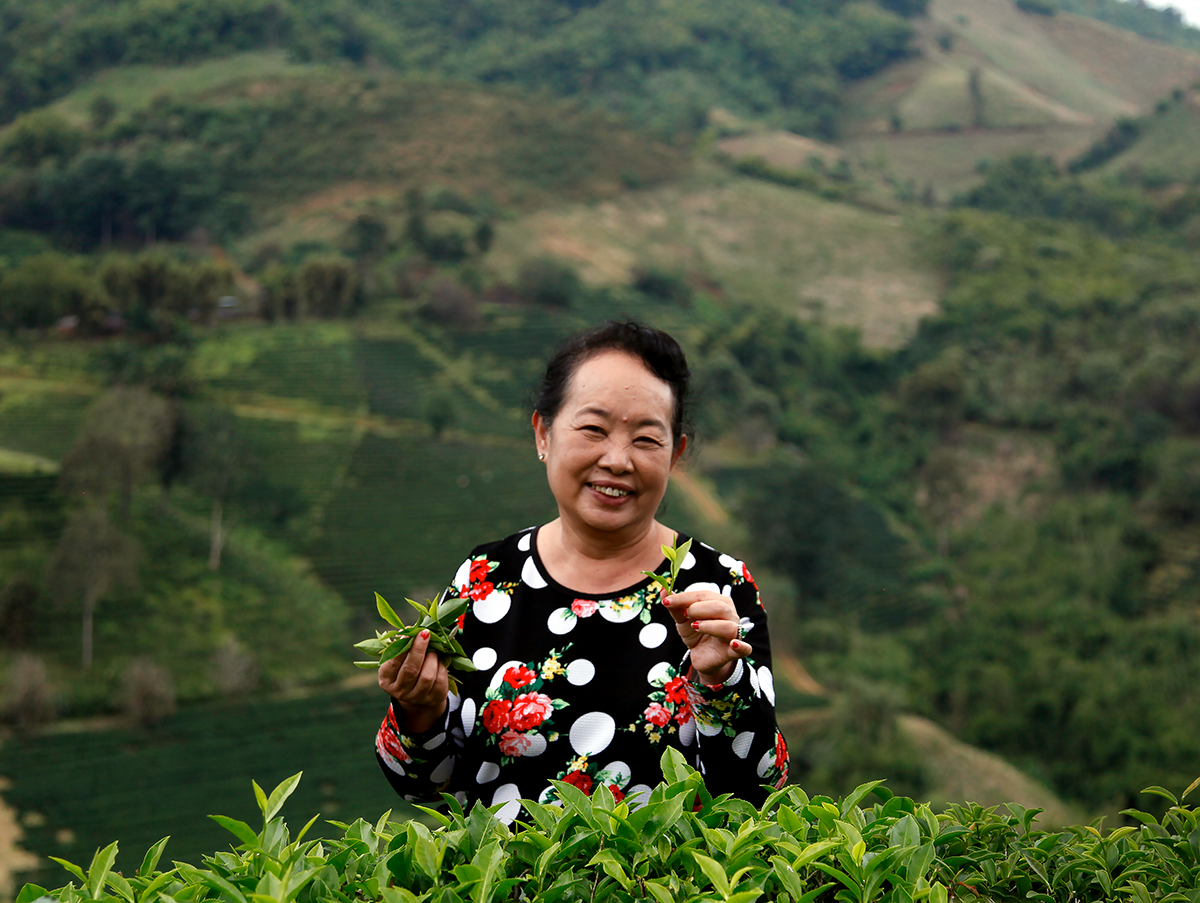
In the world of tea, Mrs Ming is very unusual. There are very few woman in charge of a tea plantation. Not only does Mrs Ming produce some incredible Oolongs, she is also a pioneer, because she introduced tea to the area around Mae Salong. Since then, producing lightly oxidised teas in the Taiwanese style has become fashionable in this area of the Golden Triangle, on the border between Thailand and Myanmar.
I met Mrs Ming nearly ten years ago thanks to Augustin, one of my nephews who was travelling through these remote mountains on his motorbike. I’d asked him to let me know if he came across any tea plants.
Mrs Ming reserves her best teas for me – Jade Oolong, Ruby Oolong, Milky Oolong, Thai Beauty – along with that type of friendship that lasts a lifetime.
Daring and exacting, Mrs Ming never rests on her laurels. She experiments, innovates and tries out black and dark teas, with success. I have already chosen some, and soon you’ll be able to try them too.
Time to sweat
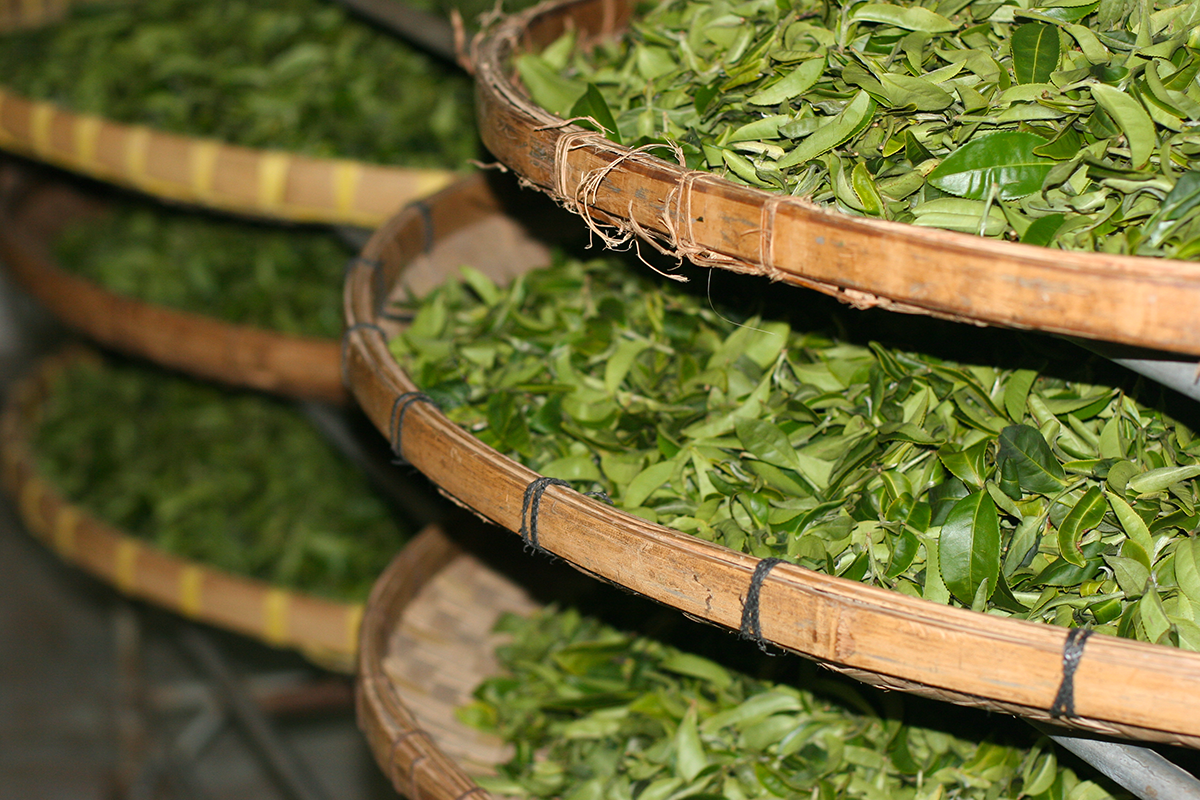
Black teas are oxidised; green teas aren’t: that’s the difference. With oolongs, it’s more complicated. They can be oxidised a little, a lot, or zealously. Their oxidation rate can range from 10% to 70%. Of course, a lightly oxidised oolong will have a more vegetal aroma, while a more oxidised oolong will develop woody, fruity notes. Whatever the level of oxidation required, the processing steps are the same: withering, sweating, roasting, rolling, then drying. The sweating stage is essential. It involves alternating periods of stirring the leaves with periods of resting them, as illustrated by this photo. The aim of this stage is to encourage oxidation while removing the natural moisture from the leaves.
Tea can be sprinkled over food
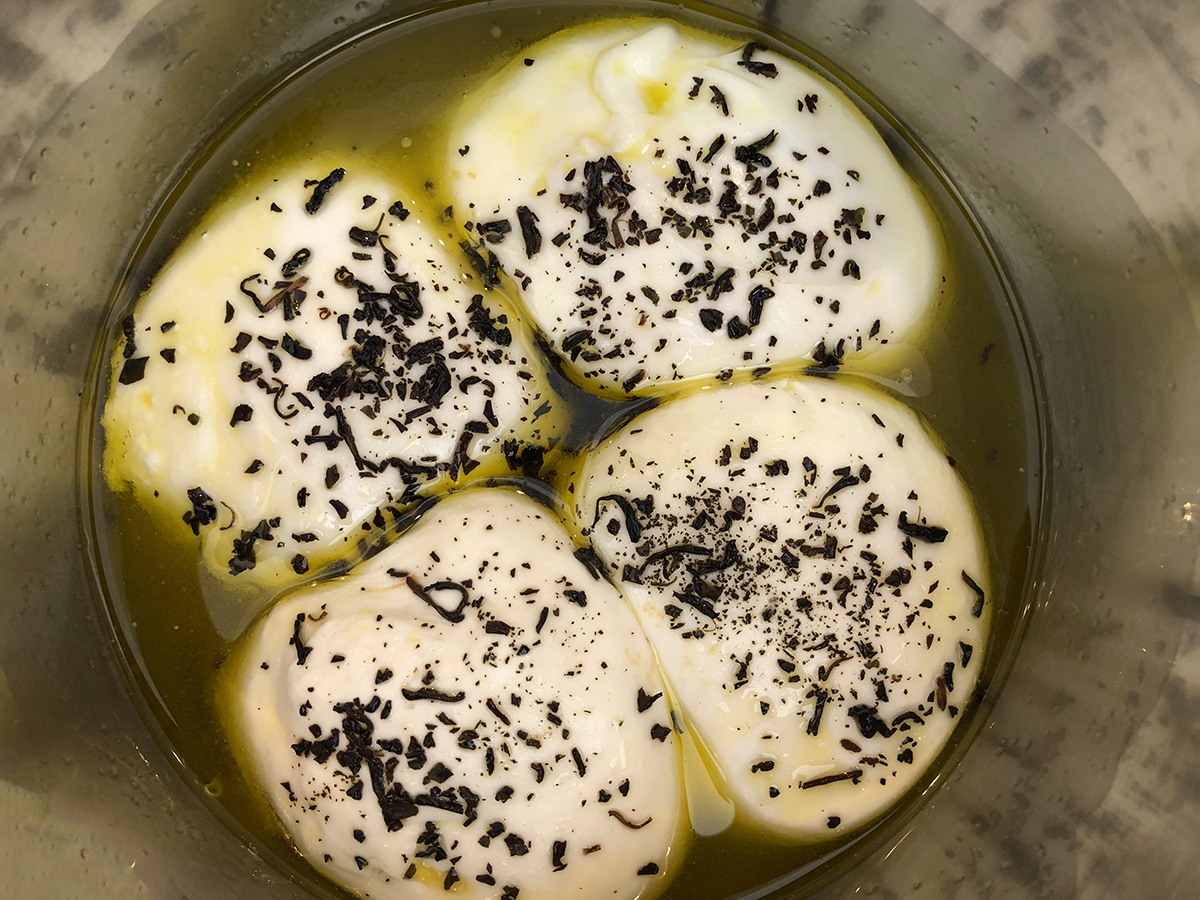
There are endless ways to use tea in cooking. For example, why not sprinkle it over food like a spice? Here, the aromatic, toasted, delicately woody and fruity notes of Jejudo Grand Oolong Impérial bring an exotic touch and a hint of crunch to this delicious burrata cheese. Sprinkle the tea over it and leave it in some green olive oil in the fridge for a couple of days. Enjoy it the Italian way: not too cold, as you sometimes see it served, but at a temperature of 20° to 22°C. To accompany it, infuse the same Korean tea in water at room temperature for 30 minutes and serve in small glasses such as vodka glasses.